Multipliers and Gatekeepers of Holocaust Records in the European Memory Data Space
Amsterdam, 20 November 2025

Amsterdam, 20 November 2025
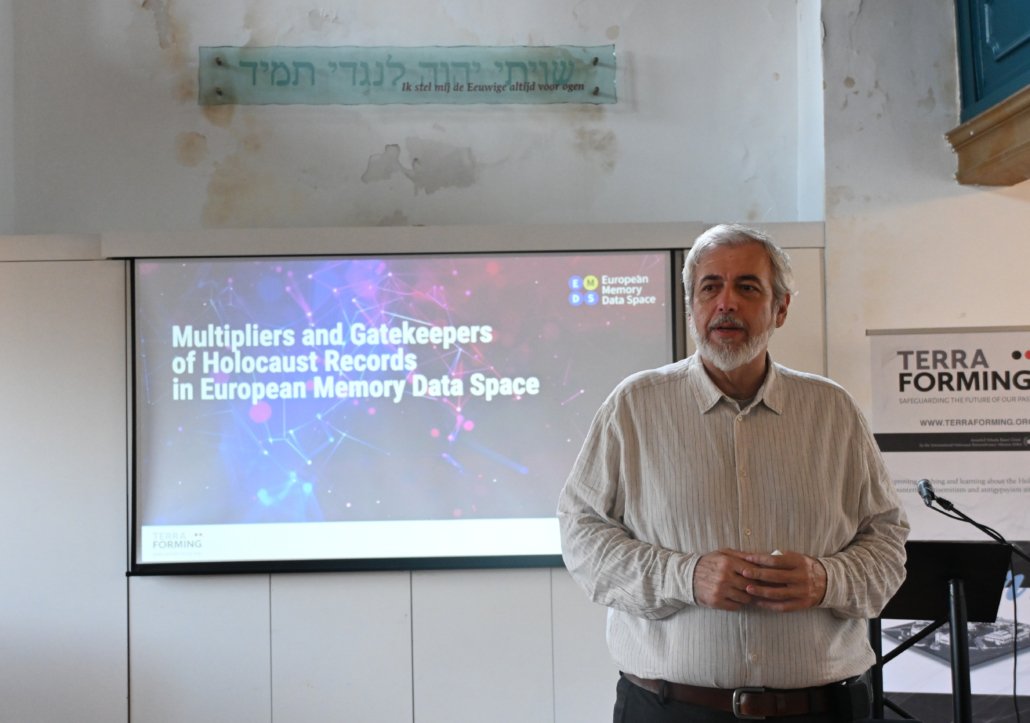
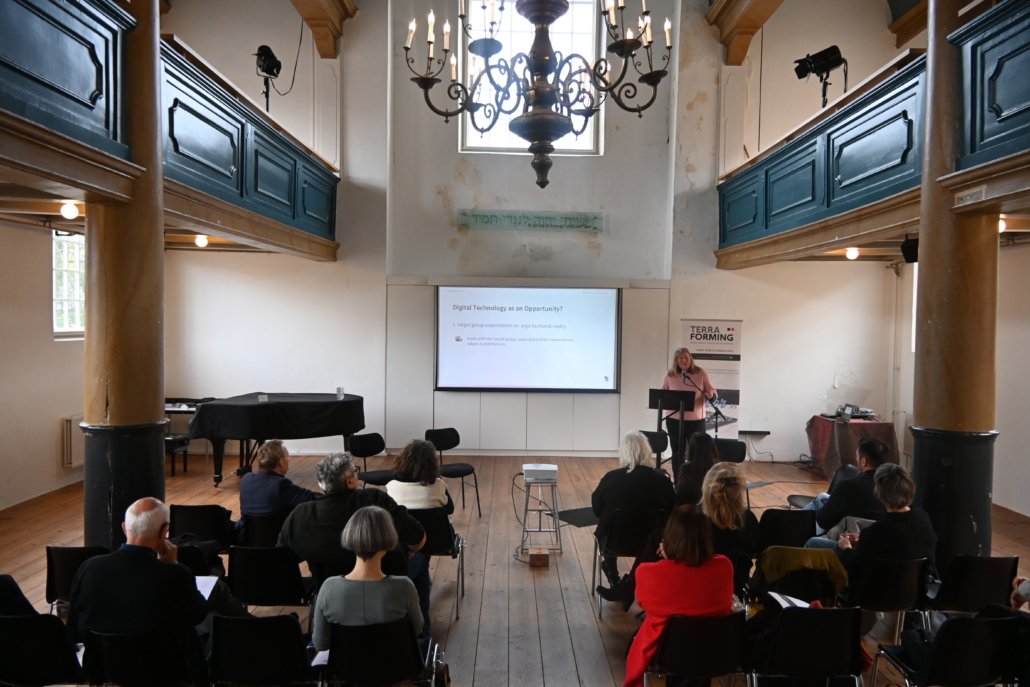
On 20 November 2025, we held the event “Multipliers and Gatekeepers of Holocaust Records in the European Memory Data Space” at the historic Uilenburgersjoel Synagogue in Amsterdam.
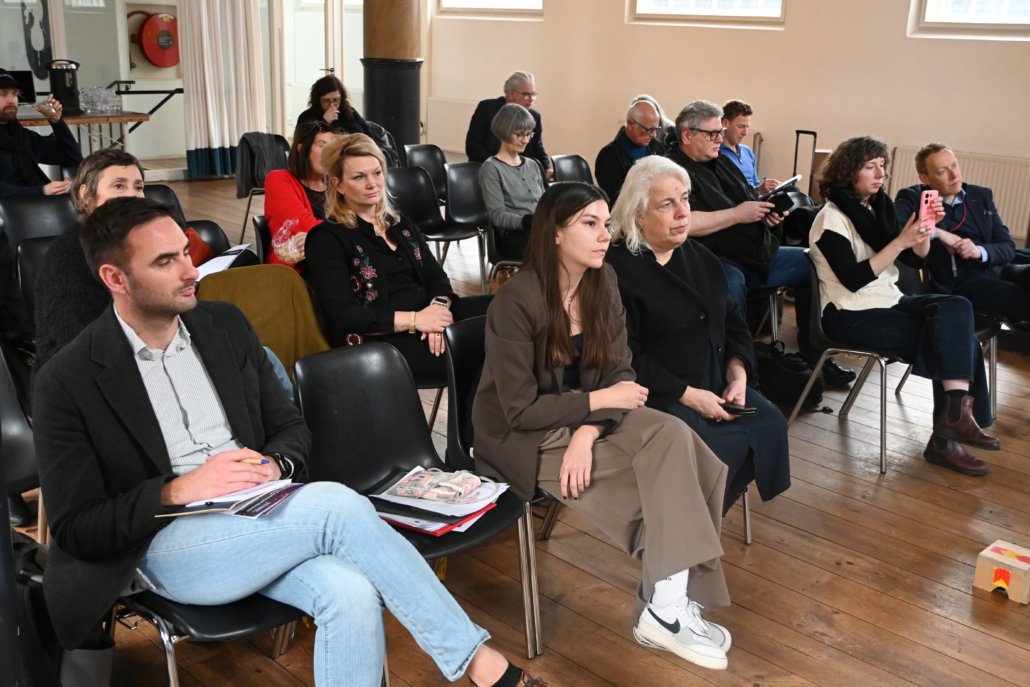
Organised within the European Memory Data Space – Blueprint project and supported by the EU’s CERV programme, the gathering brought together 30 scholars, educators, digital practitioners, and heritage professionals from Croatia, Germany, Hungary, the Netherlands, Poland, Serbia, and the UK. Participants explored how digital transformation is reshaping the stewardship, interpretation, and future use of Holocaust records — and what foundations are needed for a future European Holocaust Memory Data Space.

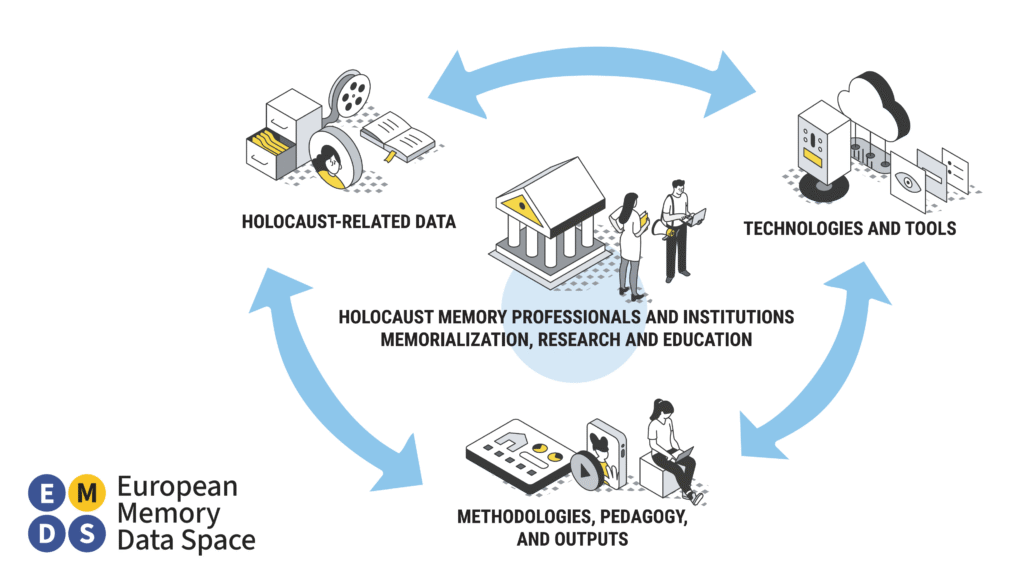
In his introductory presentation, Terraforming’s director Miško Stanišić proposed a framework for understanding digital Holocaust memorialization within the future European Memory Data Space. He described it as a people-first, values-driven ecosystem that enables Holocaust memory to be preserved, connected, interpreted, shared, and re-examined. The approach combines:
He emphasised aligning digital Holocaust records with the IHRA definition of Holocaust-related materials, while recognising that digital environments generate new forms of information relevant to memorialization, research, and education.
This introduction opened the space for discussions throughout the day, with a central question: how is digital innovation transforming the ways we preserve, share, interpret, and teach about the Holocaust?
Keynote – Anne Lammers
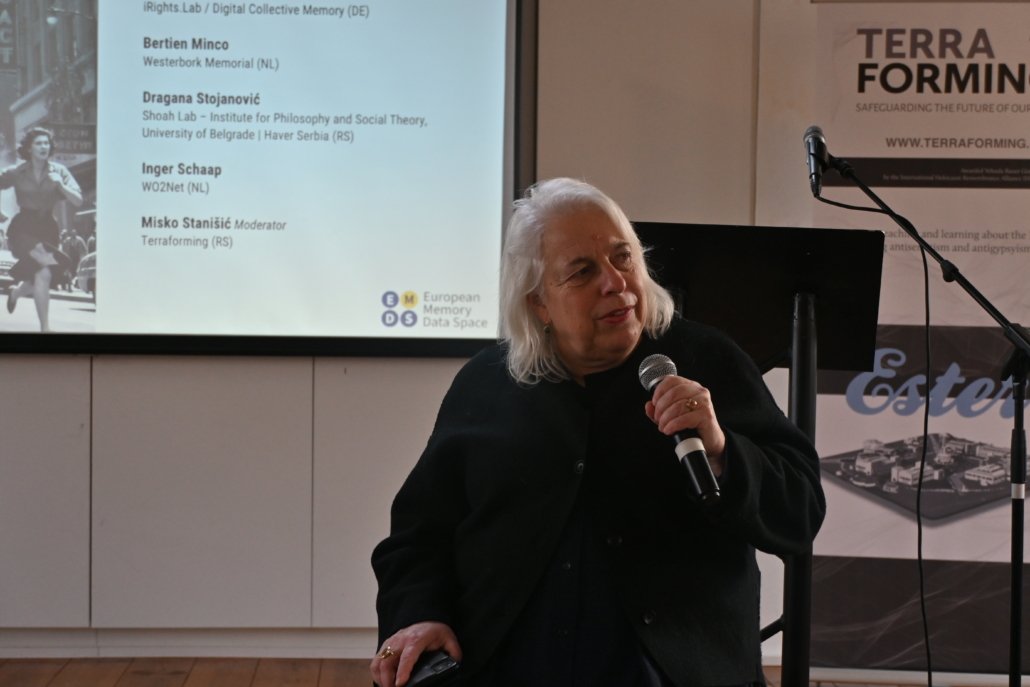
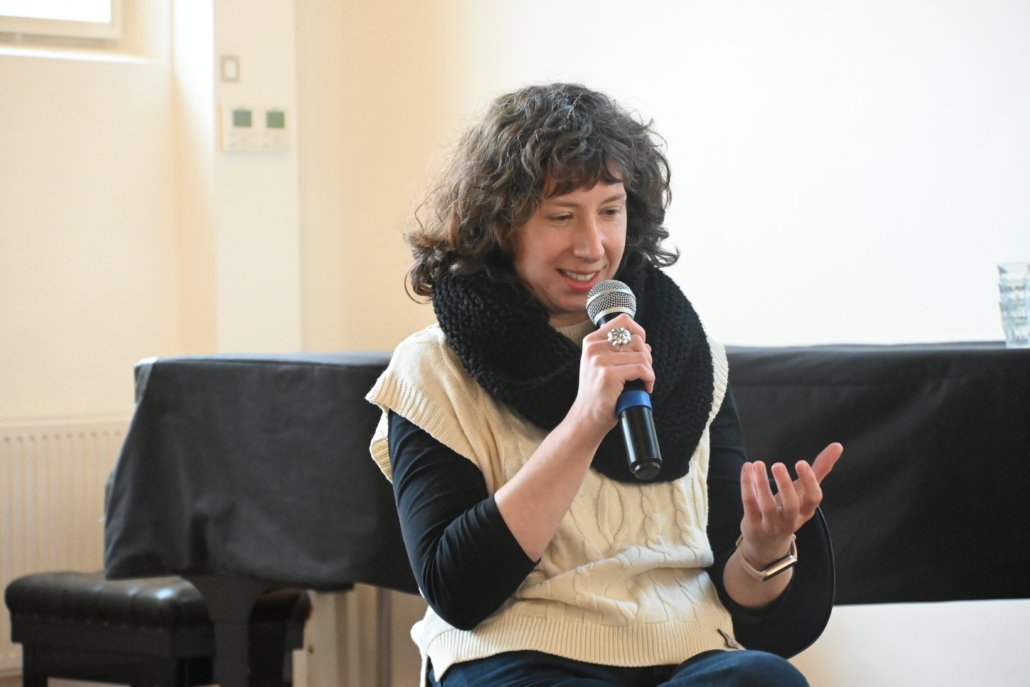
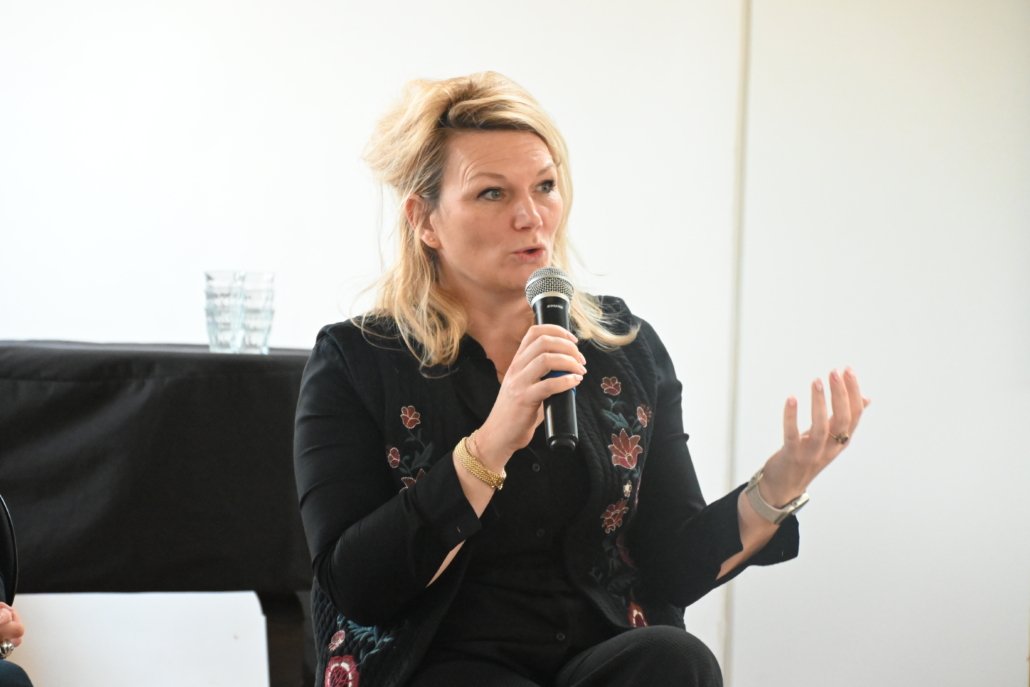
Anne Lammers opened the session by introducing iRights.Lab and the Digital Collective Memory (DCM) initiative — a collaborative programme developed with the EVZ Foundation. DCM brings together researchers and practitioners working on digital remembrance culture and explores how participation, digital ethics, and new technologies influence contemporary memory practices.
Speakers emphasised that building trust in digital tools begins with transparency. When infrastructures are demystified, memory workers feel empowered rather than displaced. Regular meeting points between technology developers and heritage professionals were described as essential.
The conversation also highlighted the challenge of translating ideas into digital formats, especially across generations and sectors that use different conceptual languages.
Participants discussed ethical issues around sensitive materials, testimonies, and curated digital experiences — including how to protect authenticity, context, and dignity.
Bertien Minco spoke about their experience in developing advanced navigation at the Westerbork Memorial, which helps visitors link oral histories as they walk through specific physical spaces, illustrating both the potential and the responsibilities of digital transformation. The panel concluded that it would be very useful and important to document and share the process of developing such tools with other colleagues and institutions around Europe.
Dragana Stojanović argued that our expectations of new technologies often mirror existing social inequalities — including gendered ones — and warned that we cannot expect digital tools to fix injustices that originate outside the technological realm.
Inger Schaap highlighted a generational divide, noting that younger digital-native generations will use technology far more fluently and may ultimately redefine today’s norms about what is—and is not—appropriate when using generative AI in Holocaust memory work.
Panelists
• (Keynote) Anne Lammers | iRights.Lab / Digital Collective Memory
• Bertien Minco | Westerbork Memorial
• Dragana Stojanović | Shoah Lab – University of Belgrade | Haver Serbia
• Inger Schaap | WO2Net
• Moderator: Miško Stanišić | Terraforming

Keynote – Jelle Veerman
Jelle Veerman began the session by presenting the new temporary exhibition at the National Holocaust Museum in Amsterdam, which is based on survivors’ testimonies and allows visitors to explore them through an AI-driven interactive interface. His keynote highlighted how testimony-based history can be transformed into a more navigable, exploratory experience without losing its emotional depth or integrity.
Discussions emphasized the importance of access to primary sources and connecting the digital and physical worlds to create experiences that are both informative and interactive. Speakers discussed concrete strategies for integrating new digital tools into existing museum and memorial frameworks. They highlighted projects such as the Amersfoort Memorial, where digital testimony avatars allow visitors to engage in direct, personal dialogue with survivor narratives.
Janine Doerry spoke about the complex challenges involved in curating an exhibition developed in active partnership with survivors and their families, emphasizing the sensitivity, dialogue, and care such collaboration requires.
Erik Somers contributed an essential reflection on the power of visual records, explaining that curators must be even more careful when working with photographs and visual materials because they affect viewers not only factually but emotionally. He referred to his work on the exhibition The Underground Camera – The Last Year of the War. Amsterdam 1944–1945, about photographers who worked illegally during the German occupation, noting how these images strongly shaped postwar public memory — and why the introduction of even more advanced technologies requires an even greater sense of responsibility.
Photography, immersive storytelling, and experimental formats were recognised as powerful tools for deepening understanding — but also as formats that heighten curatorial responsibility.
A key point was the necessity of continual renewal: while physical exhibitions can remain stable for years, digital content requires ongoing updates, maintenance, and cross-institutional collaboration.
The panel stressed that digitization must be understood as a long-term, ethical commitment, treating data as shared cultural heritage across time, institutions, and diverse user contexts.
Panelists
• (Keynote) Jelle Veerman | National Holocaust Museum Amsterdam
• Janine Doerry | Lower Saxony Memorials Foundation / Bergen-Belsen Memorial
• Erik Somers (emeritus) | NIOD Institute for War, Holocaust and Genocide Studies
• Miško Stanišić | Terraforming
• Moderator: Jovana Savić | Terraforming
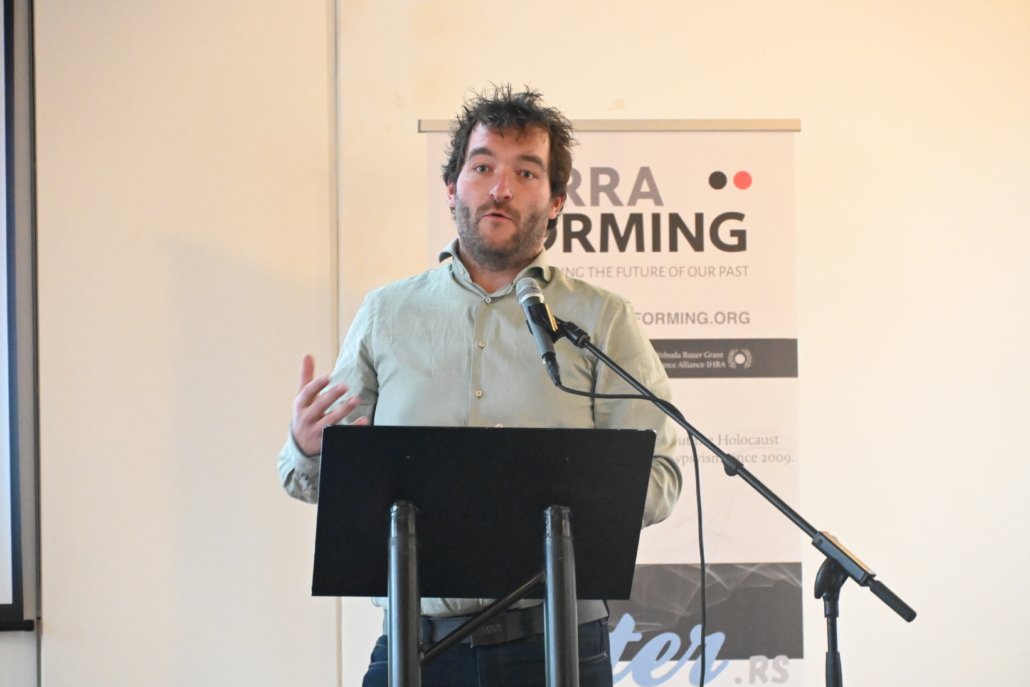

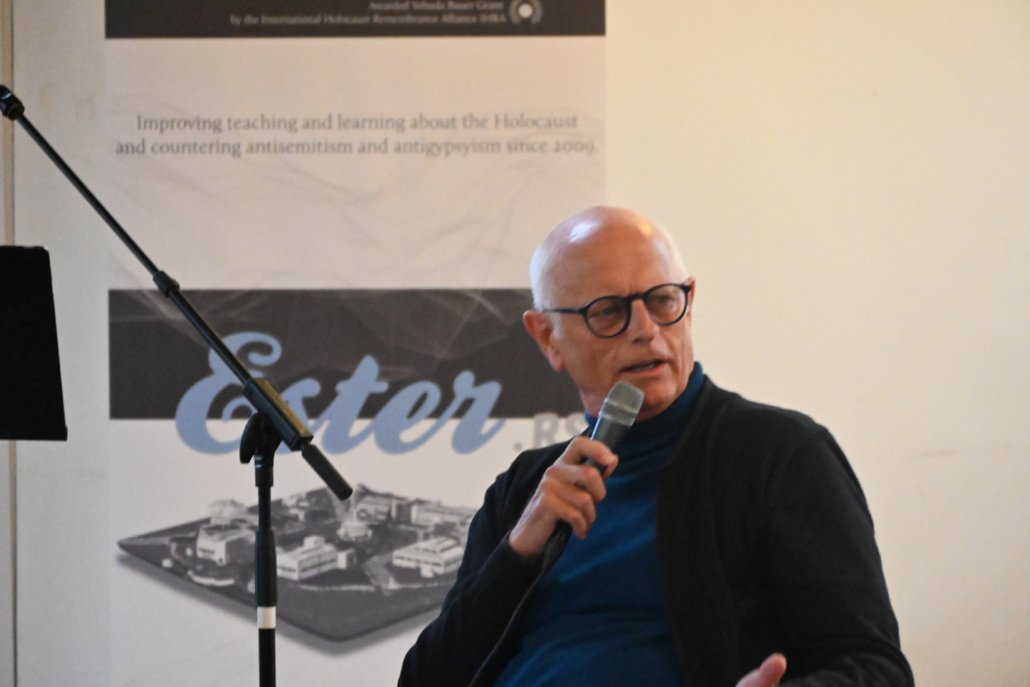
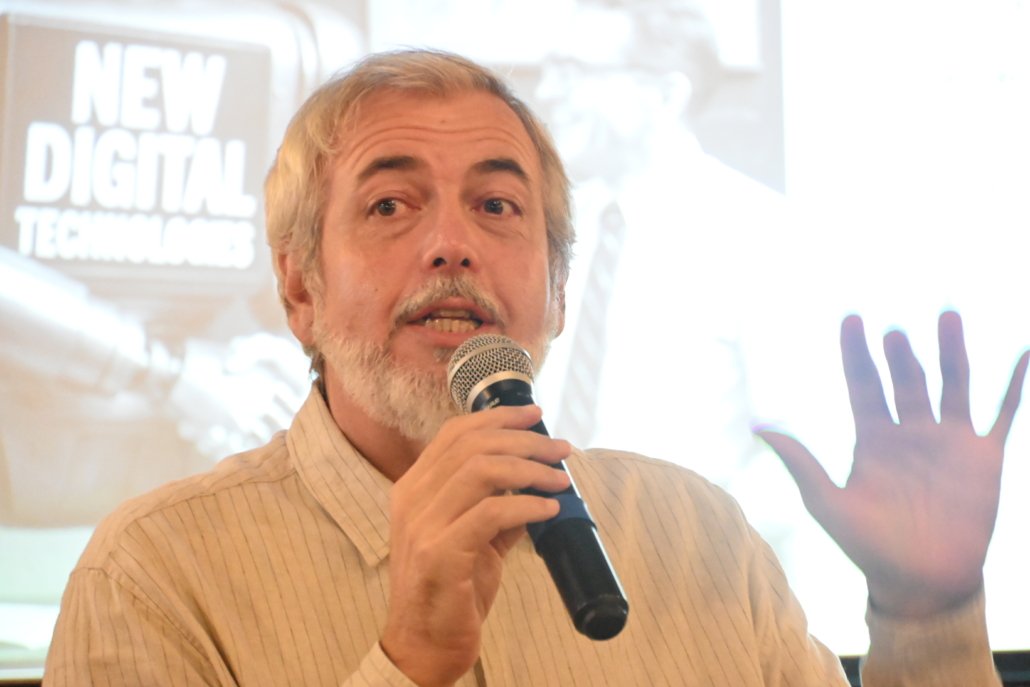
Keynote – Pavel Kats
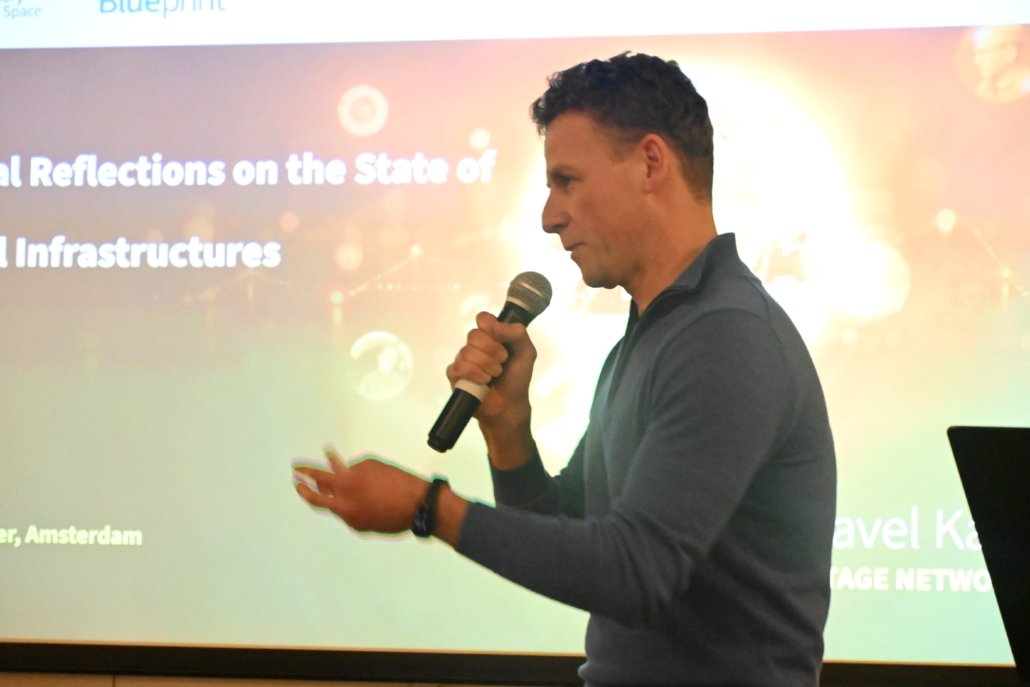
Pavel Kats opened the final session by sharing his vision for the European Memory Data Space and situating it within the broader EU Data Space initiative — a Europe-wide strategy to build domain-specific, standards-based data ecosystems that enable trustworthy sharing, interoperability, and cross-border collaboration. He emphasised that the EMDS will not be a single platform but part of a federated European data infrastructure designed to support education, research, and memory work.
The session explored how education in the digital memory sphere may evolve beyond traditional archival frameworks. Speakers highlighted creativity, interactivity, and shared human experience as key elements.
Barna Szász presented his AR project about the Budapest ghetto, which brings historical layers into the contemporary city using augmented reality. He also described the misunderstandings and hesitations he encountered — including organisations declining to collaborate because they believed that AR might conflict with the IHRA Recommendations, which state that “role play should be avoided.”
Lovro Kralj offered a different perspective, cautioning against the uncritical expansion of datasets. He argued that endlessly adding more data risks fragmentation, which is precisely what infrastructures like EHRI aim to overcome — not recreate. He stressed that the priority should be better exposure and use of the materials already available, rather than constant accumulation.
Gerrit Netten reflected on beginning with early CD-ROM projects 25 years ago, pointing out that the core methodology and pedagogy have remained consistent, even as rapidly advancing technologies now offer entirely new possibilities.
The panel concluded with a shared vision of a future in which digital tools transform archives from static repositories into dynamic, interconnected learning environments — without losing historical grounding, nuance, or responsibility.
Panelists
• (Keynote & Moderator) Pavel Katz | Jewish Heritage Network / EMDS Blueprint
• Barna Szász | If these streets could talk
• Lovro Kralj | EHRI-ERIC
• Gerrit Netten | Anne Frank House Amsterdam

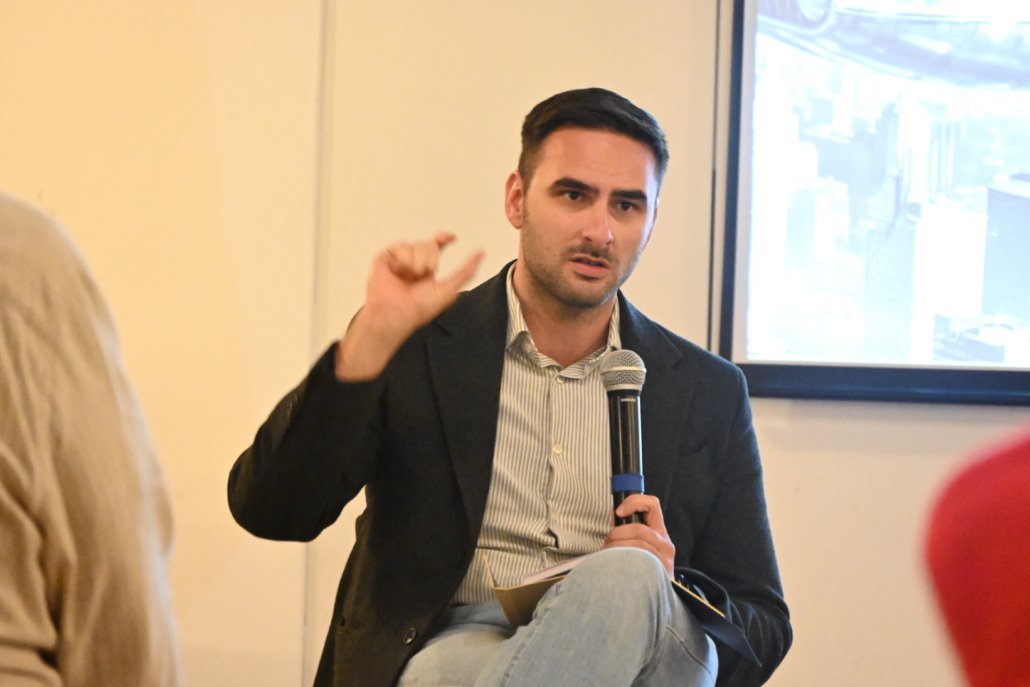
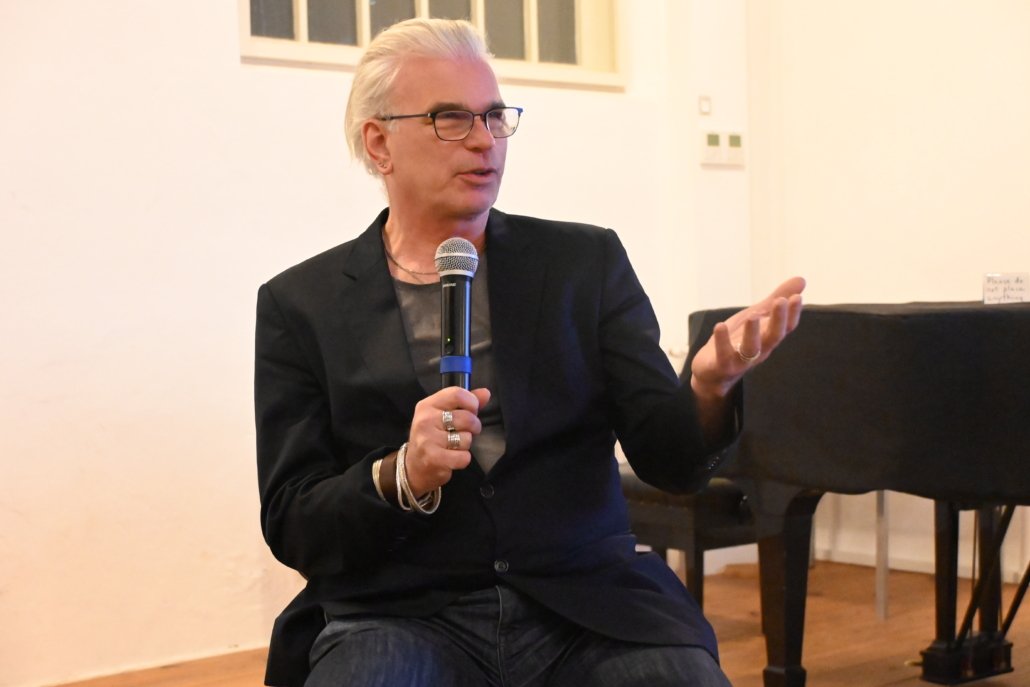
The day concluded with an informal networking session where participants continued their conversations, reflected on the day’s ideas, and explored opportunities for future collaboration. The atmosphere reinforced one of the day’s core insights: that memory work becomes stronger when diverse perspectives meet and exchange.
By organizing this event, Terraforming showed its commitment to shaping the emerging European Holocaust Memory Data Space. Through sustainable digital practices, cross-sector collaboration, and innovative approaches, the initiative helps ensure that Holocaust memory remains accurate, accessible, connected, and meaningful for generations to come.


The Uilenburgersjoel Synagogue, built in 1766, provided a symbolic and inspiring setting for the event. As one of the few remaining monuments of Amsterdam’s historic Jewish neighbourhood, its restored architecture offered a reminder of the enduring responsibility to preserve memory while embracing thoughtful innovation.
The project is supported by the European Union through the CERV program. We are grateful to all project partners who are contributing to its quality and final goals.