web analytics

Debate in Belgrade: Teaching about the Holocaust

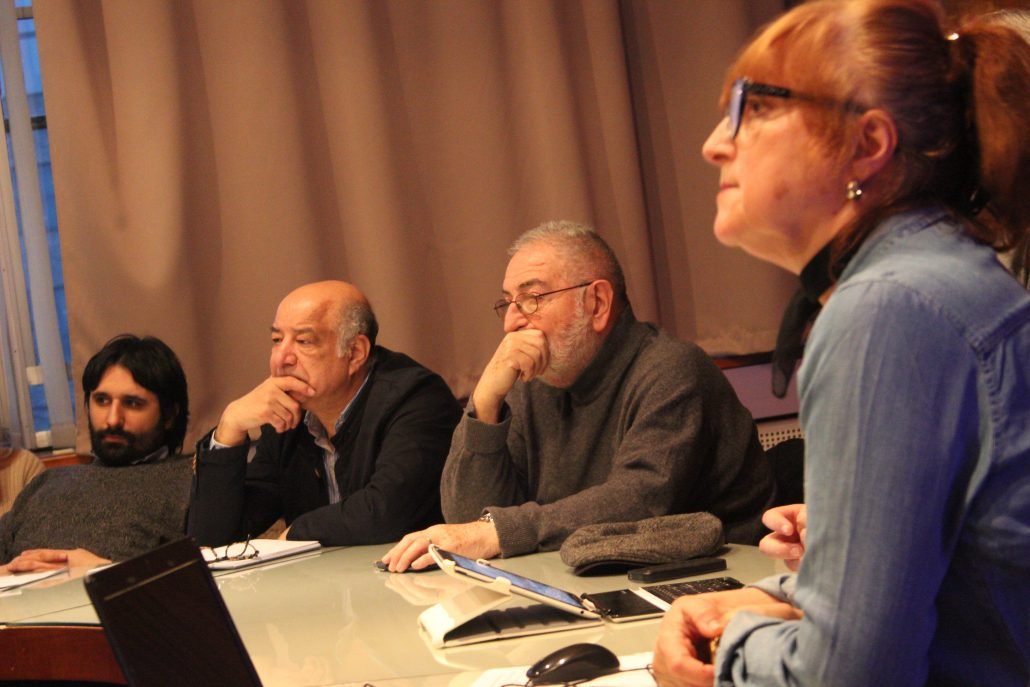
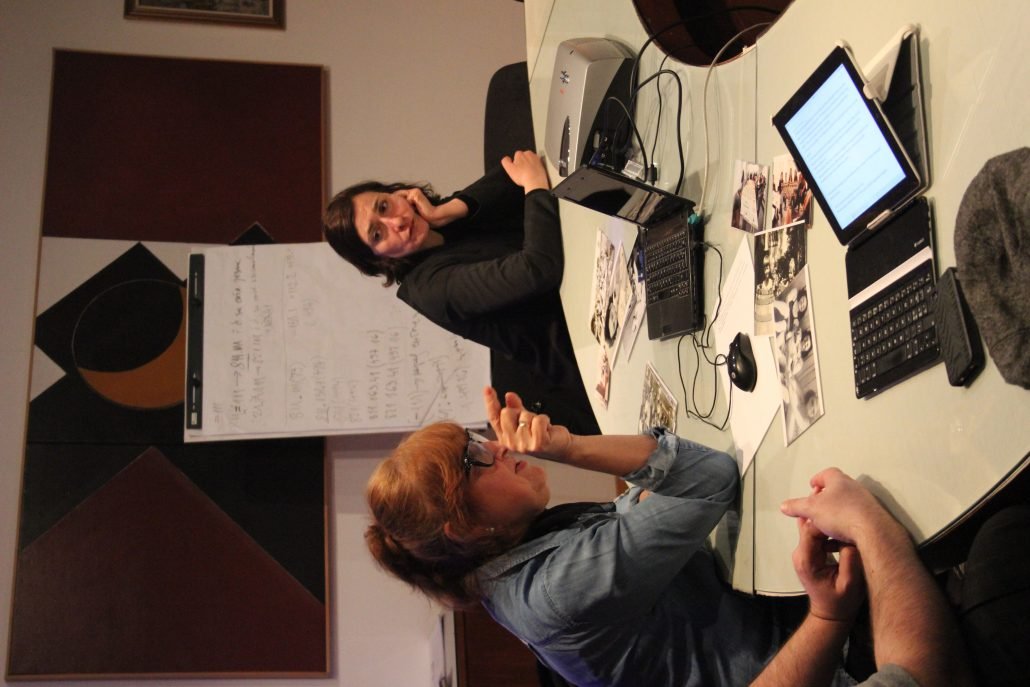
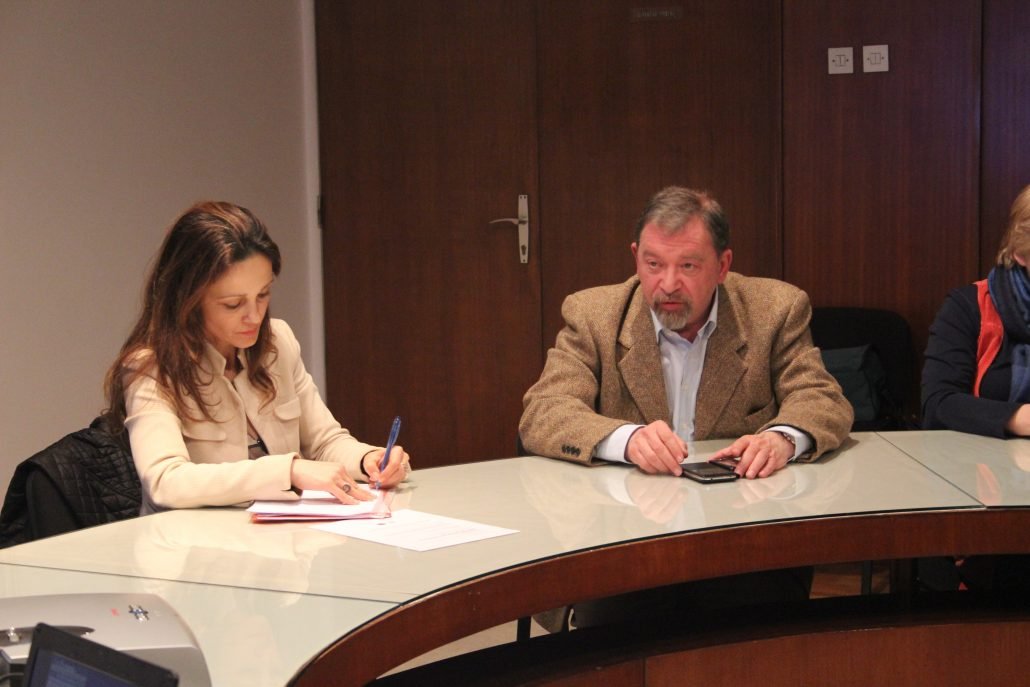
In cooperation with the National Library of Serbia, Terraforming hosted a roundtable debate in Belgrade:

Teaching about the Holocaust – Why? What? How?

The event was co-organized by Terraforming and the National Library of Serbia, and supported by the IHRA delegation of Republic of Serbia.

Main speaker:
Dr Chava Baruch, The European Department of Yad Vashem’s International School of Holocaust Studies (ISHS), Jerusalem, Israel.

Participants:
Members of the Serbian IHRA Delegation; Representatives of the National library of Serbia, Historical Archives of Belgrade, Jewish and the Roma communities, scholars and researchers, Non-governmental organizations and activists, teachers, librarians, archivists, and others involved in some of the current and planned projects and initiatives in the fields related to Holocaust research, education and remembrance in Serbia.

This was an important opportunity to learn about Yad Vashem methodologies, and the Holocaust research, education and remembrance in general. Also, this was an opportunity for Serbian participants to get to know each other better and exchange experiences with a long-term aim to strengthen their network in the fields of Holocaust education, research and remembrance in Serbia.

The event was a part of the initiative by Terraforming to raise awareness among decision makers about the importance of the Holocaust research, education and remembrance, and to encourage cross-ministerial cooperation of the Serbian Ministries, such as Ministry of Education, Ministry of Culture, Ministry of Sports and Youth, and Ministry of Social Affairs (in charge of memorials and Memorial Days commemorations). The other goal was to engage new multipliers in Holocaust education such as archivists, librarians, museum curators, and other professionals.   

Moderator:
Miško Stanišić, Terraforming

The debate took place at the National Library of Serbia in Belgrade on March 12. 2015

The Holocaust is a human story and should be taught as such, it is what gives it relevance today. In teaching we ask tree main questions: Why, What and How? It is important first to understand why this event should be taught and only than turn to the question of content and methodology.
Dr Chava Baruch
Transcript of the opening speech by Ambassador Roksanda Nincic, State Secretary at the Ministry of Foreign Affairs, and Head of the Serbian delegation to International Holocaust Remembrance Alliance – IHRA:

Dear Deputy Director of the National Library Ms Butigan, representatives of the Terraforming, colleagues and friends,

Let me, first of all, thank the National Library and Terraforming for the initiative, as well for this kind invitation. I have a special pleasure to greet Dr. Chava Baruch, from the European Department of Yad Vashem’s International School of Holocaust Studies from Jerusalem, on behalf of the Serbian Delegation with International Holocaust Remembrance Alliance.

Teaching about the Holocaust is a process. Serbia’s ambition is to enhance awareness, knowledge and understanding about the Holocaust education, research and remembrance through systematic engagement of Ministries of Education; Culture; Labor, Veteran and Social Affairs; and Foreign Affairs, both
– Institutionally, among state-employed personnel, policy makers and professionals;
– Through inclusion of public institutions such as memorials, museums, libraries, cultural centers; and
– Educational institutions and professionals.

We are aware of the necessity to further develop a broad network among all stakeholders, including Jewish and the Roma communities, NGOs and other independent initiatives.

We are grateful to Yad Vashem, not only for the tremendous support in sharing its experience and knowledge among Serbian Holocaust educators, but also in creating new networks among Serbian teachers. It helps in teaching how to keep alive the remembrance and to raise awareness of the consequences that kind of extremism might bring to a society. Learning about the past is the best tool of prevention.

This event is an opportunity to learn more about Yad Vashem, the greatest witness of the Holocaust, and its methodologies, but also to foster, expand and straighten our network in Serbia in order to continue this important work.

Thank you, and I wish you a productive session, to the benefit of us all.

Ambassador Roksanda Nincic

Among participants there were:

Dr Chava Baruch, Yad Vashem;
Ambassador Roksanda Nincic, State Secretary at the Ministry of Foreign Affairs, Head of Serbian delegation to IHRA;
Mrs Vesna Filipovic, Ministry of Foreign Affairs, Deputy Head of Serbian delegation to IHRA;
Mrs Tanja Pusonja, Ministry of Labour and Social Affairs, IHRA delegate;
Mrs Biljana Stojanovic, Ministry of Education, IHRA delegate;
Mr Dragan Milosevic, National Library of Serbia;
Dr Ruben Fuks, President of the Federation of Jewish Communities of Serbia;
Mr Aleksandar Necak, representing the Jewish Communities of Zemun and Subotica, Steering Board Member at the Museum of Genocide Victims in Belgrade, Senior Advisor at Terraforming;
Mr Ljuan Koka, Steering Board Member at the National Council of the Roma in Serbia;
Dr Milovan Pisarri, Center for Holocaust Studies and Education, Belgrade;
Mr Nikola Radic Lucati, Center for Holocaust Studies and Education, Belgrade;
Mrs Ivana Bartulovic, Belgrade Open School;
Mr James May, Haver Serbia;
Mrs Andrea Palasti, Haver Serbia;
Dr Olga Manojlovic Pintar, Institute for Recent History, Belgrade;
Dr Sanja Todosijevic, Institute for Recent History Belgrade;
Mrs Monja Milinkovic, Eduka publishing, Belgrade;

+ additional 10-12 participants: representatives of several local NGOs, history teachers from primary and secondary schools around Belgrade, university students, and members of the Jewish and Roma communities;

Hosts:

Mr Misko Stanisic, Terraforming;
Mrs Nevena Bajalica, Anne Frank House Amsterdam, IHRA delegate, Terraforming;
Mrs Tamara Butigan, Deputy Director National Library of Serbia;