web analytics
  • Event in Amsterdam
    in the frames of the project "Escalating into Holocaust"

    21 – 22 September 2016

    Miško NIOD

black and white photo: Nikola Radic Lucati

The event was co-organized and co-hosted by NIOD Institute for War, Holocaust and Genocide Studies and Terraforming,
in the frames of the joint project “Escalating into Holocaust”.

Public event at NIOD

21. September 2016

A public presentation “Escalating into Holocaust” took place on Wednesday 21 September 2016 at the NIOD Institute for War, Holocaust and Genocide Studies in Amsterdam.

The event attracted an audience of about 50 participants – scholars, academics, PhD students, activists, professionals in the fields of Holocaust research, education, commemoration, musealisation and related fields, as well as others interested in the subject.
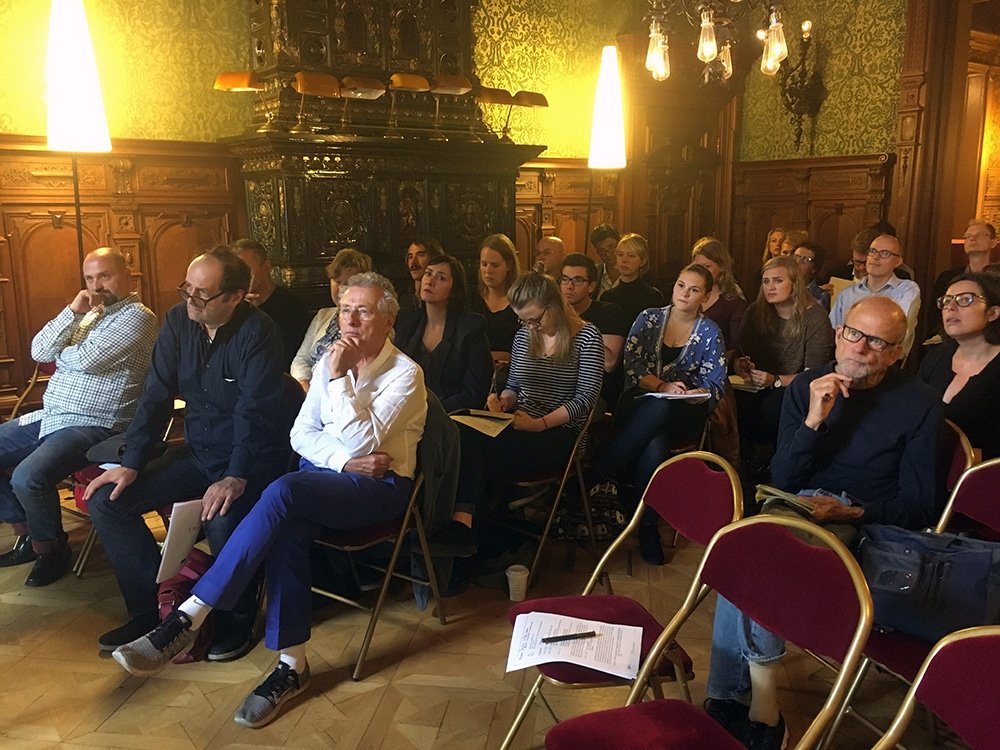
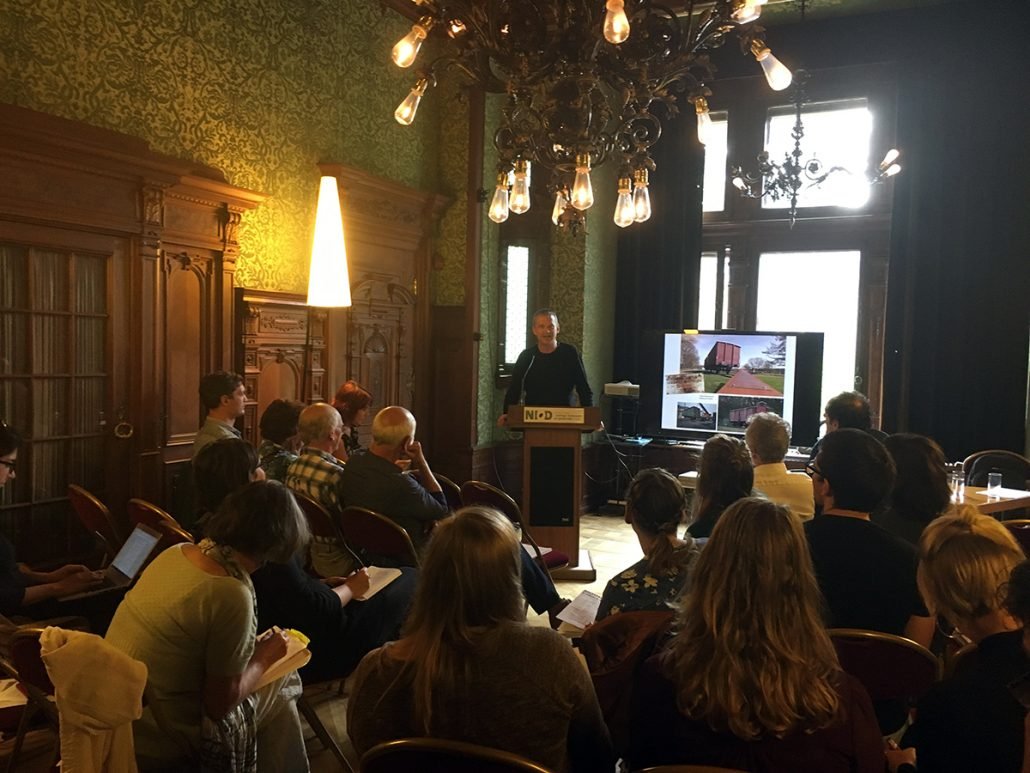
Programme

  • Concept, content and aims of the project “Escalating into Holocaust”
    Misko Stanisic, Director of Terraforming
  • Holocaust in German-occupied Serbia and the concentration camp at Sajmiste
    Dr Milan Koljanin, Institute for Contemporary History in Belgrade
  • Work of the Historical Archives of Belgrade on a database of the Sajmište camp victims
    Vladimir Mijatovic, Senior archivist at the Historical Archives of Belgrade
  • The exhibition “October 1941 – Escalating into Holocaust
    Nikola Radic Lucati, Center for Holocaust Research and Education
  • Musealisation of the Holocaust – Memory and Representation
    Dr Erik Somers, Historian at the NIOD Institute for War, Holocaust and Genocide Studies
  • Holocaust and Remembrance – Kazerne Dossin: Memorial and Museum
    Dr Pieter Lagrou , Professor of History at the University of Brussels
  • Developing the Concept and Content of a Holocaust Memorial – Challenges and Best Practices

    Expert meeting in Amsterdam

Expert meeting

22. September 2016

During the second day of the programme in Amsterdam, with participation experts from the Netherlands, Serbia, Belgium, Sweden, an expert meeting took place at the Dutch Theatre Museum – Hollandsche Schouwburg – a museum and a monument dedicated to the Jews of the Netherlands murdered in the Second World War. The subject of the meeting was: “Developing The Concept And Content Of A Holocaust Memorial – Challenges And Best Practices“.

This idea and experience exchange aimed to explore the ways the Holocaust is remembered, commemorated and taught about in different parts of Europe, particularly the Netherlands and Serbia, and to contribute to better understanding of the current and past practices and the development processes behind creating museums and memorials.

As a part of the programme, a guided tour through the National Holocaust Museum in developing, the Dutch Resistance Museum and the Anne Frank House was organized for the participants. Also, the participants had an opportunity to explore the archives and the library at the NIOD Institute for War, Holocaust and Genocide Studies.

Participants at the Expert Meeting

  • Annemiek Gringold, National Holocaust Museum/Hollandsche Schouwburg, member of the IHRA Museums and Memorials Working Group (Netherlands)
  • Levine Rouw, International Project Coordinator at the Anne Frank House in Amsterdam (Netherlands)
  • Nevena Bajalica, Anne Frank House Amsterdam/Terraforming, member of the IHRA Education Working Group (Netherlands)
  • Liesbeth van der Horst, director of the Dutch Resistance Museum (Netherlands)
  • Karlien Metz, head of exhibitions and collections at the Dutch Resistance Museum (Netherlands)
  • Niels Weitkamp, adviser at the National Committee for 4 and 5 May, and member of the IHRA Communication Working Group (Netherlands)
  • Pieter Lagrou, professor of history at the Université Libre de Bruxelles (Belgium)
  • Anne Helfrich, NIOD Institute for War, Holocaust and Genocide Studies (Netherlands)
  • Erik Somers, NIOD Institute for War, Holocaust and Genocide Studies (Netherlands)
  • Milan Koljanin, Institute for Contemporary History in Belgrade, and member of the IHRA Academic Working Group (Serbia)
  • Vladimir Mijatovic, Historical Archives of Belgrade (Serbia)
  • Nikola Radic Lucati, Center for Holocaust Research and Education in Belgrade (Serbia)
  • Andreja Lekic, for the Department for Cultural Studies Faculty of Philosophy, University of Rijeka (Croatia)
  • Misko Stanisic, Terraforming (Sweden)
  • At the National Holocaust Museum in developing

Project partners:

Project partners for the project “Escalating into Holocaust”

The project is financed by the EACEA – Europe for Citizens Programme:
Strand 1 – European Remembrance (REMEM)