
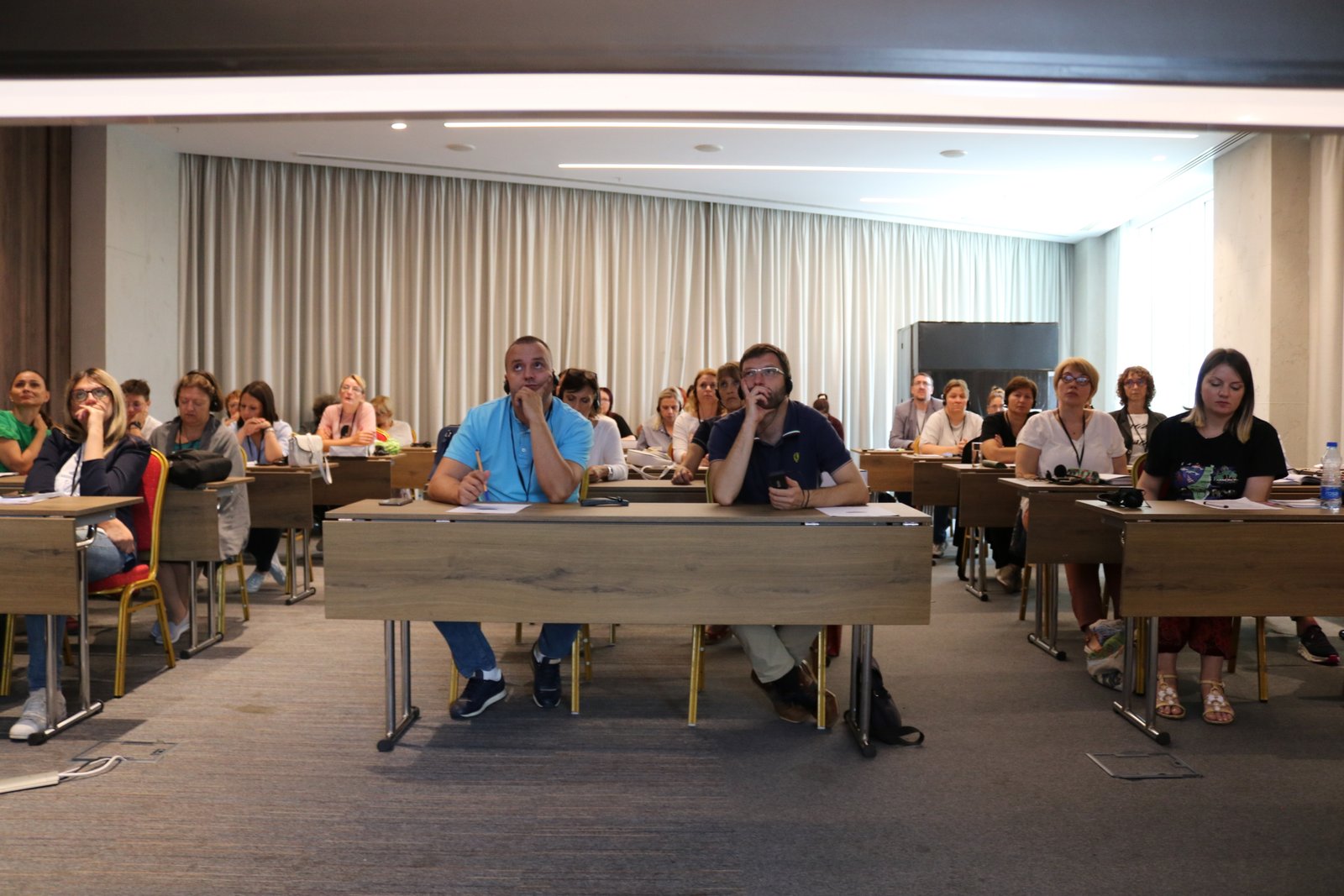
Terraforming offers three free accredited courses:
Learning about the Holocaust according to IHRA recommendations
Field: Social Sciences
Competence that the program develops in the target group:
- Subject teacher – primary school – teacher’s competences for a narrow professional field
- Teacher of subject classes – high school: teacher’s competencies for a specialized field
- Teacher of general education subjects – secondary vocational school – teacher’s competencies for a specialized field
- Teacher of general education subjects – in a secondary art school (music, ballet, fine arts) – teacher’s competencies for a specialized field
- Teacher of optional and optional programs/subjects – teacher competencies for a narrow professional field
Priority area:
The methodology of working with students that encourages the development of functional knowledge, skills, and attitudes (learning and teaching with a focus on competencies and outcomes, active learning, research methods, thematic teaching, and project learning)
General objectives:
Introducing participants to the term, causes, and consequences of the Holocaust following the International Holocaust Remembrance Alliance recommendations.
Specific objectives:
- Introducing the terminology and defining Holocaust by the IHRA recommendations.
- Understanding the causes and consequences of the Holocaust
- Introducing teachers to the concept of Holocaust denial, distortion, and manipulation of history by IHRA definitions.
- Identifying discrimination, xenophobia, and threats to human rights in contemporary society.
- Contemporary resources related to teaching and learning about the Holocaust
- Using teaching materials to achieve outcomes and develop competencies (topic oriented and general cross-curricular competencies).
Expected outcomes of the training:
Teachers will be able to:
- define the term Holocaust in accordance with iHRA recommendations,
- understand the causes and consequences of the Holocaust
- recognize different forms of discrimination, xenophobia, and human right violations in contemporary society,
- identify different forms of hate speech in historical and contemporary sources and explain its negative consequences,
- identify contemporary sources and documents related to learning about the Holocaust
- use teaching materials to achieve subject outcomes and develop student competencies,
Number of participants:
30
Duration of the program:
Days: 1
Points: 8
Price:
The seminar is free.
Program topics:
- Teaching and learning about the Holocaust by IHRA recommendations.
- Denials, distortions and manipulation of the history of the Holocaust
- Work on educational graphic novels “Ester”
Authors:
- Aleksandar Todosijević, history teacher, Elementary School “Branko Radičević” – Batajnica;
- Miško Stanišić, Terraforming;
- Nevena Bajalica, Terraforming
Lecturers:
- Aleksandar Todosijević, history teacher Elementary School “Branko Radičević” – Batajnica
- Prof. dr. Marko Šuica, professor of History, Faculty of Philosophy, Belgrade
- Petar Đurđev, historian, Historical Archive of the City of Novi Sad
- Dr. Vasilije Milnović, director of the Scientific Dpt. of the University Library “Svetozar Marković” in Belgrade
- Milan Koljanin, historian, Memorial Center “Staro Sajmiste”, Belgrade
- Miško Stanišić, Terraforming
- Nevena Bajalica, Terraforming
Institute for the Improvement of Education and Training
Online course:
Teaching and learning about antisemitism and the Holocaust by IHRA recommendations
Field: Social Sciences
Competence that the program develops:
- Subject teacher – primary school – teacher’s competences for a specialized field
- Subject teacher – high school – teacher’s competences for a specialized field
- Teacher of general education subjects – secondary vocational school – teacher’s competences for a specialized field
- Teacher of general education subjects – in a secondary art school (music, ballet, fine arts) – teacher’s competences for a specialized field
- Teacher of optional and optional programs/subjects – teacher competences for a narrow professional field
Priority area:
The methodology of working with students that encourages the development of functional knowledge, skills, and attitudes (learning and teaching with a focus on competencies and outcomes, active learning, research methods, thematic teaching, and project learning)
General objectives:
Introducing participants to the term, causes, and consequences of the Holocaust following the International Holocaust Remembrance Alliance recommendations.
Specific objectives:
- Introducing the terminology and defining antisemitism and the Holocaust by the IHRA recommendations.
- Introducing the methodology of teaching and learning about the Holocaust and antisemitism by IHRA recommendations.
- Understanding social processes in post-war Europe
- Recognizing stereotypes based on anti-Semitism and other forms of discrimination in historical and contemporary sources
- Identifying contemporary sources and documents related to human rights
- Using additional teaching materials on antisemitism to achieve outcomes and develop student competencies (topic oriented and general cross-curricular competencies).
Expected outcomes of the training:
Participants will be able to:
- define the terms Holocaust and antisemitism by IHRA definitions and recommendations
- better understand causes and consequences of antisemitism throughout history
- identify various causes and consequences of the Holocaust
- use teaching materials about the Holocaust and antisemitism to achieve outcomes and develop student competencies (topic oriented and general cross-curricular competencies)
- recognize different forms of hate speech and antisemitism in historical and contemporary sources and explain its negative social consequences
- using appropriate teaching methods, deconstructing stereotypes based on antisemitism and other forms of discrimination
- identify and promote contemporary documents and resources related to human rights.
Number of participants:
30
Duration of the program:
Sunday: 4
Points: 32
Price:
The seminar is free.
Themes:
1st week
Learning about antisemitism and its history
2nd week
Holocaust – causes and consequences
3rd week
Antisemitism in contemporary society
4th week
Teaching and learning about the Holocaust by IHRA recommendations
Authors:
- Miško Stanišić, Terraforming;
- Nevena Bajalica, Terraforming
Lecturers:
- Prof. dr. Marko Šuica, professor of History, Faculty of Philosophy, Belgrade
- Petar Đurđev, historian, Historical Archive of the City of Novi Sad
- Dr. Vasilije Milnović, director of the Scientific Dpt. of the University Library “Svetozar Marković” in Belgrade
- Milan Koljanin, historian, Memorial Center “Staro Sajmiste”, Belgrade
- Miško Stanišić, Terraforming
- Nevena Bajalica, Terraforming
Institute for the Improvement of Education and Training