Distinguished officials, colleagues, activists and fellow citizens,
In the video series Tajsa, we hear the testimony of Mrs Radojka Stojanović, a Roma woman who, as a child, survived the arrests of Roma in Belgrade in 1941. She says:
“We ran in all directions. We, children, fled to the gadje, to the non-Roma, to the peasants, where Ada Ciganlija is now, and up towards Senjak; that is where we fled. The gadje hid us—in the fields, in attics, wherever they could. The gadje took us in, and that is why my name is Radojka, and why one of my brothers is called Radoje, another Milorad, and another Milovan. And the Germans took away whoever they caught on the street, and all trace of them was lost. They took my father and uncle, and another brother too, and there is no trace of him. His name was Gaja Živojinović. Nothing is known—neither where he was taken nor where he was killed.”
We can learn a great deal from this short excerpt: about how Serbian peasants helped and hid Roma children, but also about the price of survival—concealing their Roma identity and receiving new names. The testimony conveys sadness, helplessness and injustice, as well as the difficult questions of identity that arise when a name adopted for survival remains with a person for the rest of her life. It also reveals the heavy veil of oblivion: “Nothing is known—neither where he was taken nor where he was killed.” For me, the most harrowing moment is when Mrs Stojanović says: “All trace of them was lost.”
Although ordered and supervised by the German occupation authorities, the arrests of Roma, which began in the Jatagan Mala neighborhood on 28 October 1941, were a joint operation involving German and Serbian collaborationist forces. Agents of the Serbian Special Police and Serbian gendarmes played an important role. At four o’clock in the morning, the streets where Roma families lived were sealed off. The agents and gendarmes knew which homes to raid because they had precise information based on existing so-called “gypsy lists”. On the same day, German forces and the Serbian gendarmerie raided Roma settlements in Čukarica and Žarkovo. The arrested Roma men were taken to the Topovske Šupe camp, from where they were transported to execution sites around Belgrade and murdered. That was the first time that what Mrs Stojanović describes occurred: “All trace of them was lost.”
In the post-war trials of war criminals before Yugoslav military courts, the genocide of the Roma was neither recognized nor considered as a distinct crime. In the judgment against Lieutenant General Harald Turner and SS Lieutenant Colonel Georg Kiessel for crimes committed in Belgrade, their responsibility for the murder of Jews is repeatedly addressed, yet the murder of Roma is not mentioned at all. This is true even where the order of 30 May 1941 is cited, although that German order clearly and explicitly applied to both Jews and Roma.
The oblivion surrounding the genocide of the Roma is even more apparent in the judgment against SS and Police Colonel Wilhelm Fuchs. Among other crimes, Fuchs and his co-defendants were charged with directing all measures taken against Jews, ordering their internment in the camp at Topovske Šupe and organizing the murder of Jewish men. Yet not a single word acknowledges that approximately 1,500 Roma men passed through this camp before being taken to execution sites around Belgrade and murdered.
Thus, during the post-war trials of war criminals, what Mrs Stojanović describes happened for the second time: “All trace of them was lost.”
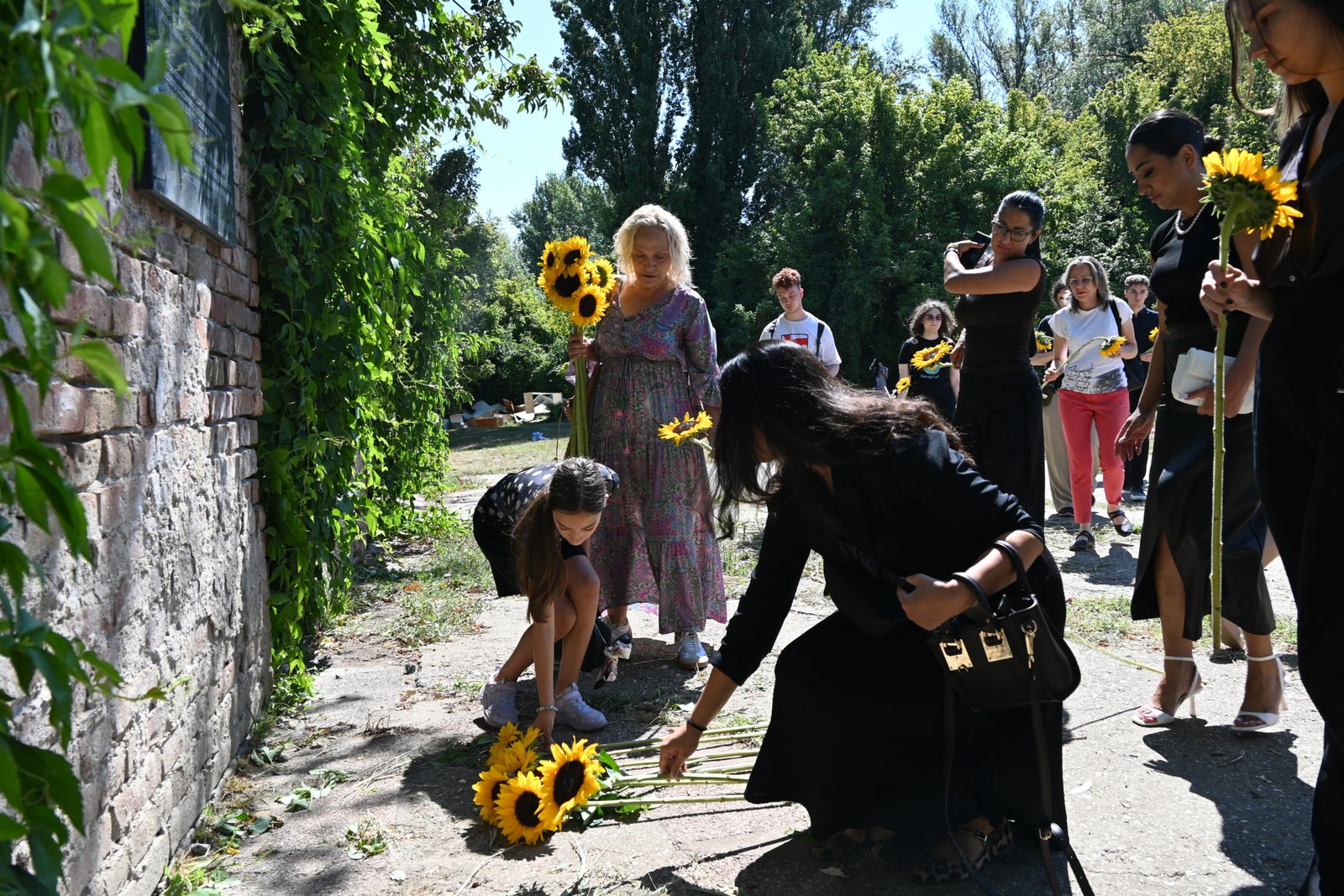
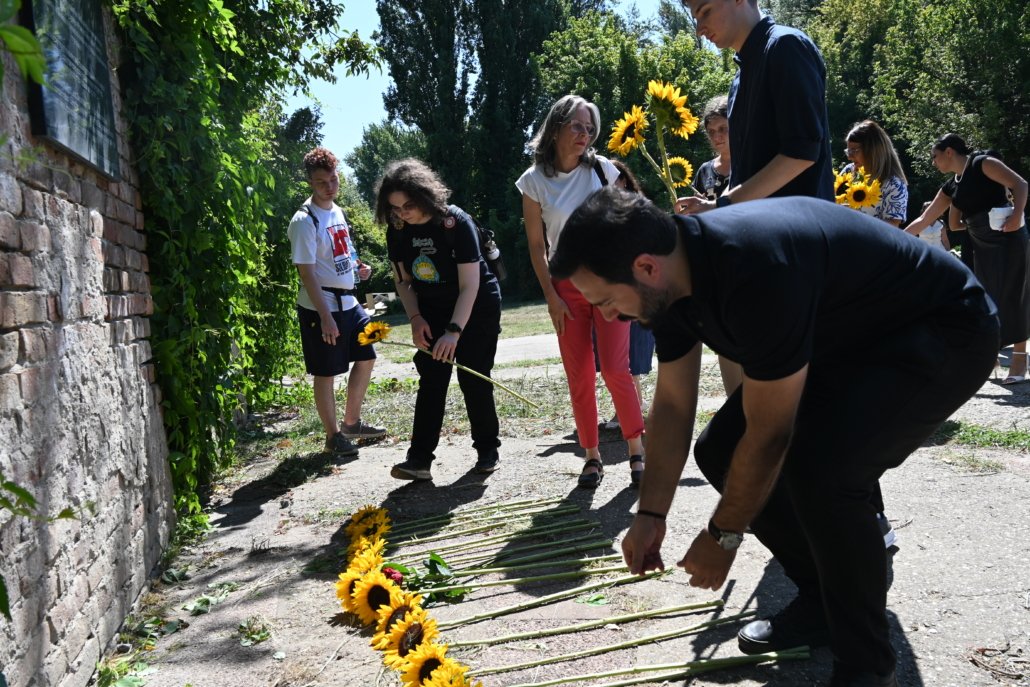
This October will mark exactly 85 years since the raids on Roma settlements in Belgrade. Yet, 85 years later, Topovske Šupe—this authentic site of persecution and murder—remains neglected, forgotten and in a shameful state. Even today, we continue to allow all traces of the victims to be lost, just as Mrs Stojanović described.
The first time, the German and Serbian collaborationist forces were responsible. The second time, the post-war authorities were responsible. Today, state institutions bear primary responsibility for this oblivion—but so do all of us if we accept silence and inaction. There can be no justification for that.
Fine words and promises mean little as long as this site remains in its present condition and there is no properly organized, fully functioning museum and educational center dedicated specifically to Roma suffering, resistance, and the struggle for civil rights. Only then will we be able to look Mrs Stojanović in the eye.
One concrete step in the struggle against this oblivion is the completion of the Serbian translation of the recommendations issued by the International Holocaust Remembrance Alliance. The IHRA Recommendations for Teaching and Learning about the Persecution and Genocide of the Roma will now also be available in Serbian.
Unfortunately, this initiative has once again come from civil society. The translation was made possible with the support of the Commissioner for the Protection of Equality, while the ministries and relevant institutions have failed to demonstrate the responsibility and commitment required to fulfill the international obligations undertaken by the Republic of Serbia.
In the coming period, Terraforming, in cooperation with ERIAC Serbia and other Serbian and international partners, will promote these recommendations and support their implementation. The IHRA Recommendations for Teaching and Learning about the Persecution and Genocide of the Roma are intended for decision-makers, education professionals and memorial institutions.
I invite all of you to become involved in implementing these recommendations so that the memory of the genocide of the Roma can take its rightful place in education and the culture of remembrance—in accordance with the highest international standards and in a genuinely inclusive manner that places the voices and perspectives of contemporary Roma communities first. Only in this way can we prevent the distortion and abuse of this history in the service of nationalism and political propaganda.
It is our duty to do everything in our power to ensure that the words “all trace of them was lost” can never again describe the fate of Roma victims.
Thank you.




 Terraforming