web analytics

Inclusive Culture of Remembrance: Voices of the Jewish Community in Holocaust Education and Commemoration

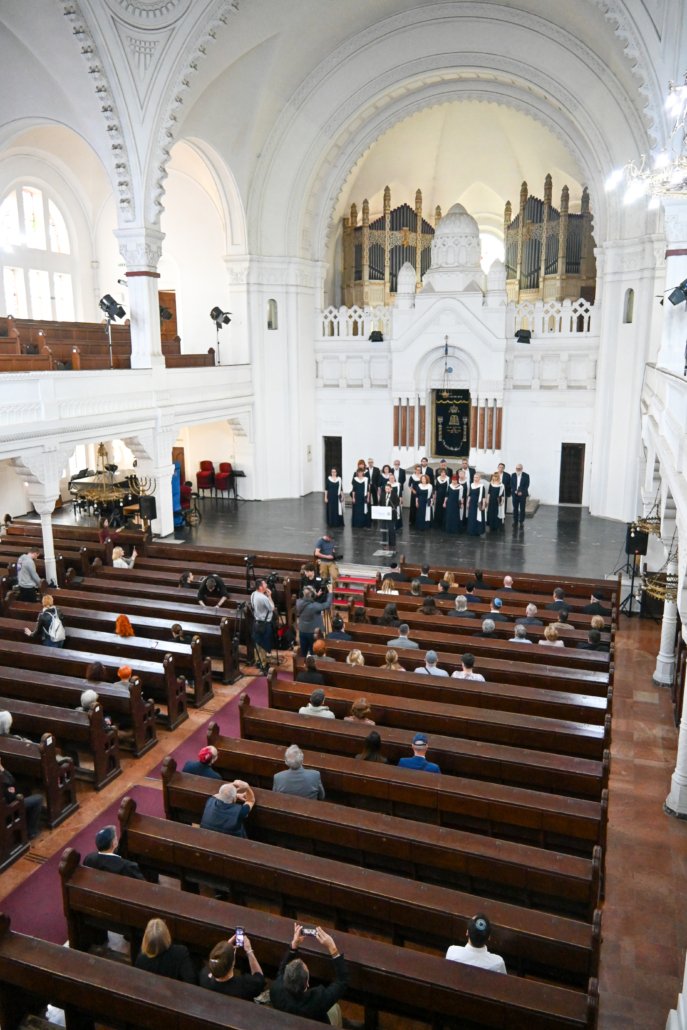
April 24, 2025: International panel discussion at the Museum of Vojvodina and marking Yom Hashoah

April 25, 2025: New exhibition in front of the Novi Sad Synagogue: Holocaust in Novi Sad

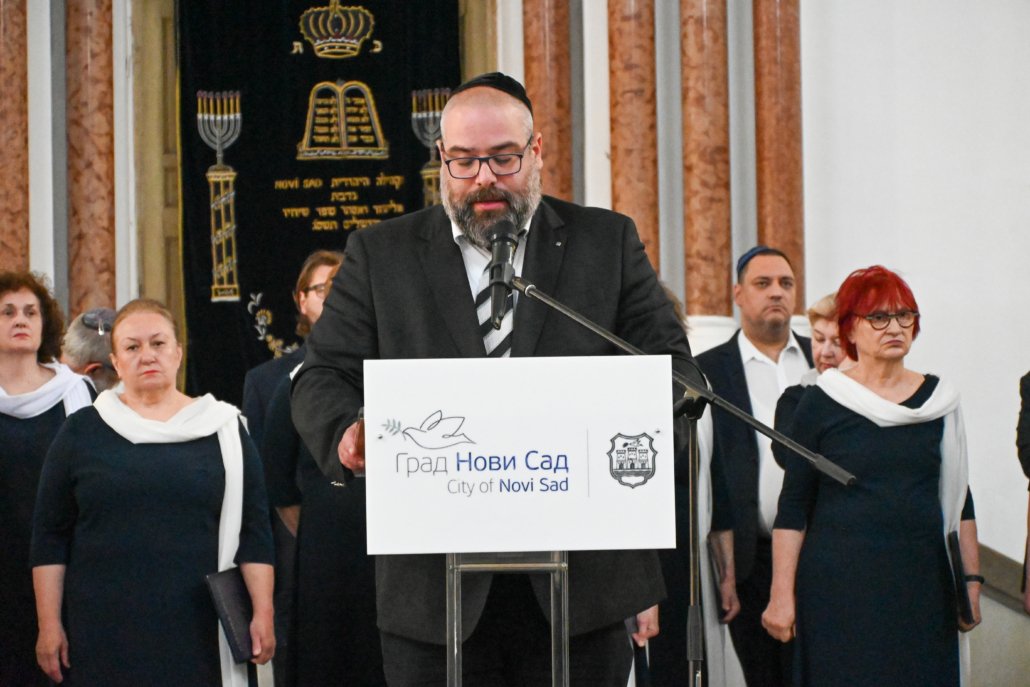
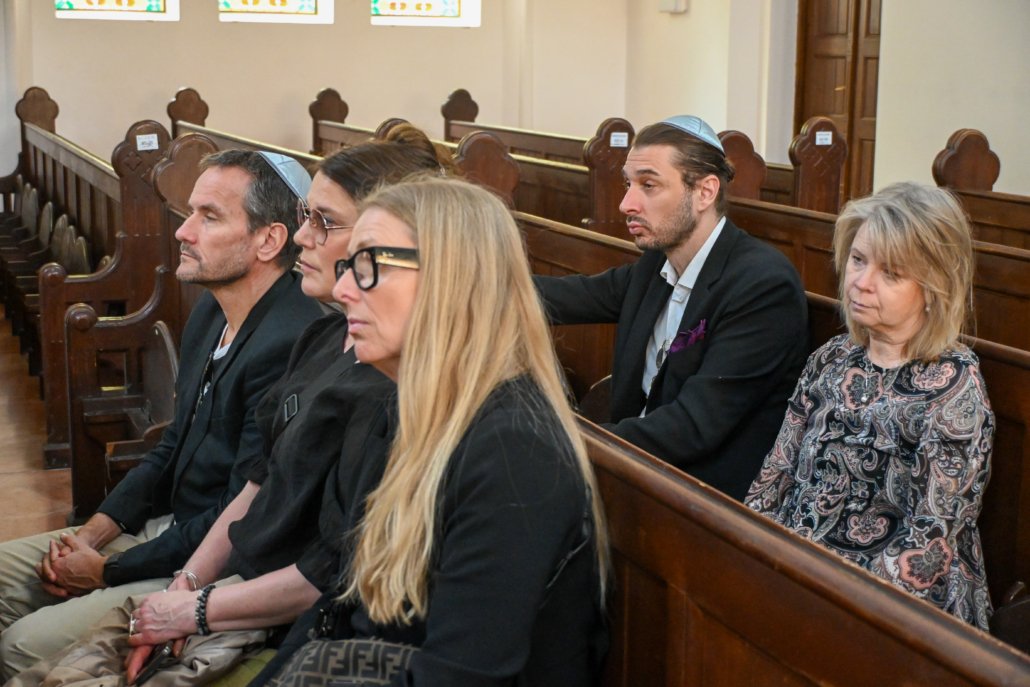
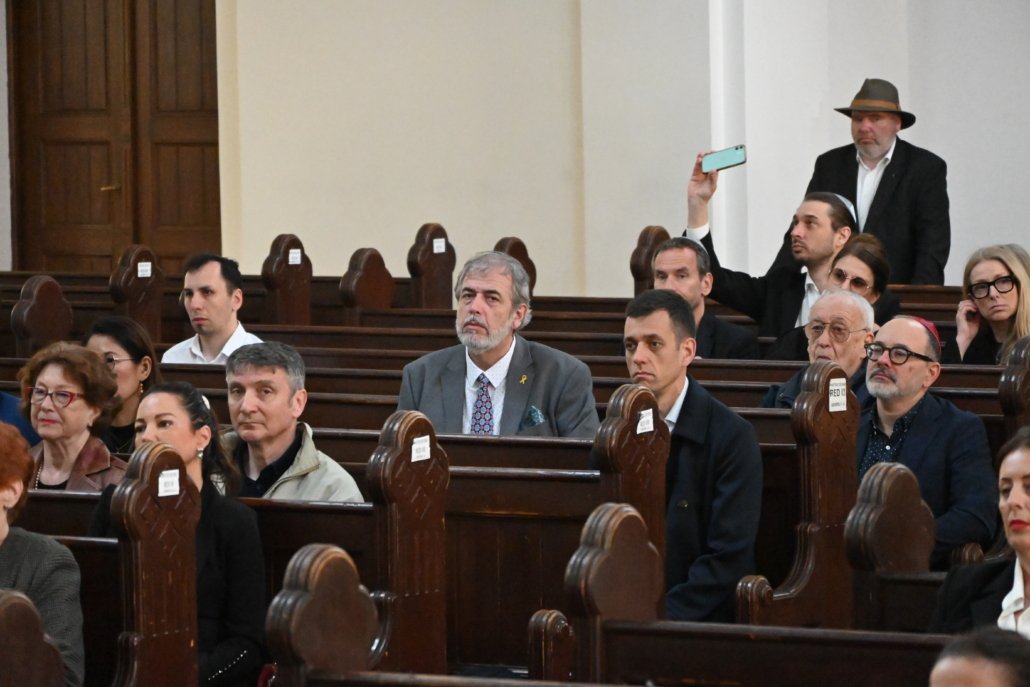
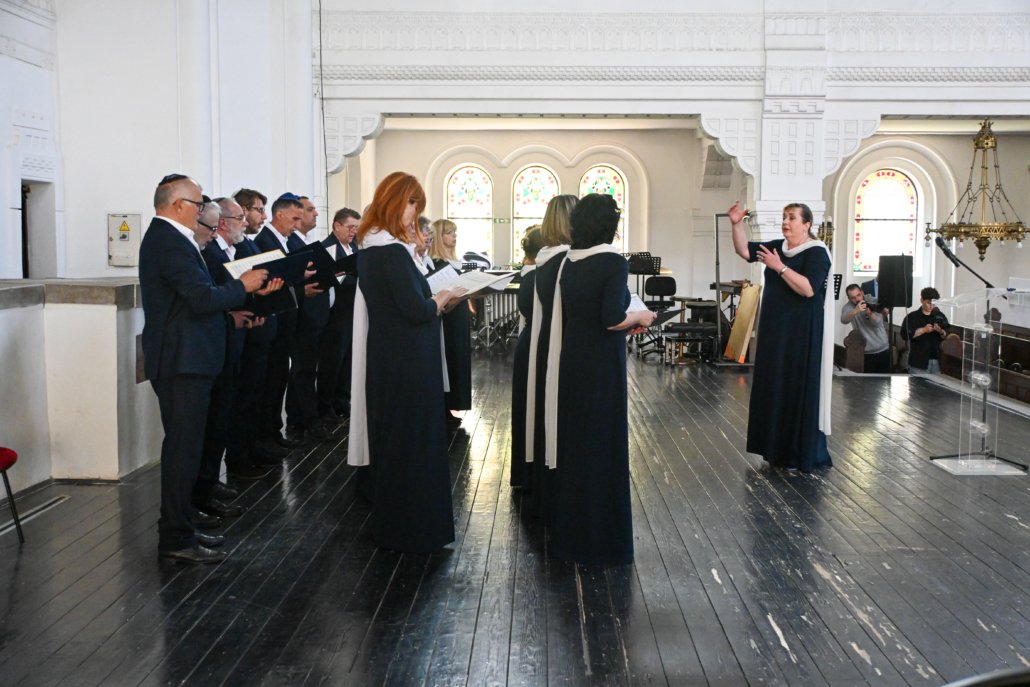
Commemoration at the Synagogue
Exhibition at the Synagogue

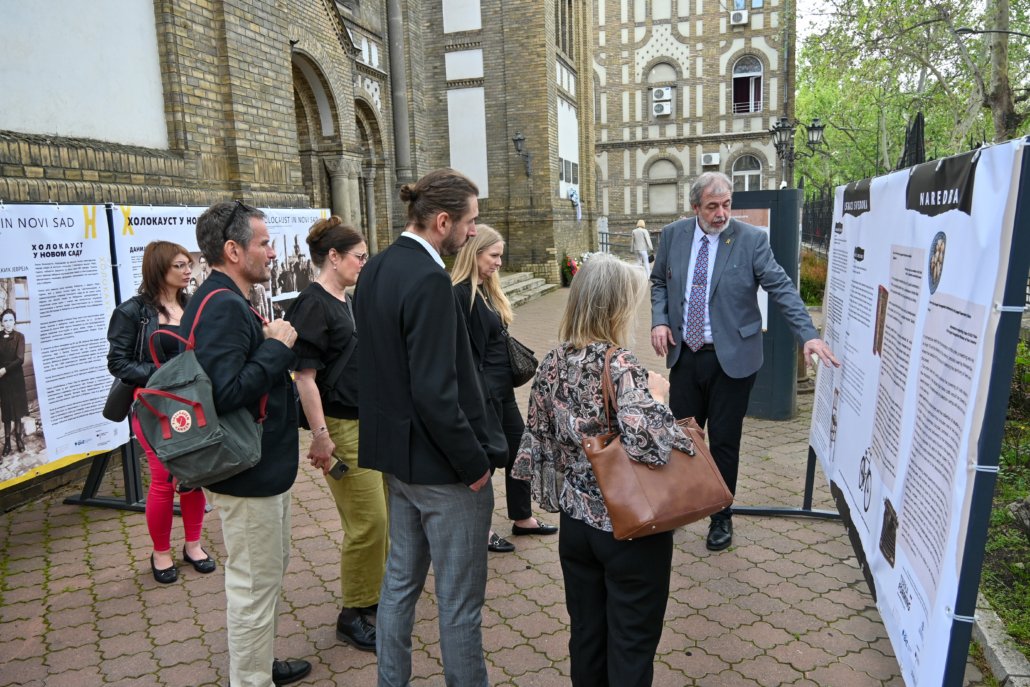
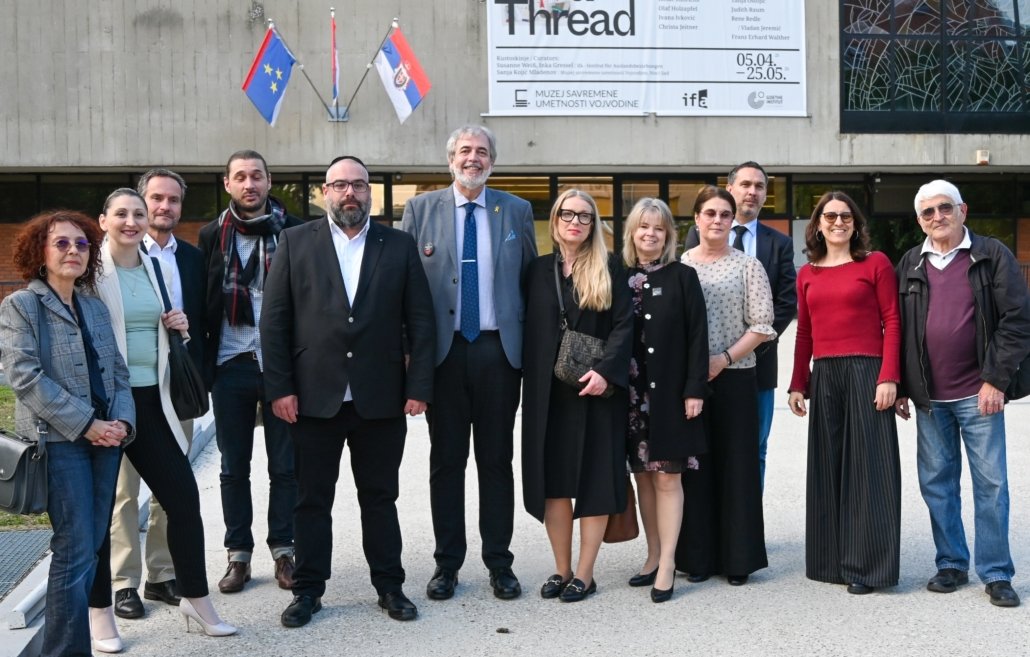
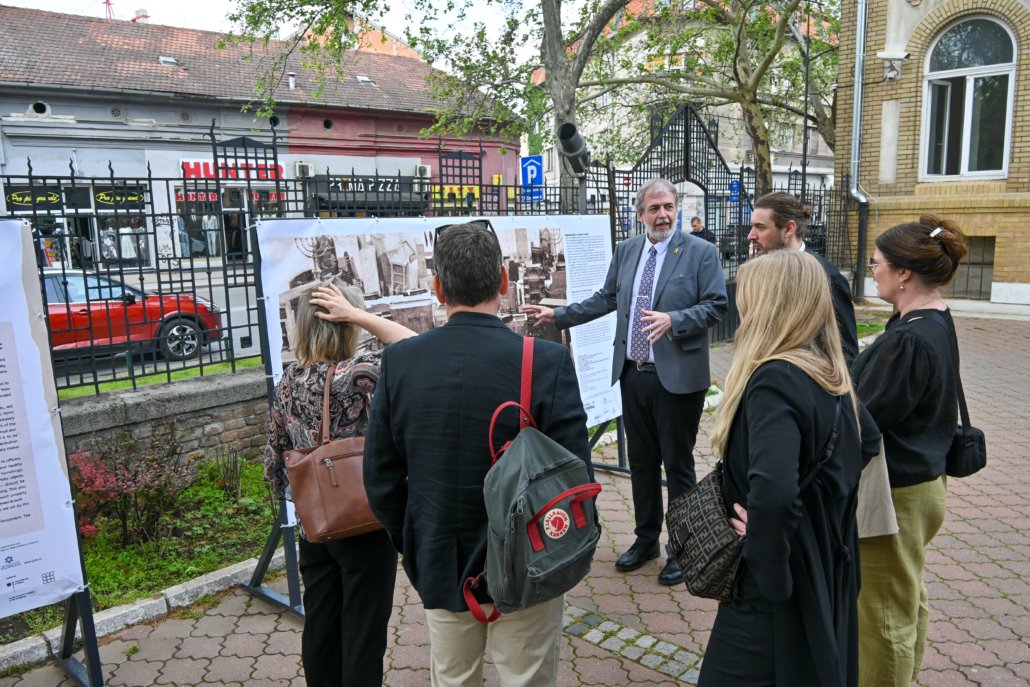
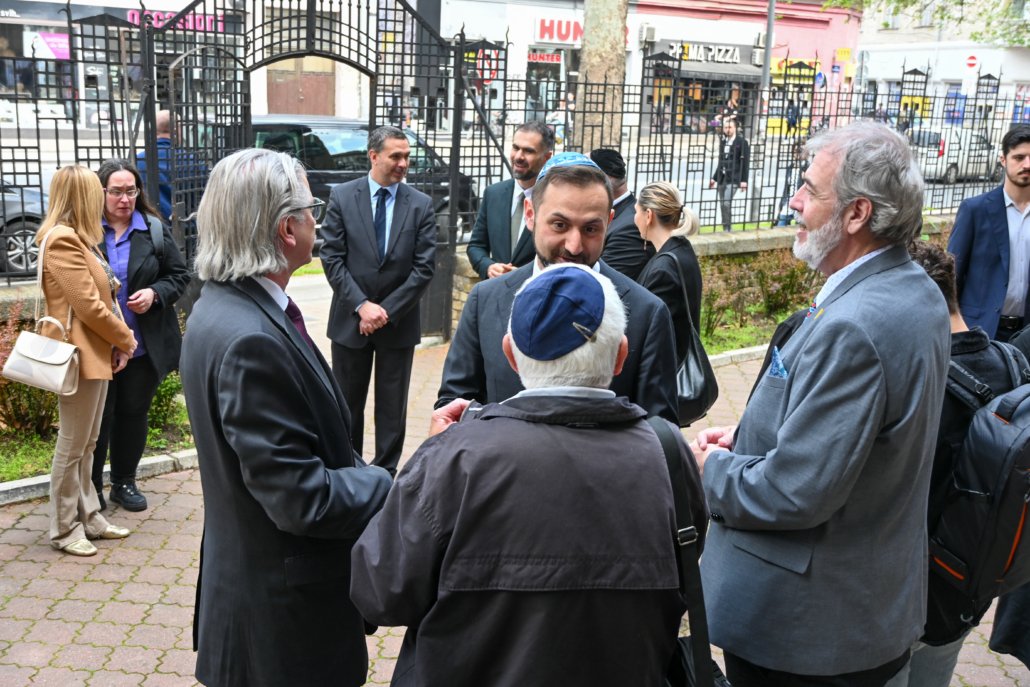
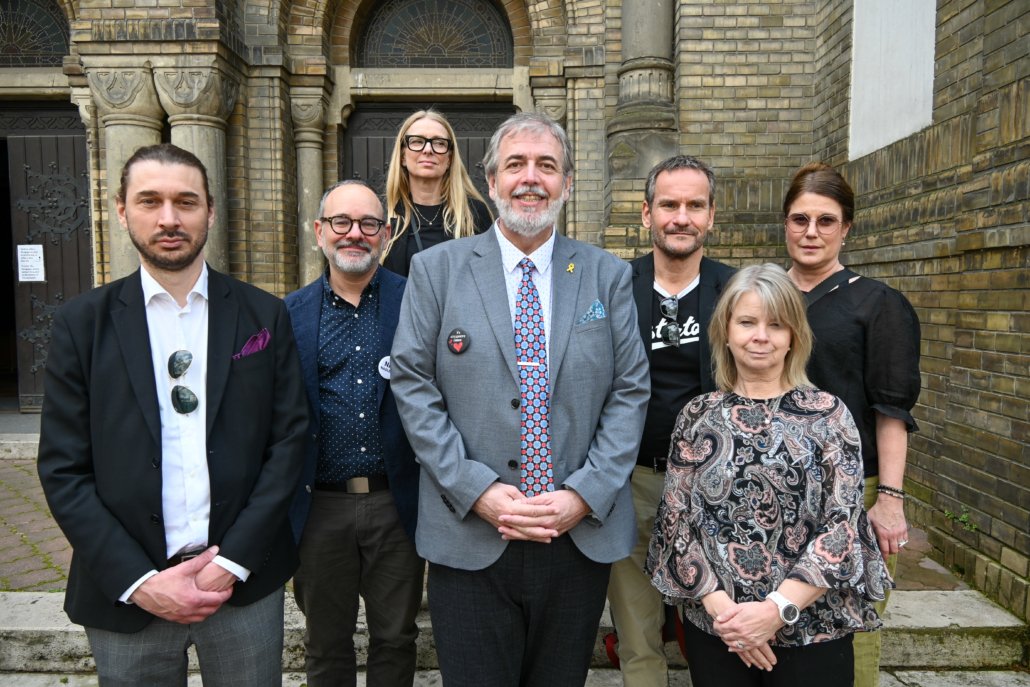
Colleagues from Sweden and the USA, with Misko Stanisic in front of the Novi Sad Synagogue, after the official commemoration of the Memorial Day of the deportation of Jews in 1944, where the Terraforming exhibition about the Holocaust in Novi Sad is displayed. 

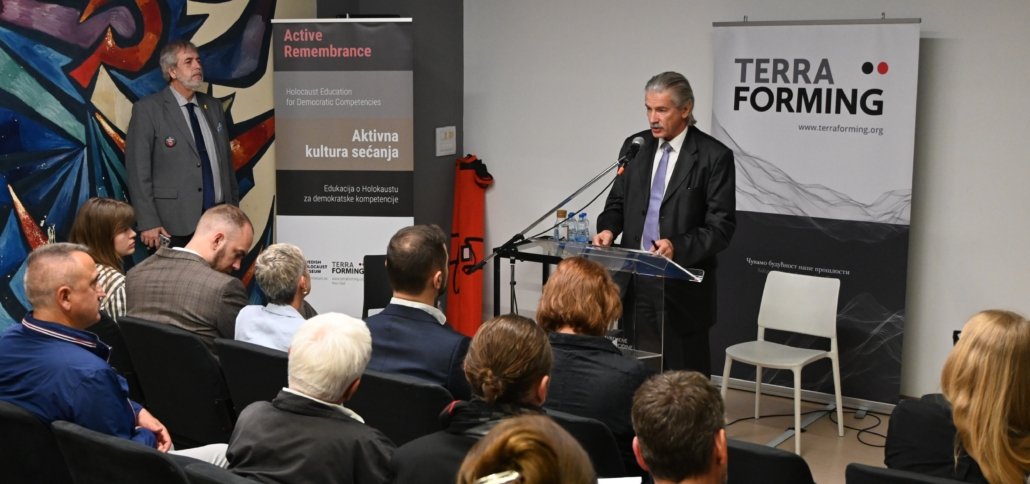
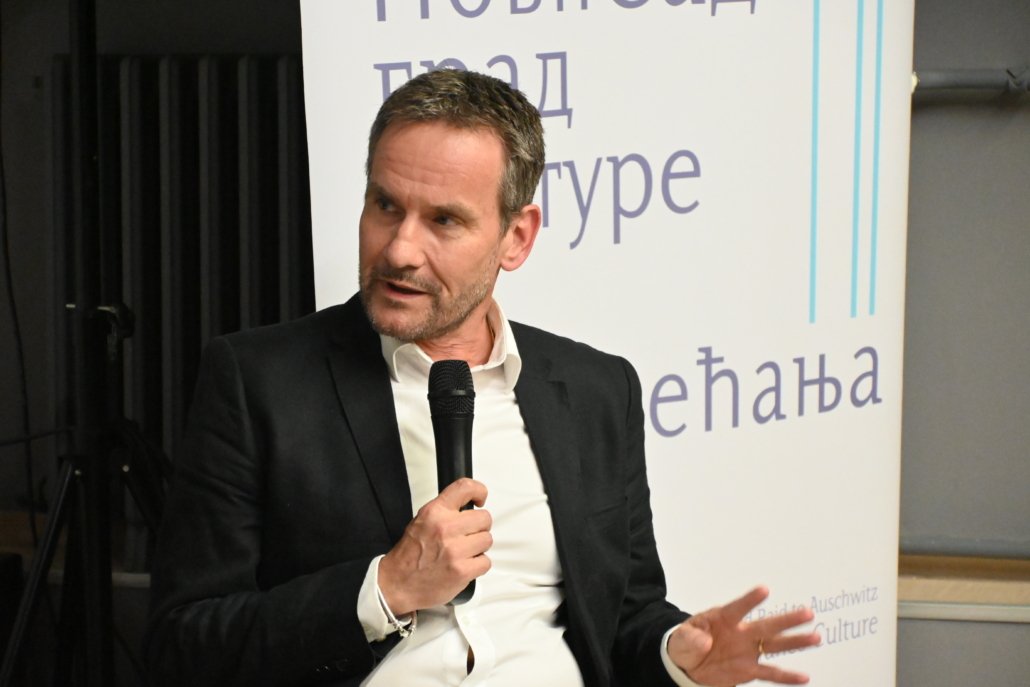
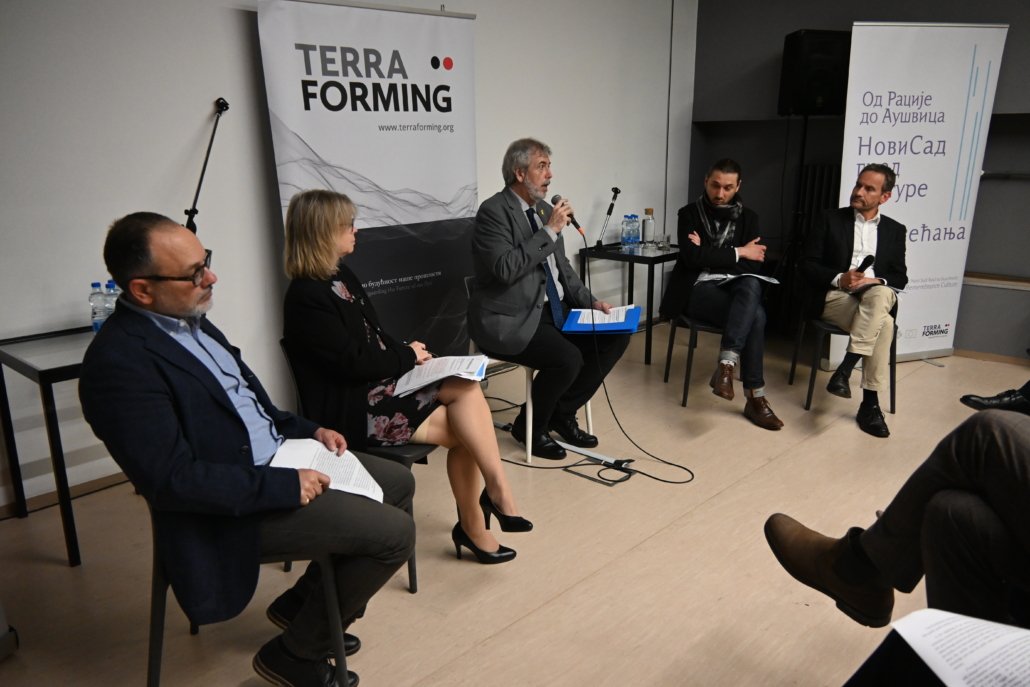
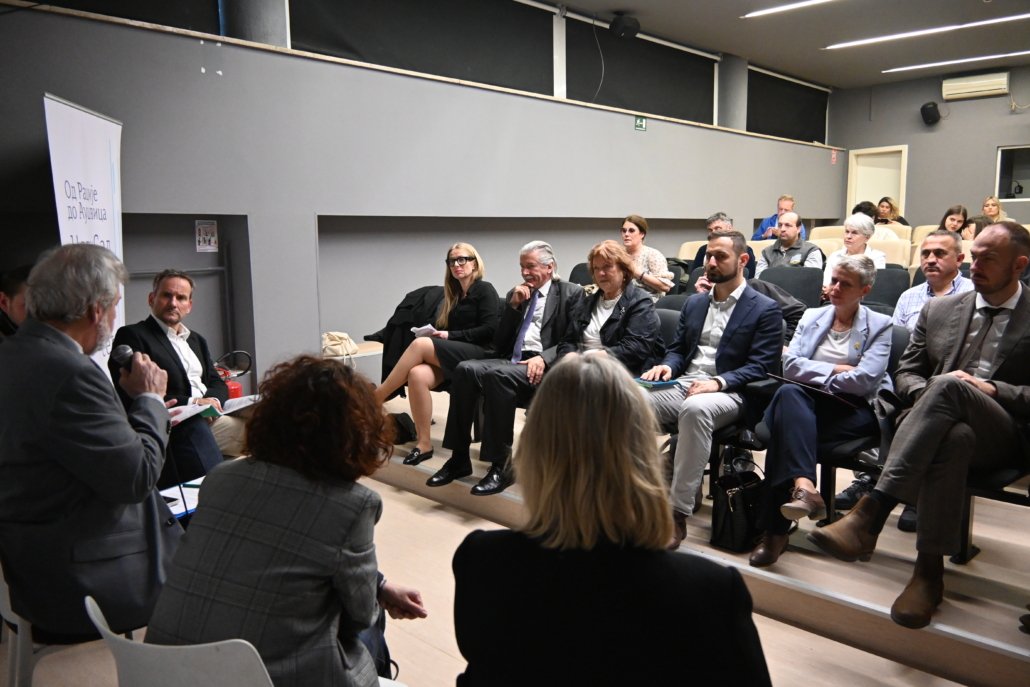
On the occasion of commemorating the deportation of Novi Sad Jews to death camps in April 1944, on Thursday, April 24, 2025, from 18:00 to 19:30 CET, in cooperation with the Jewish Community of Novi Sad and the Museum of Vojvodina, Terraforming hosted a panel discussion at the Museum of Vojvodina with international guests from Sweden and the USA.

Welcoming speeches

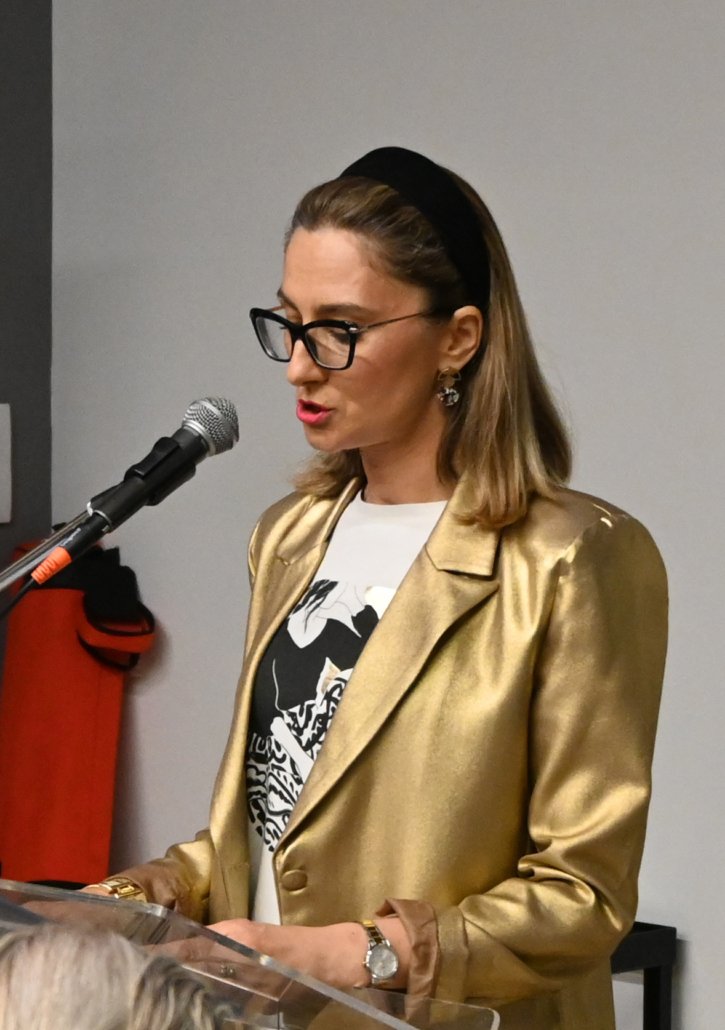
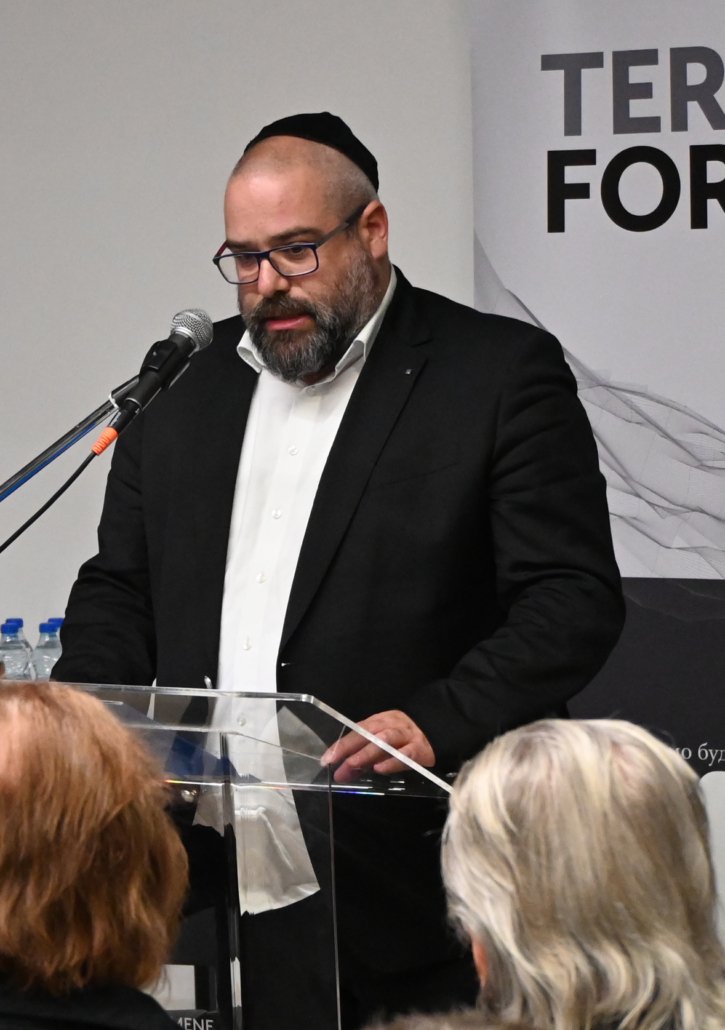
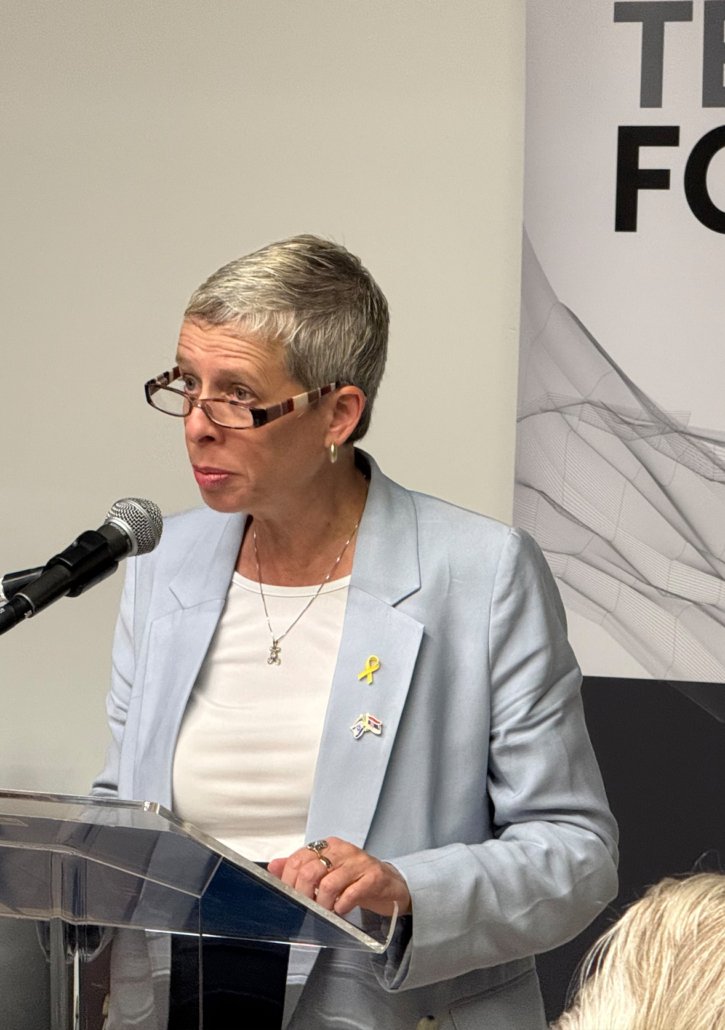
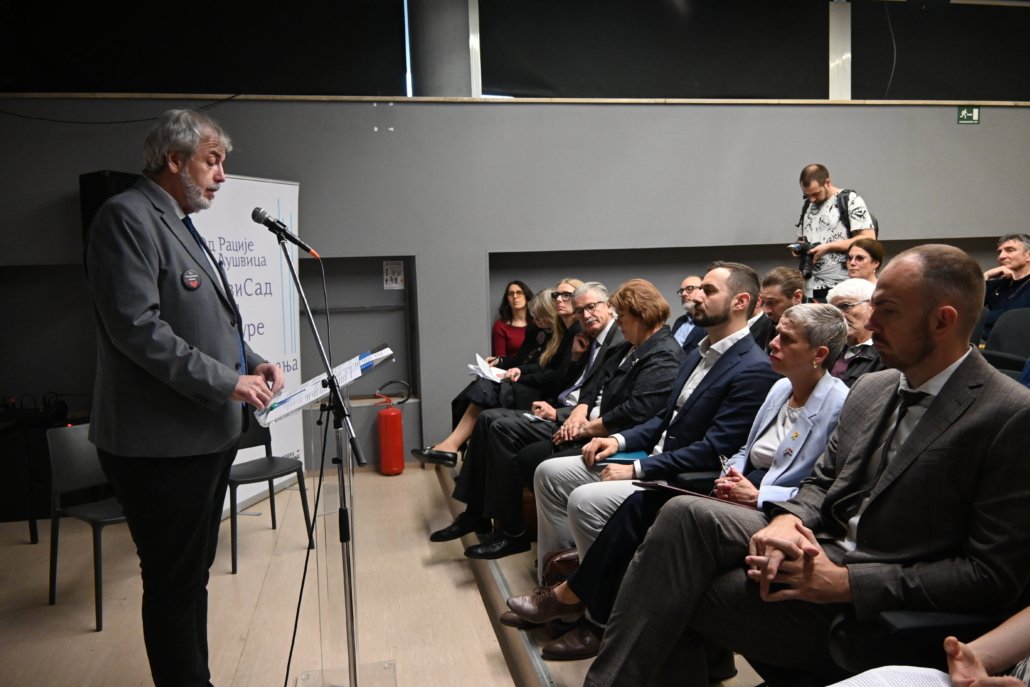
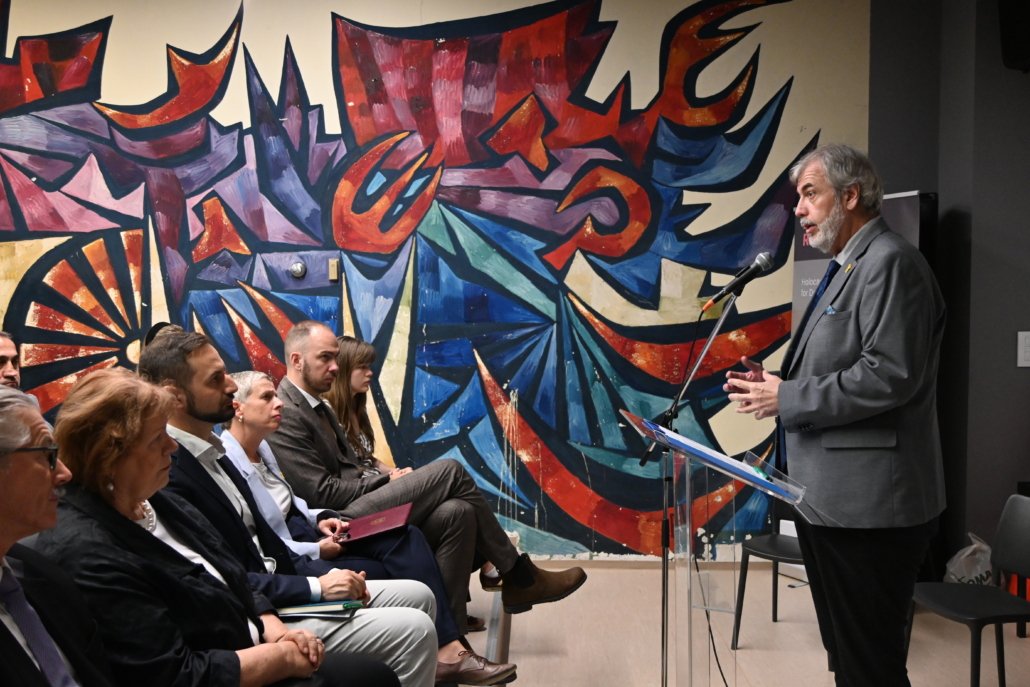
At the beginning of the program at the Museum of Vojvodina, the audience was addressed by Čarna Milinković, Director of the Museum of VojvodinaLadislav Trajer, President of the Jewish Community of Novi Sad; H.E. Avivit Bar-Ilan, Ambassador of the State of Israel; Carsten Meyer Weifhausen, Minister-Counsellor Chargé d’Affaires at the German Embassy, and Miško Stanišić, Director of Terraforming.

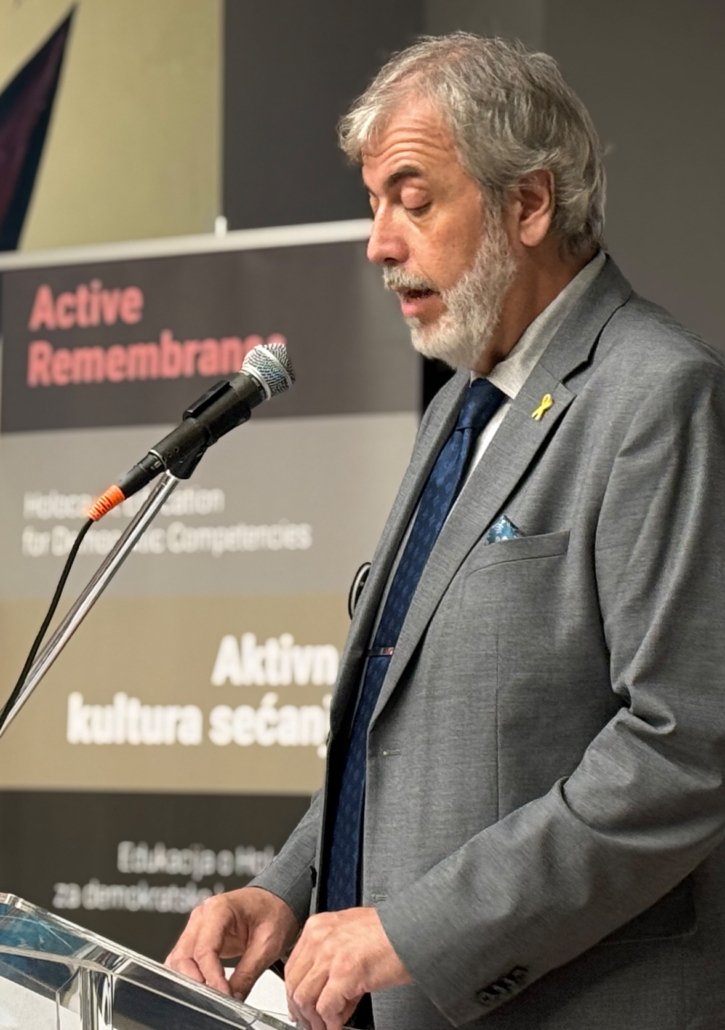
Opening speech by Misko Stanisic

Today, our memory culture, as well as European memory culture, faces two enormous challenges. One is the unprecedented rise in antisemitism, and the other is the misuse of history for nationalist and populist propaganda.

In recent days, we have seen the focus of this propaganda shift towards distorting and manipulating facts to intensify feelings of frustration and injustice, as a means of fueling fear and hatred. We emphasize that the Republic of Serbia has adopted and endorsed the definitions and recommendations of the International Holocaust Remembrance Alliance (IHRA), thereby accepting international standards in Holocaust memorialization and education.

Today, unfortunately, we are witnessing a rise in antisemitism both in Europe and here at home. That is why it is important to develop knowledge and awareness among the youth, in institutions, and in society about the existence of antisemitism and the dangers it represents.

Dear Director of the Museum of Vojvodina, esteemed ambassadors, guests from Sweden and the United States, members of the Jewish community, dear citizens and friends, welcome and thank you for being here today.

Today, we have gathered to mark a very important, tragic, and sorrowful day when we remember the deportation of Jews from Novi Sad to death camps. But today, we also commemorate the day that Jews all over the world call Yom HaShoah, the day when we remember the resistance and perseverance of Jews during the Holocaust, exemplified by the Jewish uprising in the Warsaw Ghetto.

During the Holocaust, the population of several thousand Jews from Novi Sad was nearly completely destroyed. In the Novi Sad Raid of 1942, Hungarian fascists killed over 900 Jews. Throughout the entire period of the Hungarian occupation of Bačka, Jews were disenfranchised, mistreated, robbed, expelled, forced into forced labor, and killed.

After German troops occupied Hungary in March 1944, one of the most horrific and monstrous operations of the Holocaust began in April 1944, when, in just eight weeks, around 424,000 Jews from Hungary were deported to Nazi death camps. As part of this logistically complicated and demanding operation, over 565,000 Jews from Hungary and territories under Hungarian occupation were transported and murdered.

Mass arrests of Jews in Novi Sad, as well as across the entire Bačka region, were initiated by German and Hungarian forces in the early hours of April 26, 1944. All members of the Jewish community, including children, women, the elderly, and the sick, were arrested. Virtually the entire Jewish population of Novi Sad was taken to the Novi Sad Synagogue.

In the Synagogue, they were confined from April 26 to April 28, without water, food, or toilets. From there, they were transported to collection camps in Subotica, Baja, and Bačka Topola, where they were sorted and deported by train to Nazi death camps, mostly to Auschwitz. Most were killed in gas chambers immediately upon arrival at the camp. Of the approximately 1,900 Novi Sad Jews deported in April 1944, only about two hundred survived.

After liberation, only a few hundred Jews returned to Novi Sad. Some survived the war as partisans, in exile or hiding, or despite everything, survived the horrors of camps across Europe. A large number of survivors emigrated a few years later, primarily to Israel but also to other countries.

It was extremely difficult to rebuild the life of the Jewish community in Novi Sad. Those who survived and decided to stay in Novi Sad, who found the strength to create new lives, establish families, and rebuild the community, formed the backbone from which the new, young stem of Novi Sad’s Jewish community grew, which we have today.

We thank them for that. We thank them for preserving the traces of Jewish life that have remained a part of our city’s identity, and thus a part of our shared identity as citizens of Novi Sad.

It was not only a tragedy for the Jewish community. It was a loss for all of Novi Sad – for its culture, spirit, and identity.

Therefore, remembering this day is more than just a commemoration. It is an act of civic responsibility.

Today, our memory culture, as well as European memory culture, faces two enormous challenges. One is the unprecedented rise in antisemitism, and the other is the misuse of history for nationalist and populist propaganda.

In recent days, we have seen the focus of this propaganda shift towards distorting and manipulating facts to intensify feelings of frustration and injustice towards the victims, as a means of fueling fear and hatred. In contrast to this trend, we emphasize that the Republic of Serbia has adopted and endorsed the definitions and recommendations of the International Holocaust Remembrance Alliance (IHRA), thereby accepting international standards in Holocaust memorialization and education.

Today, unfortunately, we are witnessing a rise in antisemitism both in Europe and here at home. That is why it is important to develop knowledge and awareness among the youth, in institutions, and in society about the existence of antisemitism and the dangers it represents.

Terraforming is an independent, non-governmental, non-profit organization that does not engage in politics but in nurturing and promoting the culture of memory. One of the core values and messages we spread through our work is that we must not allow ourselves to be passive observers when injustice and violence occur. This is not about politics, but about fulfilling our human, moral, civilizational, and civic duties. We want to clearly emphasize that precisely because we are committed to spreading knowledge about the historical lessons of the Holocaust, Terraforming supports and will always support the demands for establishing the rule of law, democratic governance, free and incorruptible institutions, pluralistic societies, respect for human dignity, civil and human rights, media freedoms, and a society capable of opposing corruption and the misuse of the culture of memory to promote hatred, fear, and nationalist propaganda.

That is why we thank all of you for being here. By your presence, you confirm that memory matters and contribute to a society that will not turn its head when someone’s rights, freedom, or dignity are being taken away.

A special thanks to our partners from Sweden and the United States, as well as to the Jewish community of Novi Sad. I am looking forward to discussing the central theme – an inclusive culture of memory – with the panelists.
Thank you.

Panel Discussion

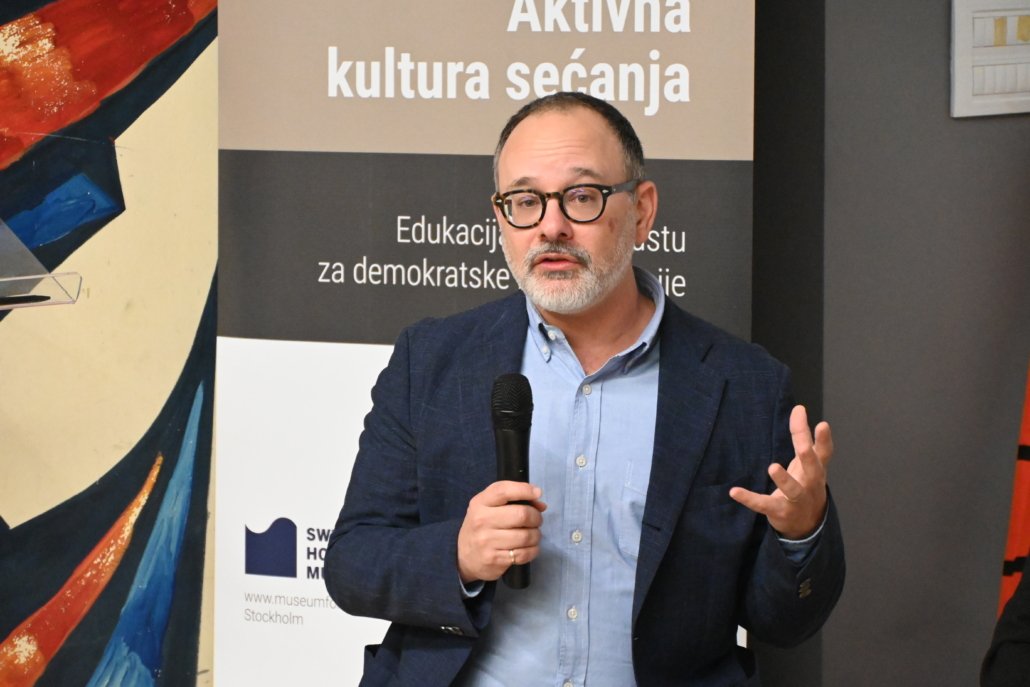
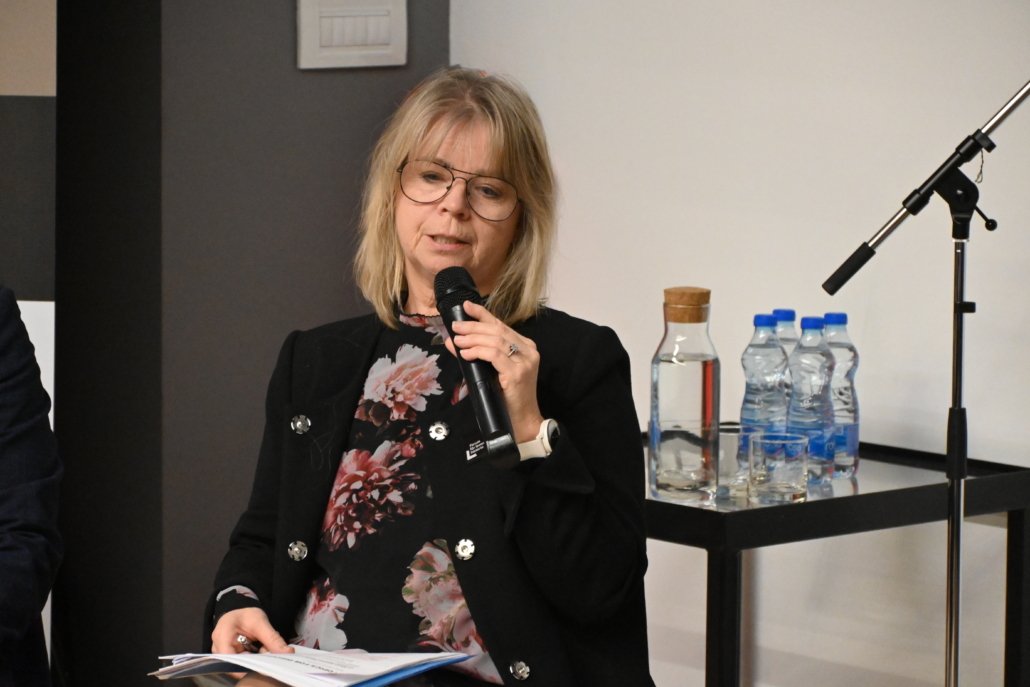
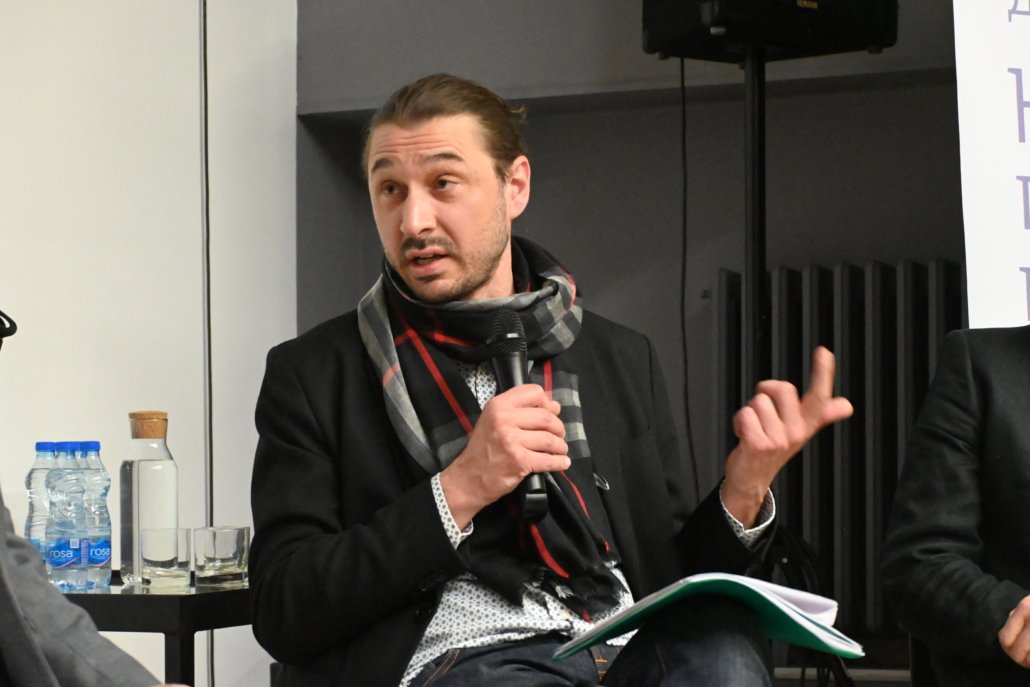
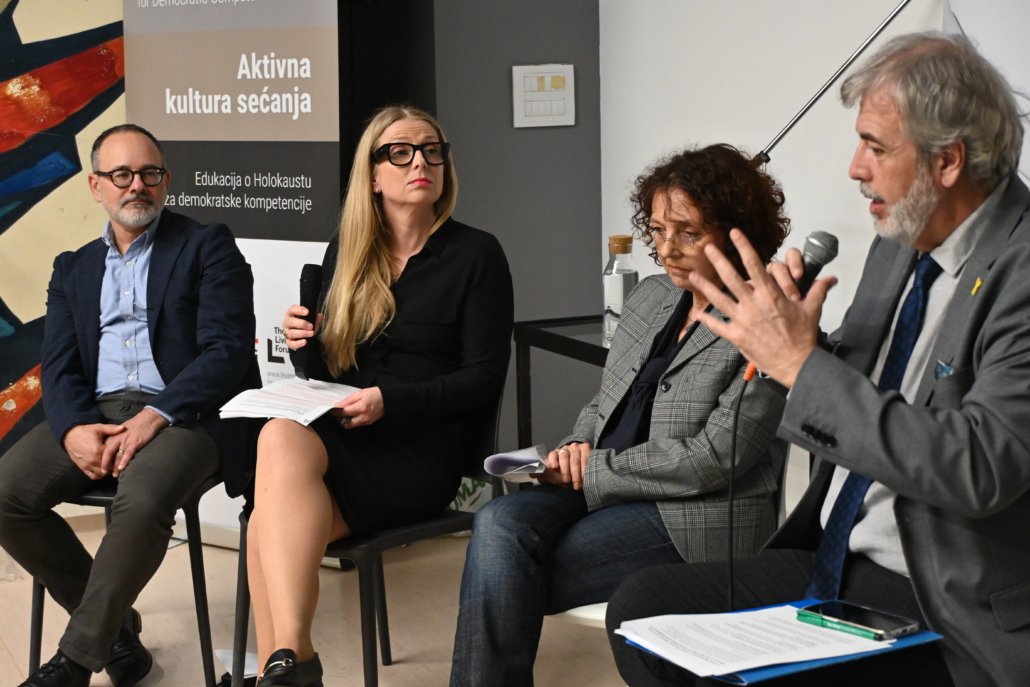
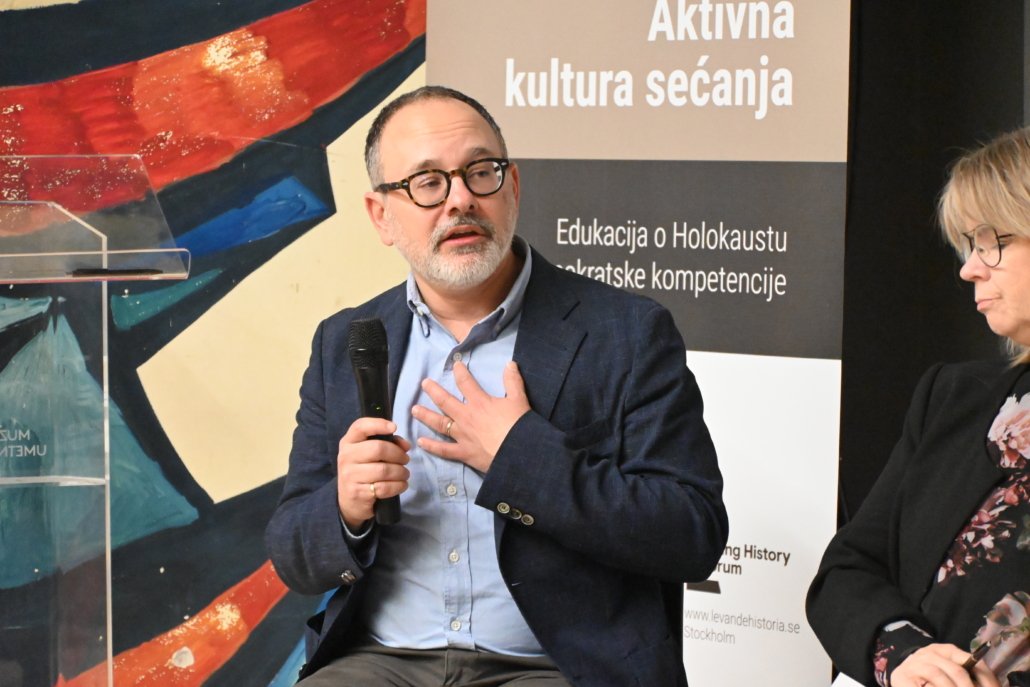
The following speakers took part in the panel at the Museum of Vojvodina: Majlis Nilsson and Konstantinos Gountas from the Swedish Living History Forum; Dan Hultquist, Director of Educational Programs at the Swedish Holocaust Museum; Stephen Naron, Director of the Fortunoff Archives of Holocaust Testimonies at Yale University, USA; Gordana Todorić, Jewish Community of Novi Sad; Miško Stanišić, Director of Terraforming and member of the delegation of the Republic of Serbia to the International Holocaust Remembrance Alliance IHRA, as host and moderator of the panel discussion;

Some of the topics we discussed

Who “owns” the culture of remembrance? How to provide space for the perspectives and voices of the contemporary Jewish and Roma communities in Serbian and European Holocaust remembrance? How to move from symbolic and formal Inclusion to essentially meaningful participation of Jewish and Roma communities in shaping the culture of remembrance?

How does the concept of “victim competition” distort the purpose of memory, and how can we challenge narratives that put the suffering of one community against another?

What does already exist – and what has yet to be built to give minority communities space, voice, and influence in memorial practice, education, and public history?

What does it mean to connect the past with the present, and historical experiences of the Holocaust with the experiences of antisemitism and antigypsyism today?

What are the models or examples of the transformation of memory into civic education, activism, and democratic engagement?

How can Holocaust education foster critical thinking, media literacy, and democratic competence among young people, especially concerning the abuse of history to promote nationalism and anti-EU propaganda?

This event is part of a wider Terraforming program to improve education and memorialization of the Jewish community in Novi Sad and Bačka that was persecuted during the Holocaust. Last year, on the 80th anniversary of the deportation, we organized an international program with guests from Great Britain, Germany, and Croatia. This time, we host experts from Sweden and the United States.
The project “Educational Graphic Novel about the Novi Sad Raid and the Deportation of the Jews of Backa – Capacity Building and Training of Trainers” is supported by the Claims Conference. As part of the project, we are producing a set of teaching materials that will comprise several elements: a graphic novel, various publications, including those on the Holocaust in Serbia and the persecution of Jews in Novi Sad, a collection of testimonies, and a teacher’s manual. The exhibition “Holocaust in Novi Sad” is part of this program.

Claims

Realized with Assistance from the Conference on Jewish Material Claims Against Germany,
Supported by the Foundation Remembrance, Responsibility and Future, and by the German Federal Ministry of Finance.

Muzej Vojvodine Logo

We thank the Museum of Vojvodina for support and hospitality.

IncluMem
Fortunoff Arhiv

The program is linked to the international project “Inclusive Remembrance – Holocaust Education and Minority Voices for Democratic Competencies” under the auspices of the Swedish Institute, which Terraforming leads in cooperation with the Swedish Holocaust Museum and the Swedish state agency the Living History Forum.

Also, the panel discussion is realized as part of the cooperation between Terraforming and the Fortunofff Archive of Holocaust Testimonies from Yale University in the USA as part of the program “Unlocking Survivor Testimony: A Program to Produce Critical Annotated Editions of Non-English Holocaust Testimonies,” through which we focus on Holocaust testimonies from Bačka and Novi Sad to present them to the international professional and wider community.

Commemoration in front of the synagogue on April 25

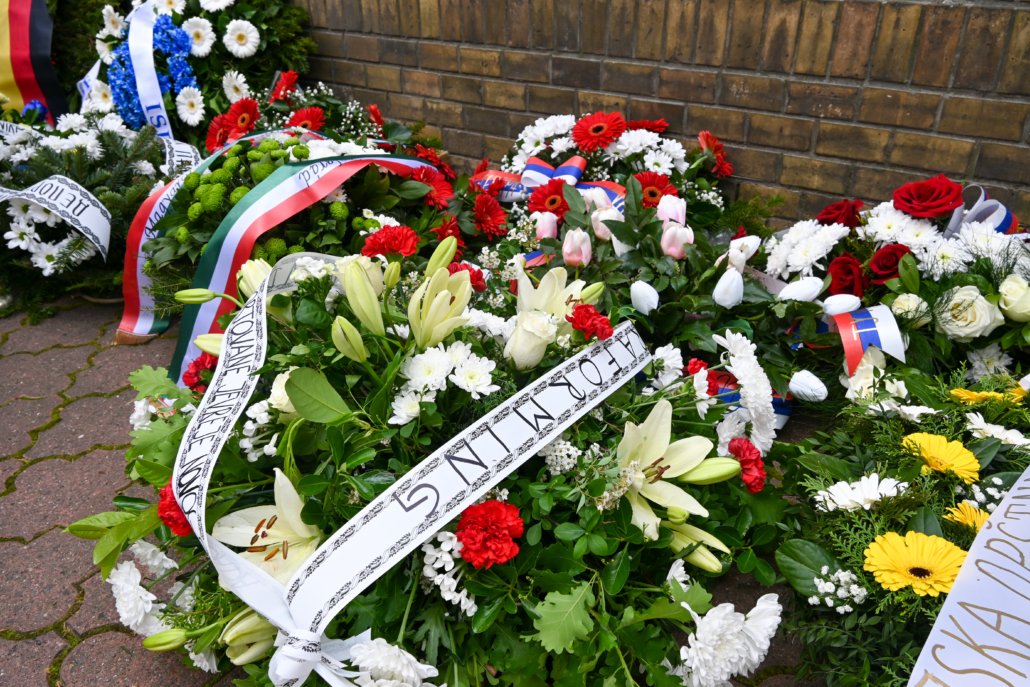
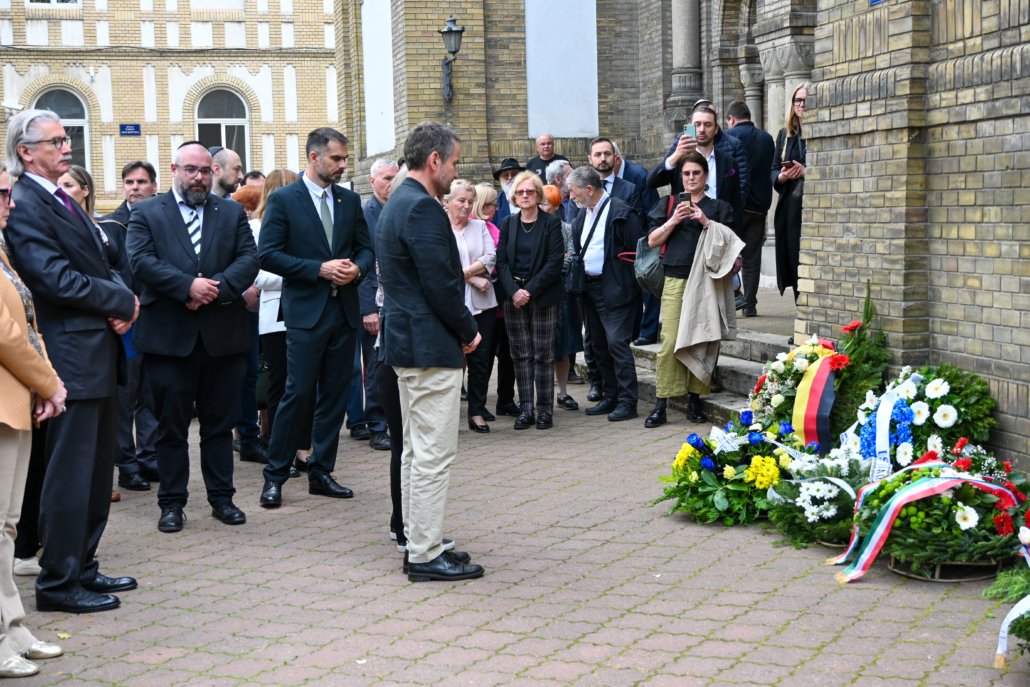
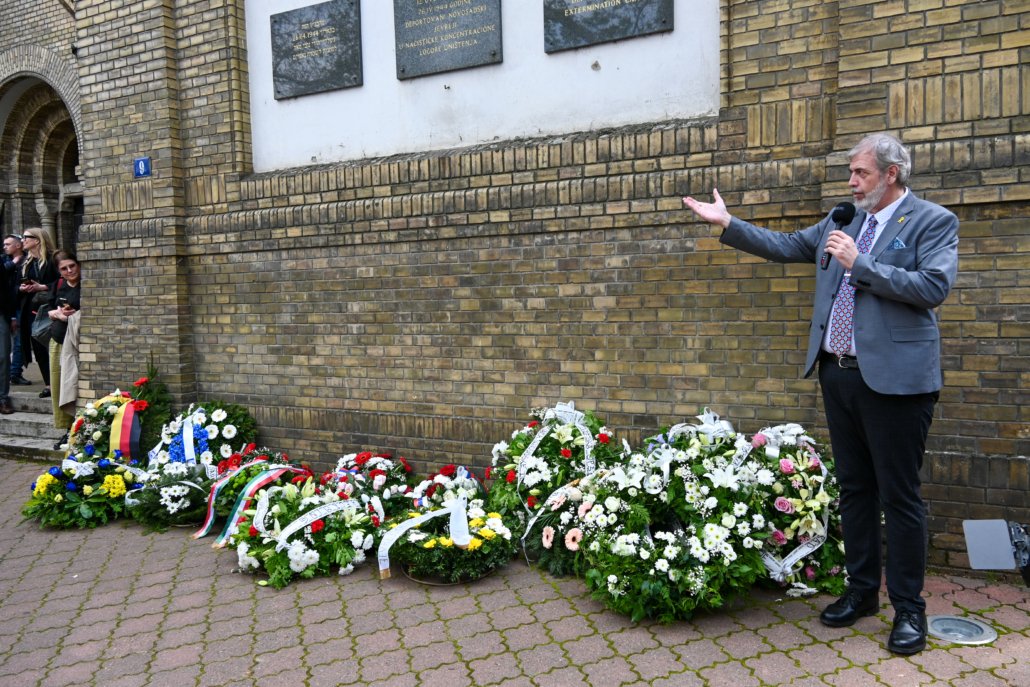
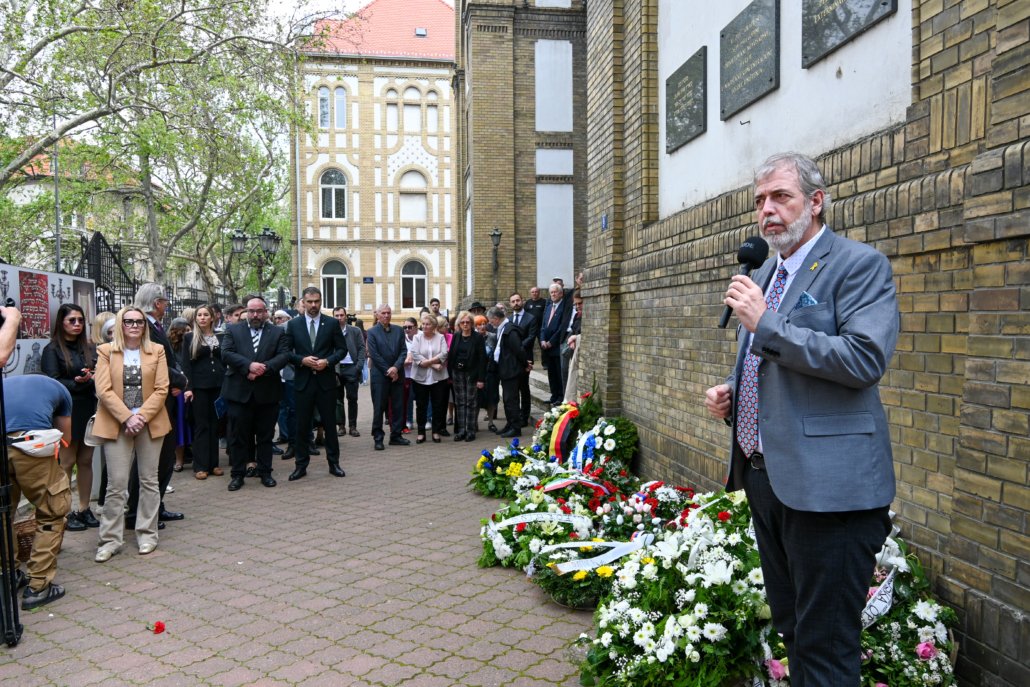
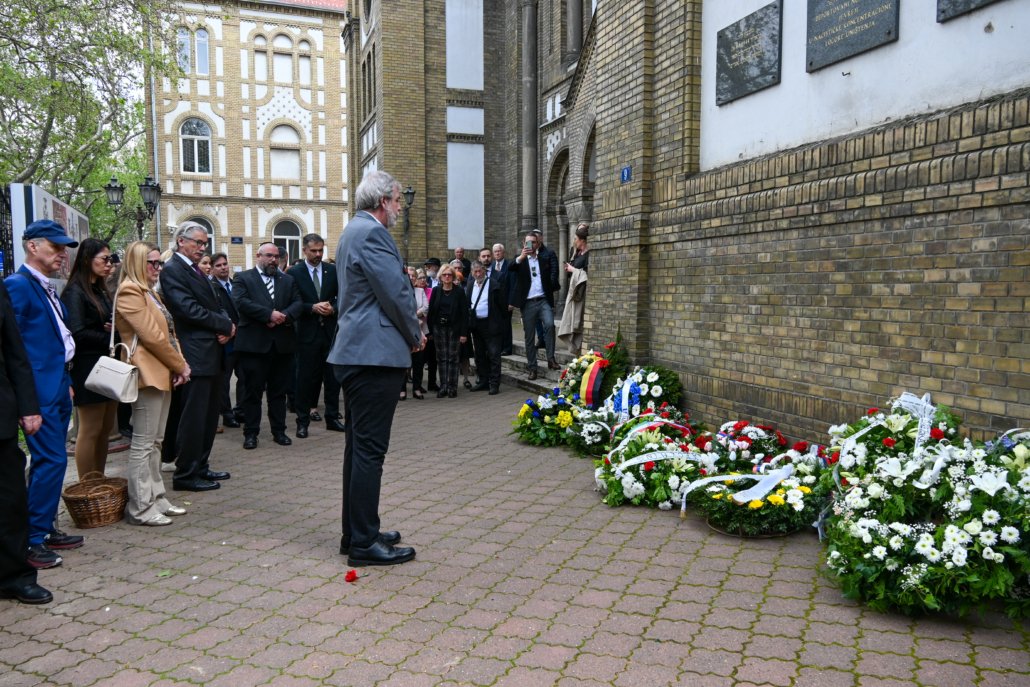
On April 25 at 12:00, in front of the Novi Sad Synagogue, the Jewish Community of Novi Sad hosted the official memorial service. Members of the Jewish community, representatives of the City Authorities, and others gathered to pay respect to the Jews deported by the Germans and Hungarians to the death camps in April 1944. Almost the entire Jewish community perished in the Holocaust. Only a couple of hundred survived.

The flowers were placed in front of the synagogue by members of the Jewish communities of Serbia, the families of survivors, local authorities, and others, among them the Swedish guests and Terraforming.

A new exhibition by Terraforming: Holocaust in Novi Sad

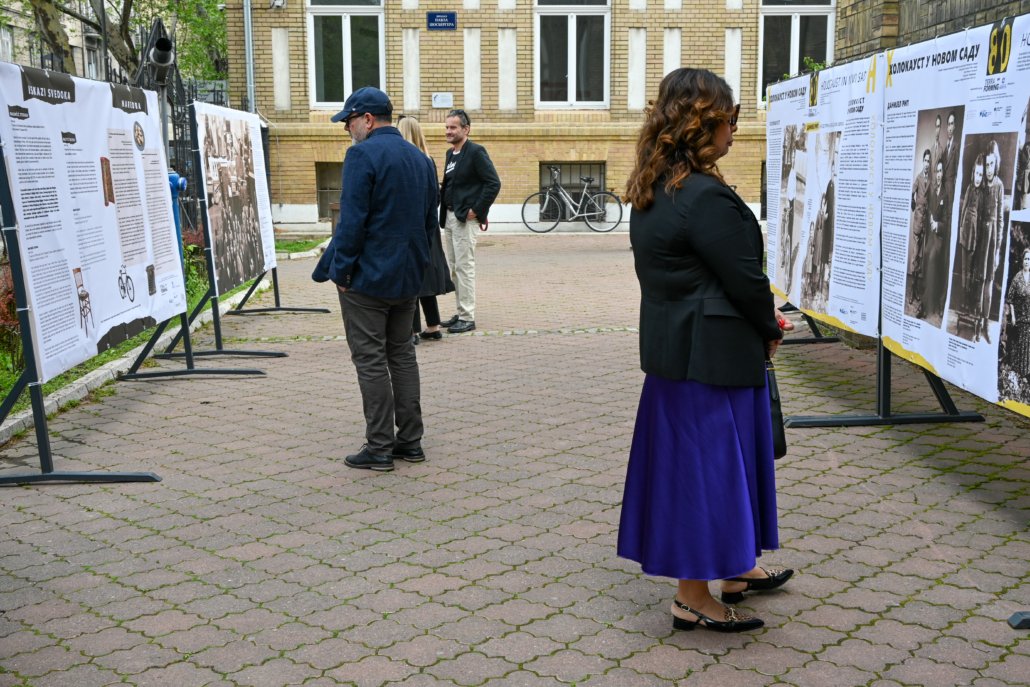
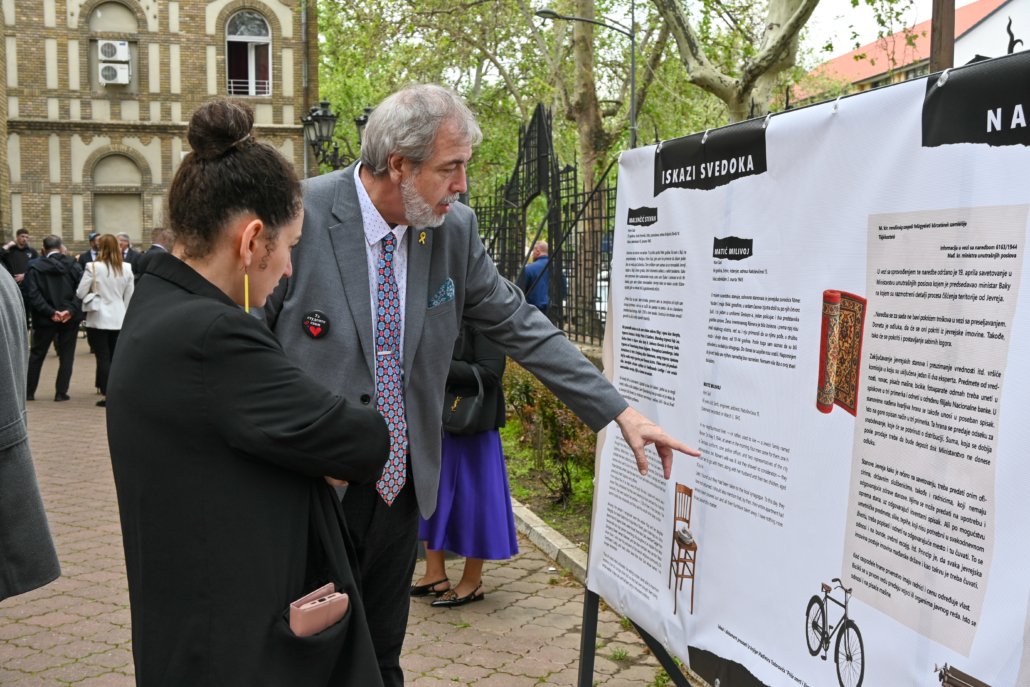
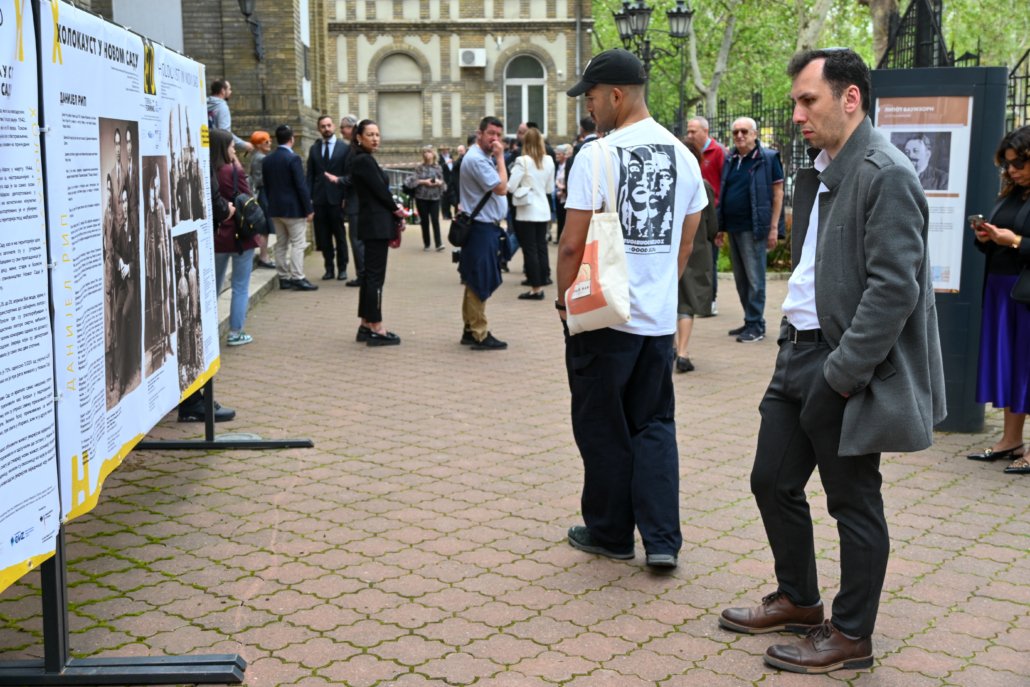
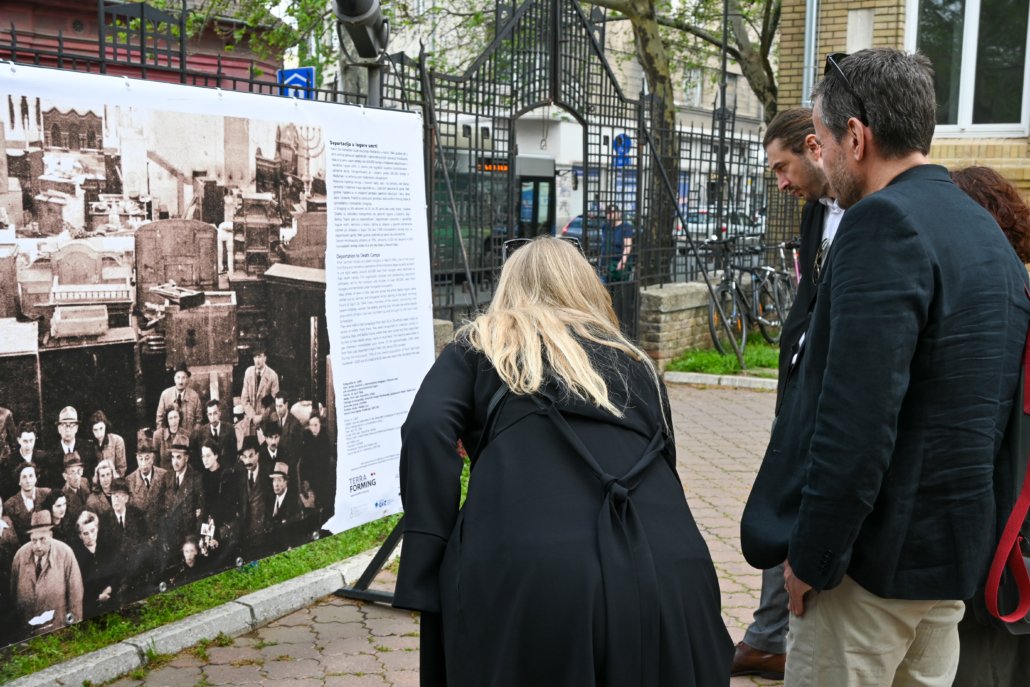
On that occasion, a new exhibition about the deportation of Novi Sad was presented in front of the Novi Sad Synagogue. The author of the exhibition is Miško Stanišić, director of Terraforming. The exhibition is based on details from biographies of victims and survivors, and corresponds with the booklet “Holocaust in Novi Sad” produced as part of the teaching material that accompanies the Educational Graphic Novel about the Novi Sad Raid and the Deportation of the Jews of Backa, developed with the support of the Claims Conference.

The exhibition is permanently placed in the yard in front of the Novi Sad Synagogue.