web analytics

Remember ReAct Revisited – Together for Impact

Organizers: Terraforming and the Swedish Embassy in Serbia

Time: 8. February 2023, 12:30-17:00 CET

Place: The Jewish Community Belgrade, Kralja Petra 71

Reviewing the results of the Malmö International Forum on Holocaust Remembrance and Combating Antisemitism

Terraforming and Embassy of Sweden in Serbia, in cooperation with the Swedish presidency of the International Holocaust Remembrance Alliance IHRA, organized an international conference in Belgrade, “Remember ReAct Revisited – Together for Impact.” The main idea was to reflect on the pledges and commitments undertaken at the Malmö International Forum on Holocaust Remembrance and Combating Antisemitism, held in October 2021.

This gave the Belgrade conference a framework for a wider discussion on the politics of remembrance, the state of memorialization and education about the Holocaust, and the genocide of the Roma, as well as awareness of antisemitism as a challenge in our societies, i.e., the need to create strategies and policies to deal with antisemitism and antigypsyism.

Report on the results of the Malmo Forum

On February 10, the International Holocaust Remembrance Alliance IHRA published a report on the progress and results achieved based on the promises made after the Malmö Forum. Reports were submitted during the past 6 months by 32 countries participating in the Forum, among which, to mention just a few countries in our region, are North Macedonia, Bosnia and Herzegovina, Croatia, Romania, Greece, and Turkey, as well as more than 10 international organizations, bodies and institutions including UNESCO, OSCE and the European Commission. The Republic of Serbia has not submitted any report on the results and implementation of the pledges it formulated at the Forum in Malmö.

Participants

Publika i ulesnici

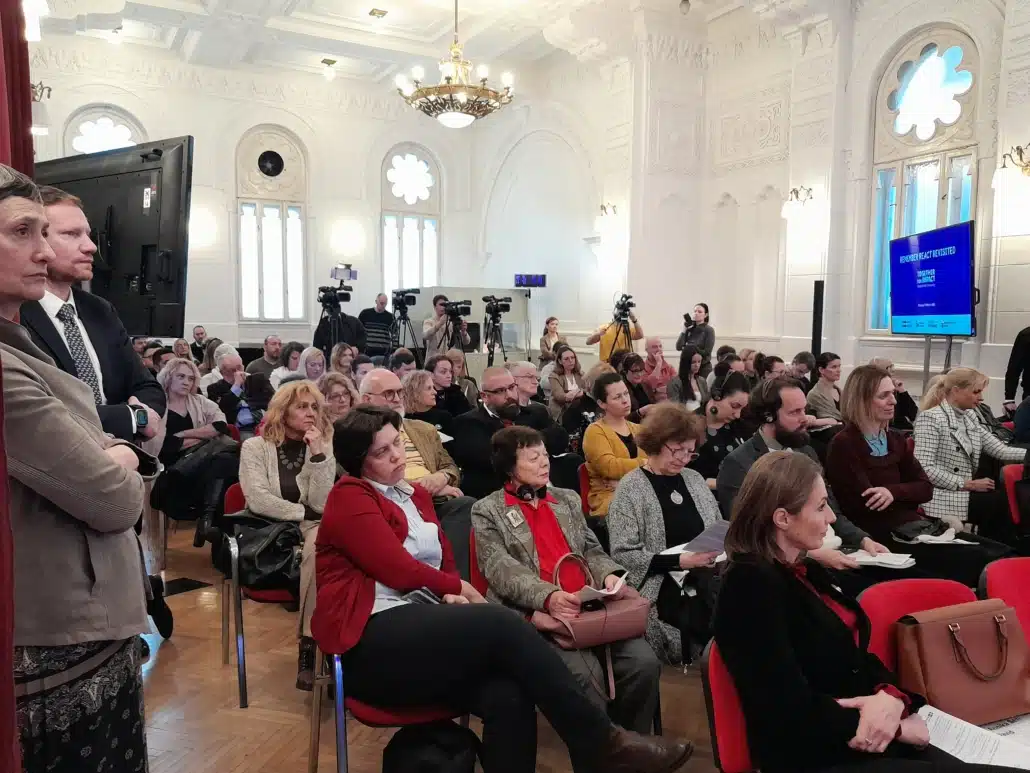
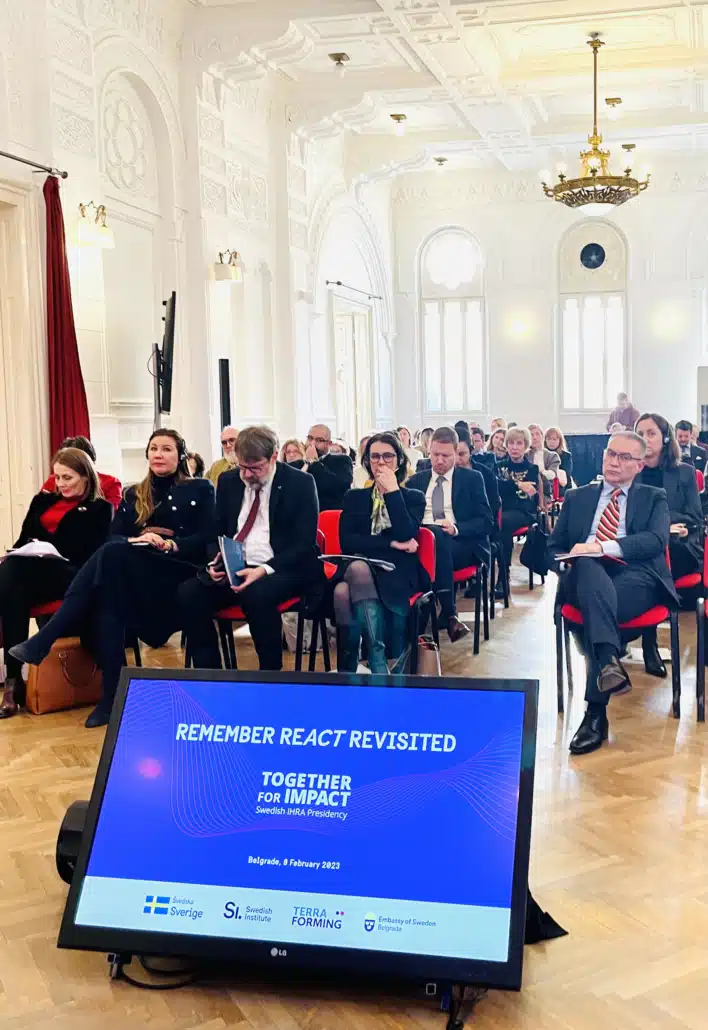
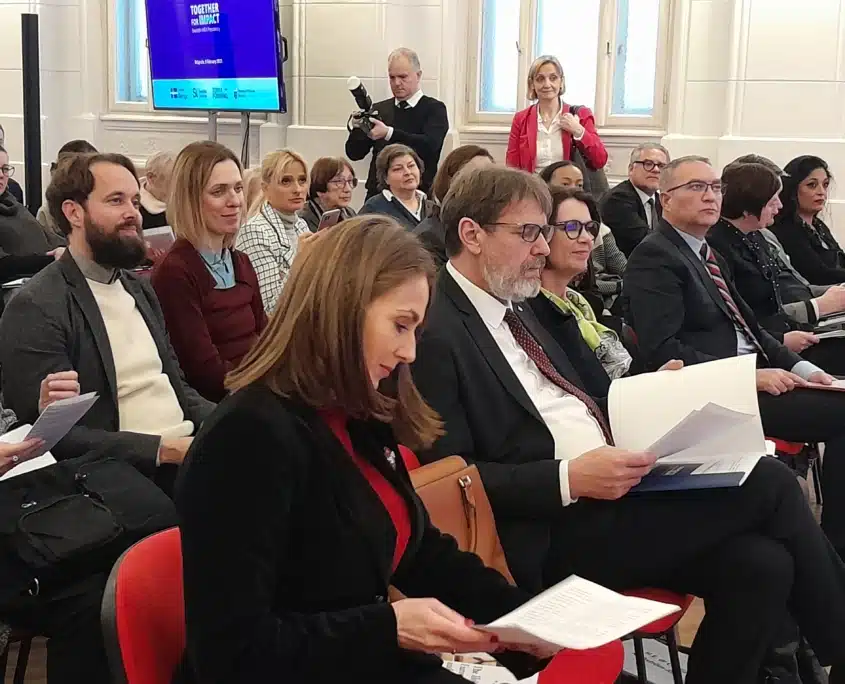
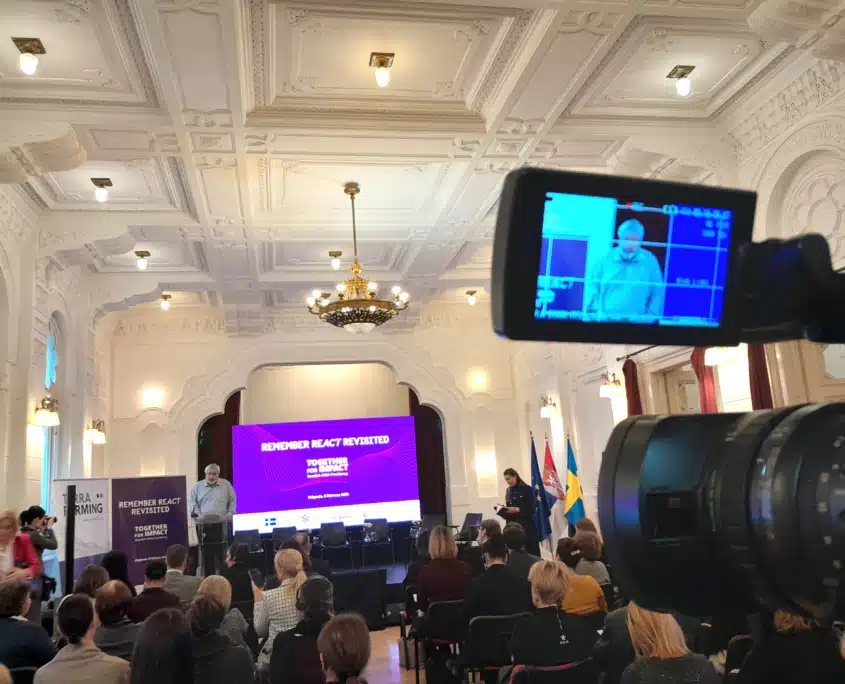
The audience and participants of the program in the hall of the Jewish Municipality of Belgrade

The concept and thematic scope

The concept and scope of the discussions were designed by Miško Stanišić, director of Teraforming and member of the IHRA delegation of the Republic of Serbia, and Nevena Bajalica, program manager at Teraforming and member of the IHRA delegation of the Republic of Serbia.

As moderators, they led discussions with the guests.

An important prerequisite for the conference’s success was the participation of representatives of relevant state institutions, experts, representatives of the Jewish and Roma communities, civil society, and other actors.

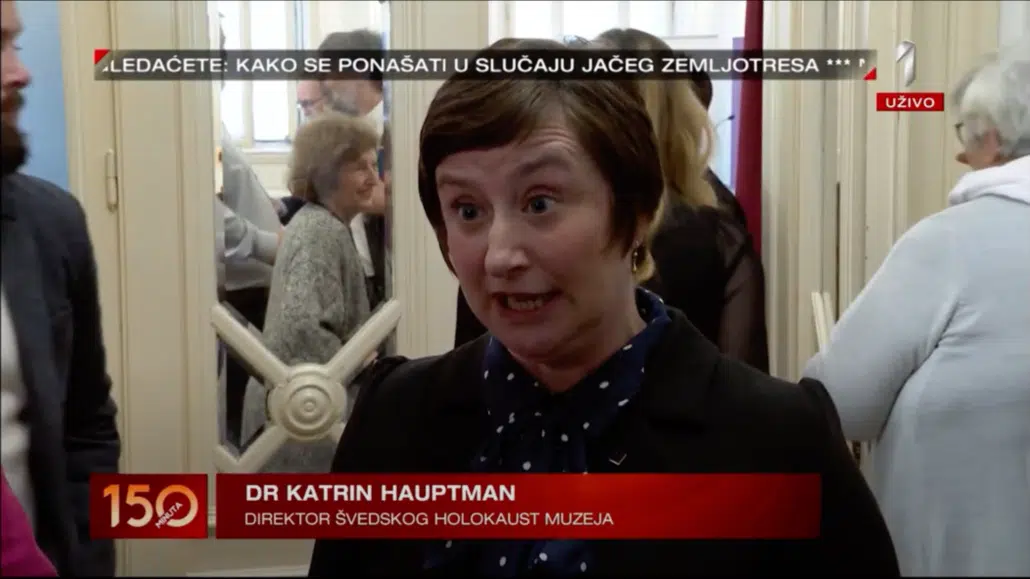
A high-level Swedish delegation consisted of representatives of the Swedish IHRA delegation led by the head of the delegation, Dr. Cecilia Rutstrom Ruin, ambassador for human rights, democracy, and the rule of law in the Ministry of Foreign Affairs of Sweden, as well as the heads of the most important Swedish institutions that deal with issues of memorialization and education about the Holocaust, the genocide of the Roma, antisemitism and antigypsyism, among which were: Petra Marselius, director of the Living History Forum, Dr. Katherine Hauptman, director of the Swedish Holocaust Museum, Anna Urombi, secretary general of the Raoul Wallenberg Academy, and Pontus Wallin, educator at the Living History Forum.

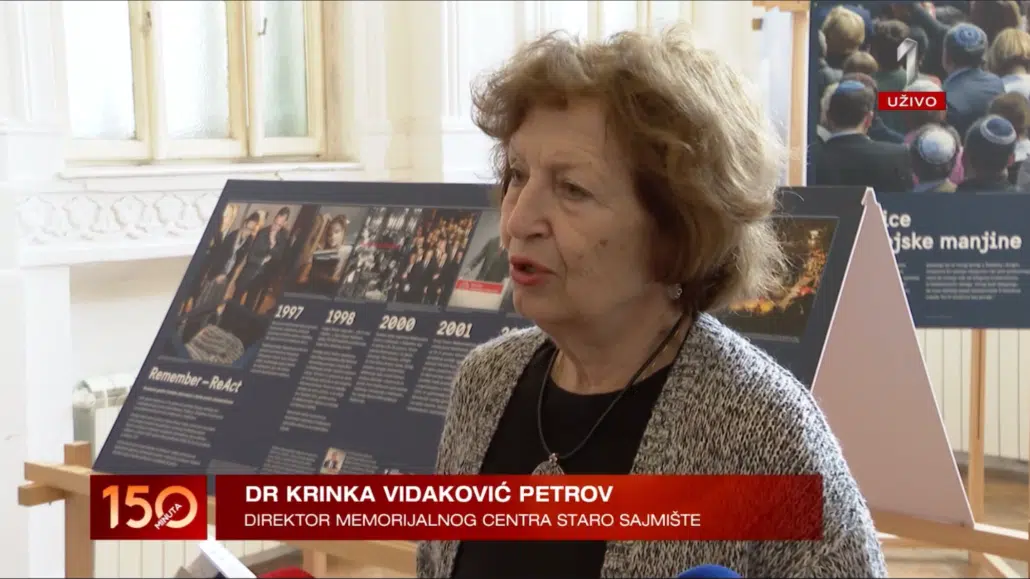
For the last six months, the Republic of Serbia has not had a head of the IHRA delegation, so a Serbian representative at that level could not participate in the work of the conference. Nevertheless, Serbia was represented in the panel discussions by relevant and competent representatives: Nataša Tasić Knežević, MP and vice president Committee for Human and Minority Rights of the Parliament of Serbia, Dr. Krinka Vidaković Petrov, director of Memorial Center “Staro Sajmište” and member of the IHRA delegation of the Republic of Serbia, Ladislav Trajer, vice president of the Federation of Jewish Communities of Serbia, and Brankica Janković, commissioner for the protection of equality. The moderators were Miško Stanišić and Nevena Bajalica from Terraforming.

Among the conference participants from Serbia were Maša Avramović, founder of the Center for the Culture of Children’s Rights C31 with the project “Cube,” and Noah Fischer from the Jewish Municipality of Sombor with the project “My story is your story.”

Audience

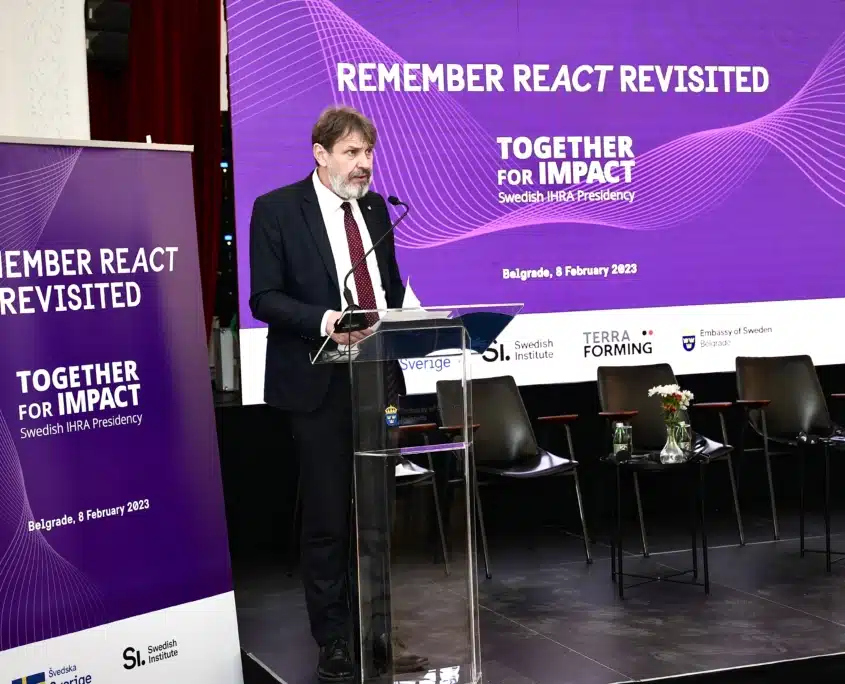
Introductory speeches

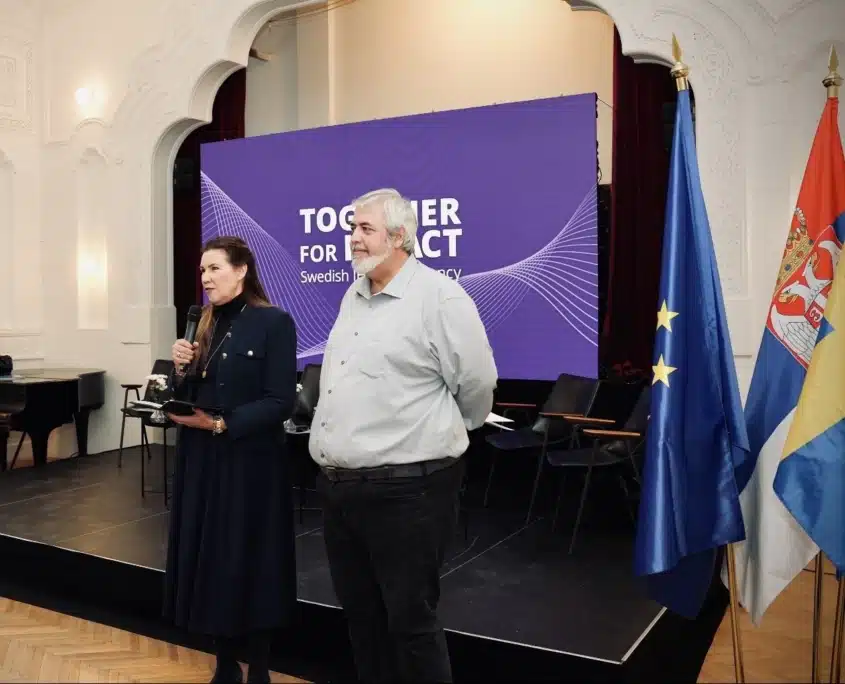
Ambasador Anika Ben David i Miško Stanišić

Anika Ben David, Ambassador of Sweden in Serbia and Miško Stanišić, Terraforming

Annika Ben David, Ambassador of Sweden to Serbia

The conference was opened by Anika Ben David, Ambassador of Sweden to Serbia, who, welcoming all the participants, expressed her satisfaction that we have the opportunity to discuss the topics of the culture of remembrance and the fight against antisemitism and antigypsyism and that such a high delegation from Sweden is participating in the dialogue.

Aron Fuks, President of the Jewish Community of Belgrade

Aaron Fuchs, President of the Jewish Community of Belgrade, expressed his gratitude that the conference is being held on the premises of the Jewish Community of Belgrade because the International Holocaust Remembrance Alliance (IHRA) and Jewish communities throughout the world, including in Serbia, are fighting for the same goals. He pointed out that this initiative is very important because the Jewish community in Serbia is very small, and there are not enough personnel and human resources to deal with antisemitism.

Miodrag Ivanović, državni sekretar u Ministarstvu kulture

Miodrag Ivanović, State Secretary in the Ministry of Culture

Miodrag Ivanović, State Secretary in the Ministry of Culture

Miodrag Ivanović, State Secretary in the Ministry of Culture, wished the participants of the conference success in their work “within this important social topic that unites us primarily through the dimension of humanity, but also through the historical obligation to acquire new knowledge from the common past that teaches us about our future”. He pointed out that the topic of the Holocaust and genocide against the Roma requires all our great attention and responsibility and that such discussions are important both for finding different angles of observation and research work as well as personal questioning, with the aim of developing capacities, mechanisms and teaching methods through which the fields of culture and education preserve memory. He pointed out that the Ministry of Culture, as part of its activities in this field, in accordance with the law from 2021 founded a new institution of culture: Memorial Center “Staro sajmište,” to carry out museological, educational, and research activities.

Dr Cecilia Rutstrom-Ruin, Ambassador for Human Rights, Democracy and Rule of Law at the Swedish Ministry of Foreign Affairs

Dr. Cecilia Rutstrom-Ruin, Ambassador for Human Rights, Democracy and Rule of Law at the Swedish Ministry of Foreign Affairs and head of the Swedish delegation to the International Holocaust Remembrance Alliance (IHRA) said that she is glad that today there is a large group of Swedes who have come to take part in this conference, representing the bodies and institutions of the Swedish Government and civil society. Ambassador Rutstrom-Ruin noted that it is important to focus on the youth, because working with the youth should ensure that the atrocities of the past are never repeated. She also pointed out that Sweden chaired the International Holocaust Remembrance Alliance at a difficult historical moment when Russia launched aggression against Ukraine. “In that aggression, the term denazification is used in order to legitimize the war. This shows how important it is to protect the facts and fight against the distortion of history”, emphasized Ambassador Rutstrom-Ruin.

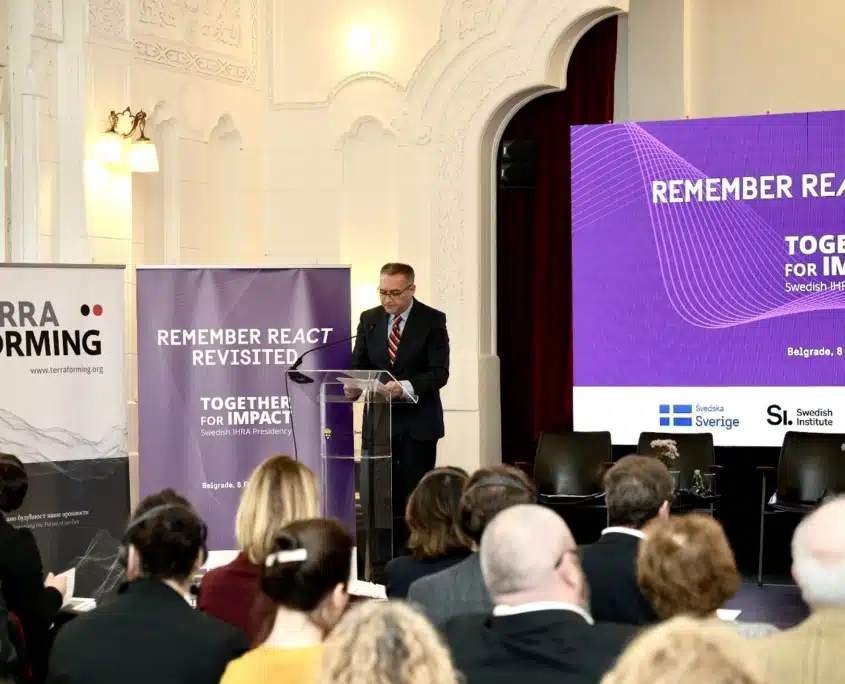
Miško Stanišić, Director of Terraforming

Miško Stanišić, director of Terraforming and member of the IHRA delegation of the Republic of Serbia, addressed the conference participants with the following words:

An honest, meaningful, and courageous culture of remembrance, especially of the Holocaust, treats the crimes of the past as a warning that both as individuals and as a society we are responsible and obliged to actively nurture, strengthen and defend the very social values and rights that were denied to the victims: human dignity, respect for civil and human rights, rule of law and pluralism.

An honest, meaningful and courageous culture of remembrance does not abuse the past and does not inflame nationalism, hatred and fear. Unfortunately, the memorialization of suffering in the Second World War in the Republic of Serbia is often manifested in exactly this way, partly as a result of a lack of experience and knowledge of international norms and standards in memorialization and education about the Holocaust, and partly because behind it lies politicking and nationalism.

Serbia is not the only country facing this problem. Distortion, manipulation, and politicization of the Holocaust is a common problem in all societies. The distortion and abuse of this history are always at the core an expression of antisemitism. Antisemitism not only affects the freedom and rights of Jewish communities, but is a direct danger to democracy, and a sign that there are anti-democratic, xenophobic, racist powers in society and extreme nationalist forces that we must oppose. This is the reality in Sweden, Serbia, and other countries.

The International Holocaust Remembrance Alliance IHRA is the highest international authority for creating guidelines and policies and shaping the future of memorialization, commemoration, research, and education about the Holocaust and the suffering and genocide of the Roma, that is, antisemitism and antigypsyism.

The membership of the Republic of Serbia in this unique organization that brings together experts, governments, and policymakers is extremely important, not only because Serbia undertakes obligations and follows the development of the principles and doctrines of the contemporary culture of remembrance but also because it has the opportunity to directly participate in these processes and contribute its perspectives and experiences.

Today we have the opportunity to discuss the values and principles of the International Holocaust Remembrance Alliance. That is why I would like to thank our partners, and guests from Sweden and Serbia, who participate in the program that we at Terraforming prepared in partnership with the Swedish Embassy.

Ministar Tomislav Žigmanov

Tomislav Žigmanov, Minister for Human and Minority Rights and Social Dialogue

Tomislav Žigmanov, Minister for Human and Minority Rights and Social Dialogue

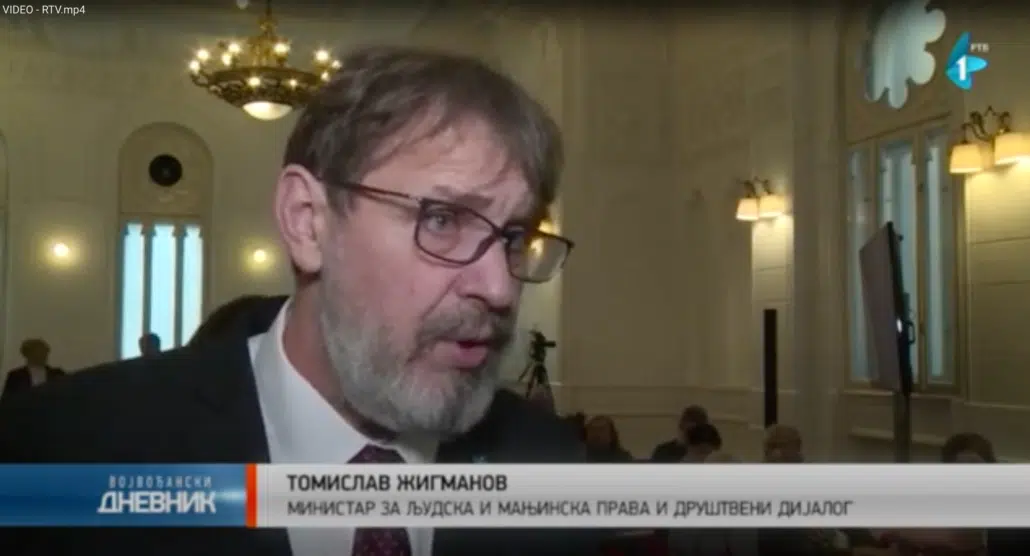
Tomislav Žigmanov, Minister for Human and Minority Rights and Social Dialogue, emphasized that we should fight so that crimes are never forgotten, resolutely reject all strategies of denying them, and that every form of hatred and violence that is at the root of all crimes should be cut at the root. He stated that humanity, faced with the genocide and atrocities committed against the Jewish people and other peoples during the Second World War, responded by adopting the Universal Declaration of Human Rights, emphasizing the resolute demand to reaffirm the dignity, freedom, and equality of every human being as the highest values. Žigmanov said that even today, 75 years after its adoption, the Declaration stands before all of us “as a daily reminder and obligation that no crimes must be repeated, which is why the affirmation of the culture of human rights and the advocacy for the values on which it rests must continue to be first-rate for everyone assignment.” The Minister pointed out that this is the only way we will fulfill the duty and obligation of every responsible member of a society dedicated to democracy to provide those who come after us with a future in which peace, tolerance, understanding, and acceptance of diversity reign.

Panel discussions

Panel 1 – Holocaust Memorialization and Education

Prvi panel

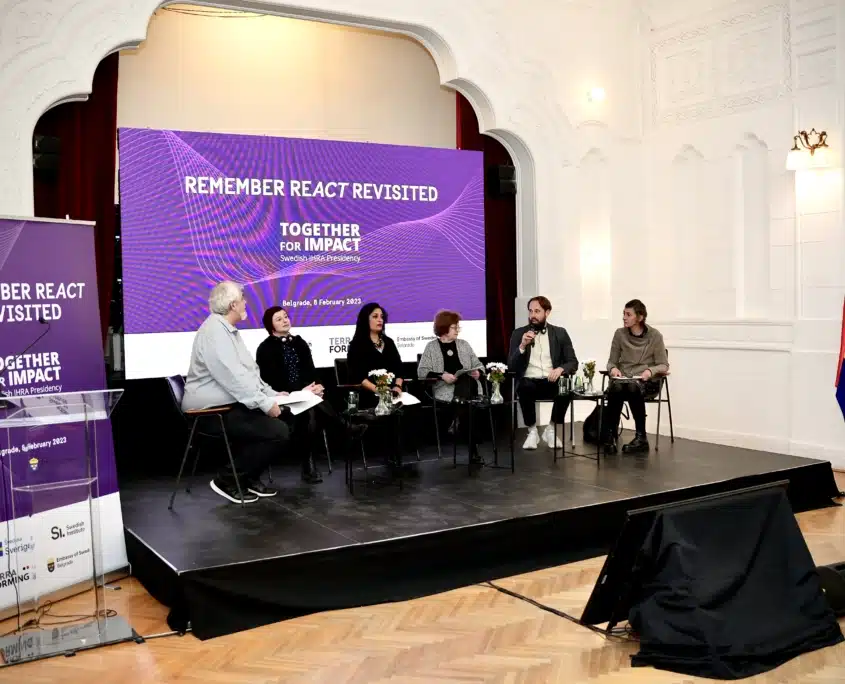
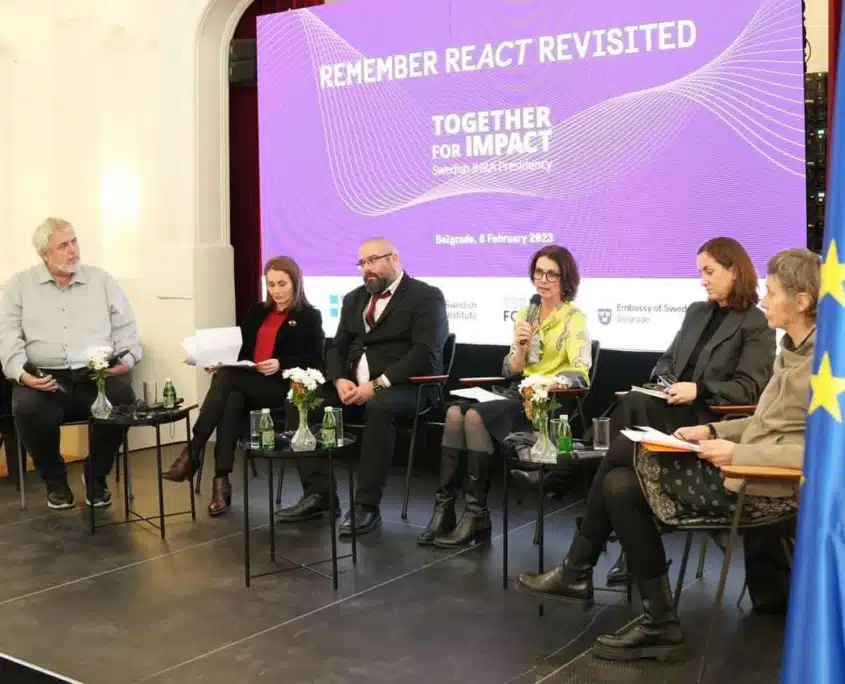
Participants of the first panel

This panel was marked by an intensive discussion of issues concerning strategies for developing Holocaust education leading to the strengthening of critical thinking. There was a discussion about local specificities, both historical and in the implementation of policies of commemoration of the Holocaust and the genocide against the Roma. The participants also discussed initiatives to open new memorial centers in Serbia and Sweden, as well as potential problems that may arise in that context, especially in the application and maintenance of international standards and goals in memorialization and education about the Holocaust.

Krinka Vidaković Petrov explained that the “Staro sajmište” Memorial Center is a very young institution that is just at the beginning, although a lot has already been done. She pointed out that one of the key activities of the “Staro Sajmište” Memorial Center is education, not only about the concentration camp “Staro Sajmiste” but also about the historical context that enabled and contributed to such an evil appearing in reality. “Evil is a great master, and its best apprentice is oblivion, but when it comes to young people, we should ask them to see how we can involve them in actively dealing with this topic,” said Vidaković Petrov.

Nataša Tasić Knežević pointed out that the genocide against the Roma was forgotten and ignored for decades. She emphasized that the persecution of the Roma lasted for centuries before the Holocaust took place and that is why it is even more important to approach this topic responsibly in memorialization and education.

I am afraid that some of these projects are approached without sufficient experience and knowledge of contemporary Holocaust memorialization, museology, archival and museum pedagogy and without sufficient understanding of the basic goals and standards of teaching and learning about the Holocaust. The big challenge is that there is not enough awareness of the fact that there is a lack of experience and professional capacity, which in itself is both the cause and the consequence of the same problem. Another possibility is that international recommendations and professional standards are deliberately ignored, which would be even worse. Both possibilities are very worrying.

Miško Stanišić

Participants:

  • Nataša Tasić Knežević, Member of Parliament and Deputy President of the Committee for Human and Minority Rights of the Parliament of Serbia,
  • Dr. Kathryn Haupman, director of the Swedish Holocaust Museum,
  • Dr. Krinka Vidaković Petrov, director of the “Staro Sajmište” Memorial Center
  • Pontus Wallin, educator at the Living History Forum – Sweden’s state agency for education about the Holocaust and human rights,
  • Miško Stanišić, Terraforming, moderator,
  • Nevena Bajalica, Terraforming, moderator.
At the beginning, Miško Stanišić introduced the panelists to the discussion with the following words:

The membership of the Republic of Serbia in IHRA has been marked with inconsistency and, I would say, a lack of continuity and serious efforts to implement its strategies and recommendations on the national level or take an active part in shaping international policies and standards in the memorialization of the Holocaust and combating antisemitism and antigypsyism. The IHRA publications, guidelines, and recommendations are rarely translated. They have never been printed in Serbia, so they have not been distributed to the institutions and professionals for whom they are intended. The pledges presented at the International Forum in Malmo by the Republic of Serbia are a good example of a lack of understanding of what is expected from Serbia in this context. Among several problematic statements, Serbian pledges manage not to mention the word “Roma” not even once.

Following the IHRA Recommendations on teaching and learning about the Holocaust, we know that education about the Holocaust should contribute to the development of critical thinking and promote space for questioning the evolution of antisemitism and other forms of intolerance, including hate speech, propaganda, media manipulation, and group violence, i.e. enabling students to cope with contemporary dilemmas and social challenges. In this context, how in new institutions, museums, and memorial centers do you work or plan to work with Holocaust education to equip students to deal with current challenges and dilemmas such as contemporary antisemitism, antigypsyism, racism, xenophobia towards migrants and refugees, homophobia, Islamophobia, including recent or contemporary violent histories such as the Yugoslav wars in the 1990s or Russian aggression on Ukraine?

In the second part of the first panel, Miško Stanišić opened a discussion on a series of challenges faced by new memorial centers and museums:

In Serbia, there are several new initiatives to create new memorial centers. There is an initiative for a memorial center to remember the victims of the camp in Bor, the “Staro sajmište” memorial center in Belgrade is gradually starting to work, and recently in Novi Sad, there has been mention of an initiative to create a memorial center dedicated to the Novi Sad raid. While this is of course a very positive development and good news, I am concerned about whether these projects will reach certain minimum international standards. I am afraid that some of these projects are approached without sufficient experience and knowledge of contemporary Holocaust memorialization, museology, archival and museum pedagogy and without sufficient understanding of the basic goals and standards of teaching and learning about the Holocaust.

The big challenge is that there is not enough awareness of the fact that there is a lack of experience and professional capacity, which in itself is both the cause and the consequence of the same problem. Another possibility is that international recommendations and professional standards are deliberately ignored, which would be even worse. Both possibilities are very worrying.

How do you achieve quality assurance and public accountability when creating a new Holocaust museum? How do you develop quality management at this point? How will you ensure that accumulated international experience and knowledge about contemporary Holocaust memorialization, museology, archival and museum pedagogy, and international goals and standards in teaching and learning about the Holocaust will be implemented in your institution? When museums are just at the very beginning of their work, how will you ensure continuous evaluation and improvement?

Panel 2 – Facing contemporary antisemitism

Drugi panel

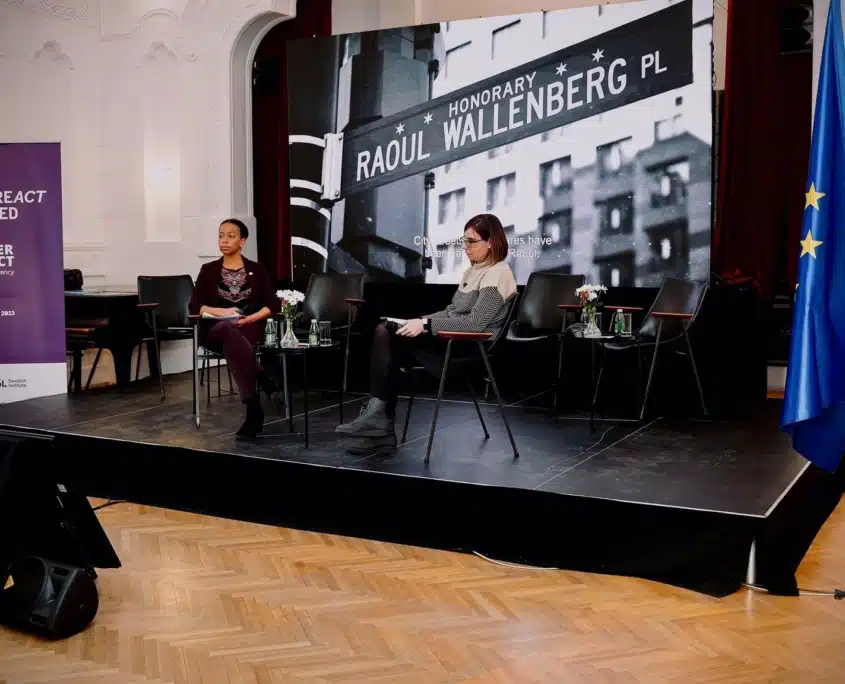
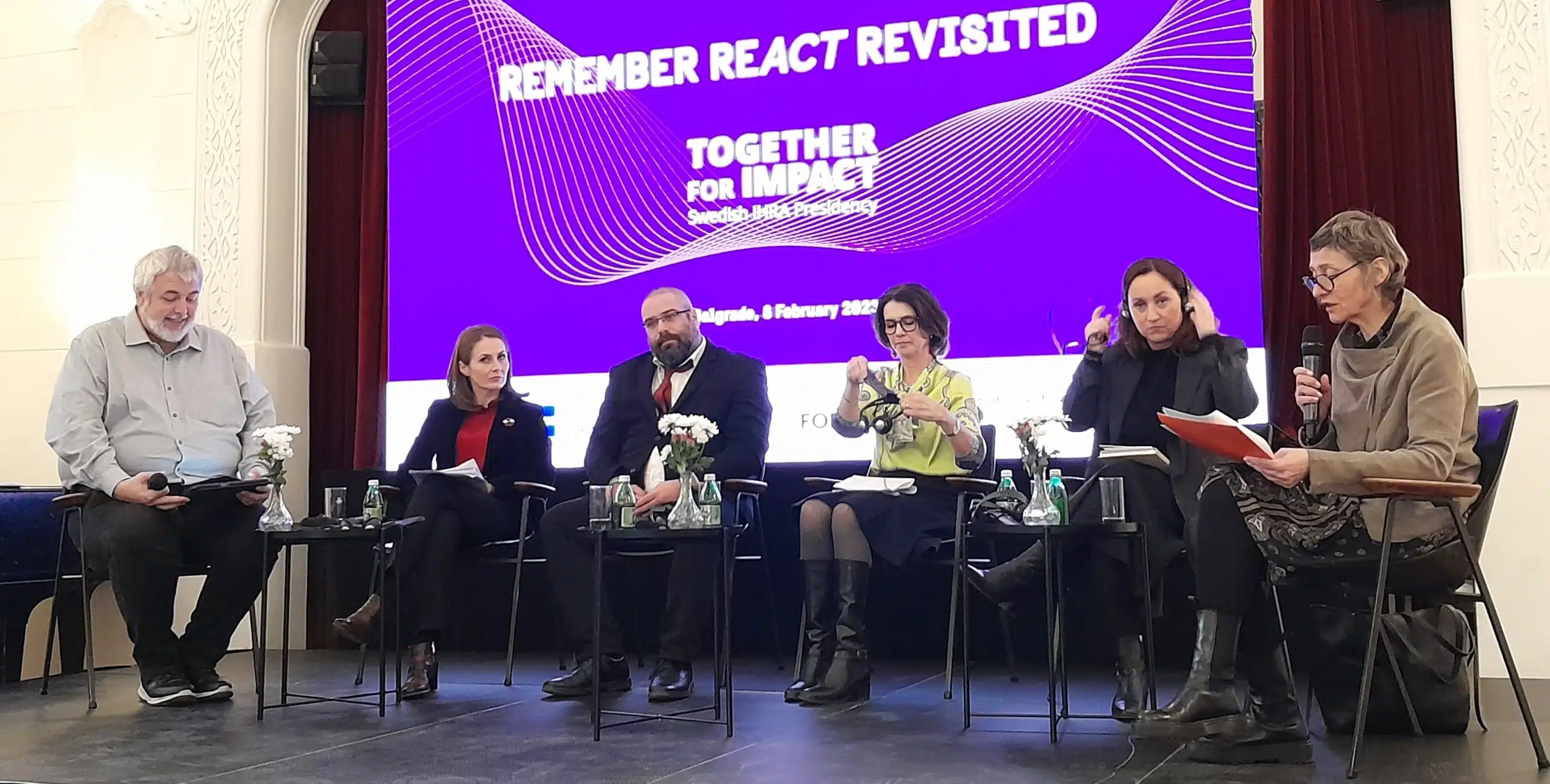
Participants of the second panel

The panel discussed the capacity to recognize and identify antisemitism, radical groups, and the distortion and manipulation of Holocaust history, which is always an expression of antisemitism.

Brankica Janković pointed out that we foster the remembrance culture primarily for the sake of young people and emphasized that the Holocaust is important for understanding all forms of discrimination because it shows what fear and hatred of “others” can lead to. She concluded that our obligation is increased by the fact that there are fewer and fewer survivors who can tell their personal stories. The commissioner stated that, even though the Holocaust is still strongly present in our collective consciousness, there are indications that fewer and fewer people remember and understand the significance of this event, which is why it is necessary to continue education about the Holocaust to preserve the memory of victims and to raise awareness of the importance of fighting racism and discrimination. She recalled the marked increase in antisemitism, especially on the Internet, which has become a digital battlefield and training ground for the most diverse forms of antisemitic propaganda, which often appears in covert and subtle forms, such as memes and gifs. “We have to react to every single incident because everything starts with words, and it can turn into something much more dangerous,” the commissioner pointed out. She emphasized that the principles stated in the Strategy for the fight against antisemitism of the European Commission can be universally applicable and serve as a starting point for further activities on this front and assessed that the institution of the Commissioner for the Protection of Equality successfully copes with the challenges in the fight against antisemitism, taking into account its practice and a high degree of cooperation with the Jewish community in Serbia and beyond.

Ladislav Trayer explained that traditionally, in Serbia, classical Christian antisemitism was never developed, but modern antisemitism is present today. He explained that there are extremist groups in Serbia. For some of these groups, antisemitism is part of the iconography and “image,” while the focus is hatred and violence directed primarily towards some other vulnerable minorities. Other extremist groups draw their inspiration directly from Nazism and for which antisemitism is the central ideological postulate.

Unfortunately, in the contemporary Serbian culture of remembrance, there are examples of abuse of Jewish victims for nationalist propaganda. The fact that a much larger number of professionals and stakeholders in the fields of culture, science, and education do not recognize examples of distortion, abuse, and manipulation of the Holocaust memory shows that they do not understand how such abuses are inappropriate and antisemitic, and how, after all, such abuse of history humiliate and abuse Serbian victims, too. All this shows the poor state of knowledge, understanding, and capacity to deal with antisemitism in Serbia.

Miško Stanišić

Participants:

  • Dr. Cecilia Rutstrom Ruin, ambassador for human rights, democracy and the rule of law at the Swedish Ministry of Foreign Affairs, and head of the Swedish IHRA delegation,
  • Petra Marselius, general director of the Forum for Living History – the Swedish state agency for education about the Holocaust and human rights,
  • Ladislav Trayer, vice president of the Federation of Jewish Communities of Serbia,
  • Brankica Janković, commissioner for the protection of equality,
  • Miško Stanišić, Terraforming, moderator,
  • Nevena Bajalica, Terraforming, moderator.
In the introduction to the discussion, Nevena Bajalica emphasized the importance of the working definition of antisemitism by the International Holocaust Remembrance Alliance IHRA:

adopted by the IHRA in 2016. The definition was additionally accepted by 39 states through special acts of parliaments or governments. Among them is the Republic of Serbia, which accepted the working definition of antisemitism by the Government decision in January 2020. . The IHRA definition of antisemitism has been accepted by international institutions such as the United Nations, the European Parliament, the European Council, the European Commission, the Council of Europe, and many other state institutions, universities, and organizations around the world. The first European strategy for the fight against antisemitism and the promotion of Jewish communities, which was adopted by the European Commission a year ago, is based on this definition and obliged all members of the European Union to create National Strategies. The Terraforming initiative is based on the idea of starting a process that will lead to the creation of strategies for countering antisemitism in Serbia. In September 2022 Terraforming founded the Center for Combating Antisemitism and Intolerance. One of the Center’s first tasks is to raise awareness of the Serbian public, government, and policymakers to the fact that antisemitism exists in Serbia, just like in other countries, and that it is extremely important to work on addressing and preventing antisemitism.

There are forms of antisemitism specific to national and local environments. Examples specific to Serbia are antisemitic narratives related to the NATO bombing of Yugoslavia or Israel’s recognition of Kosovo’s independence. On the other hand, many anti-Jewish stereotypes and myths are spread around the world, such as the typical myths about “powerful Jewish families that control banks, media, state policies, etc.” Such stereotypes are widespread even among ordinary citizens who often do not recognize antisemitic prejudices and other xenophobic attitudes in themselves. Also, there are radical organizations and groups – from the extreme right, neo-Nazis, to “anti-globalists” and xenophobic organizations that, apart from the Jewish community, target various minority and vulnerable groups, such as Muslims, immigrants, and refugees. In Serbia, the LGBT community and Roma are especially targeted by radical groups and exposed to violence.

Miško Stanišić raised the issue of distortion of history and misuse of the culture of memory:

Holocaust distortion is the biggest challenge we face today, and it is widespread all over the world, in different forms. A current example of the manipulation and misuse of World War II history that directly promotes violence and spreads fear is the propaganda term “denazification of Ukraine” used to justify Russian aggression against Ukraine. In Serbia, we witnessed that some of the incidents and violence against Serbs in Kosovo were described by some officials as “the night of broken glass” or “the last European ghetto.” These are clear examples of inappropriate abuse of the Holocaust for political and propaganda purposes.

The distortion, misuse, and manipulation of this history are always antisemitic at its core. Unfortunately, in the contemporary Serbian culture of remembrance, there are examples of abuse of Jewish victims for nationalist propaganda. The fact that a much larger number of professionals and stakeholders in the fields of culture, science, and education do not recognize examples of distortion, abuse, and manipulation of the Holocaust memory shows that they do not understand how such abuses are inappropriate and antisemitic, and how, after all, such abuse of history humiliate and abuse Serbian victims, too. All this shows the poor state of knowledge, understanding, and capacity to deal with antisemitism in Serbia.

One of the problems seems to be a general lack of knowledge about antisemitism, which is an obstacle to its recognition and identification. Thus, the first necessary prerequisite for exposing, debunking, and countering antisemitism with appropriate measures has not been fulfilled, that is, we are faced with a lack of routines, policies, and strategies for combating antisemitism. As a result of all this, antisemitism is not recognized as a problem in Serbian society.

Youth activism in the culture of memory and the fight against antisemitism

Prezentacija

Ana Urombi, general secretary of the Raul Wallenberg Academy and Maša Avramović, founder of the Center for the Culture of Children’s Rights C31

Participants:

  • Ana Urombi, general secretary of the Raoul Wallenberg Academy
  • Maša Avramović, founder of the Center for the Culture of Children’s Rights C31
  • Noa Fischer, Jewish community of Sombor

In this part of the program, Ana Urombi, general secretary of the Raul Wallenberg Academy, and Maša Avramović, founder of the Center for the Culture of Children’s Rights C31, spoke and on that occasion presented the concept and project “Cube”, designed to bring young people closer to topics such as discrimination and antisemitism in an interactive way and democracy. The project was successfully implemented in Serbia by NGO C31 under the leadership of Maša Avramović.

After their presentation, Noah Fischer presented the project of the Ministry of Foreign Affairs of Israel entitled “My story is your story”. As she explained, the goal of this project is to connect students around the world with Holocaust survivors and present their life stories through social networks. “Holocaust survivors tend to bury their memories, to save themselves from the pain of what they went through, some don’t even want to talk about the subject because it’s too difficult for them. But if no one talks about the horrible things they can to repeat themselves. Through our memory, we also remind others. That way, history can never be questioned,” Noa concluded.

Media coverage of the conference

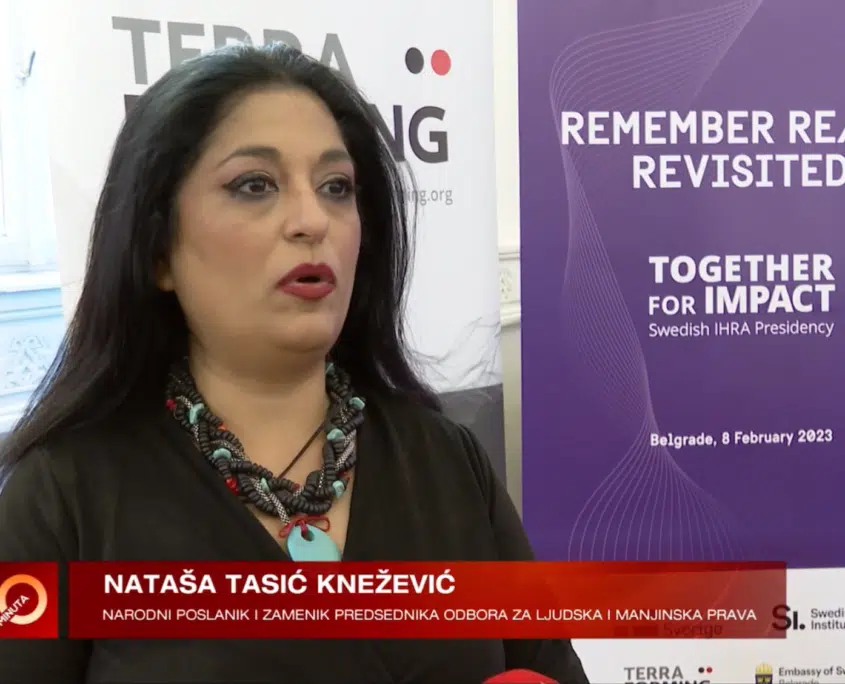
Nataša Tasić Knežević
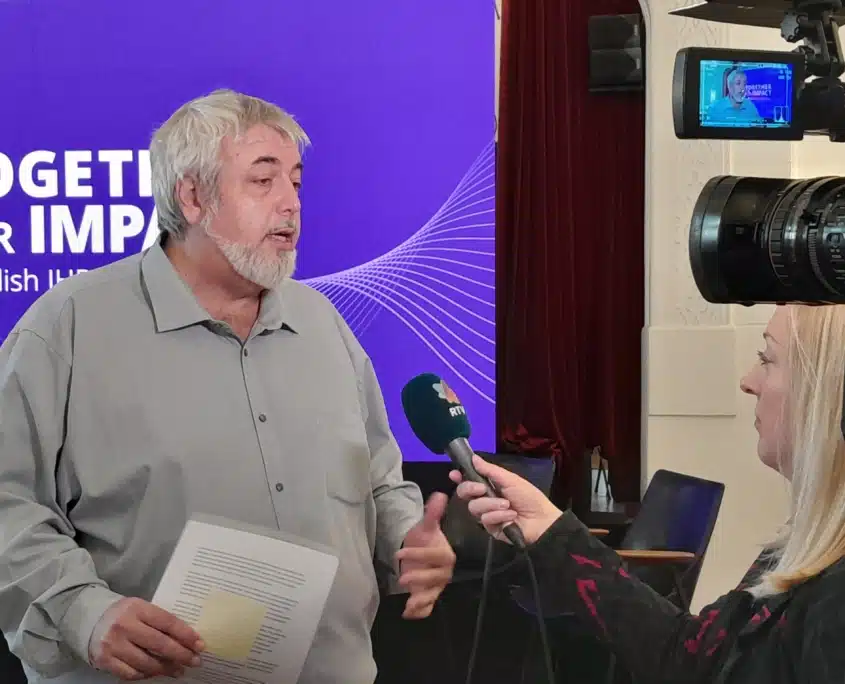
Miško Stanišić

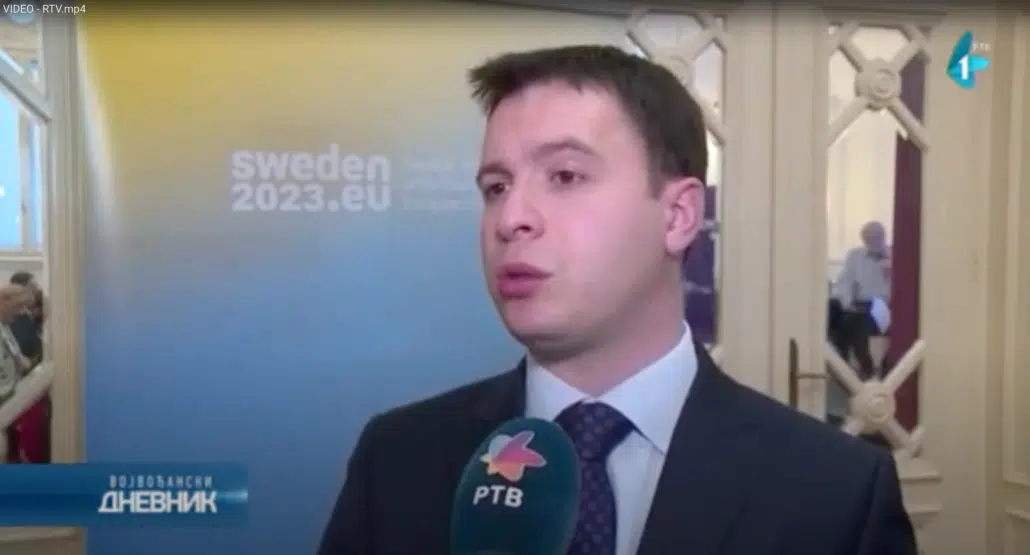
The conference attracted a lot of media attention. Among the media that attended and published articles about the conference were Tanjug, RTV, TV Prva, RTS, N1, Danas, Politika, and others. The reports were also published on the website of the Government of the Republic of Serbia, the Ministry of Culture of the Republic of Serbia, the Federation of Jewish Communities of Serbia, the Commissioner for Equality, and many others.

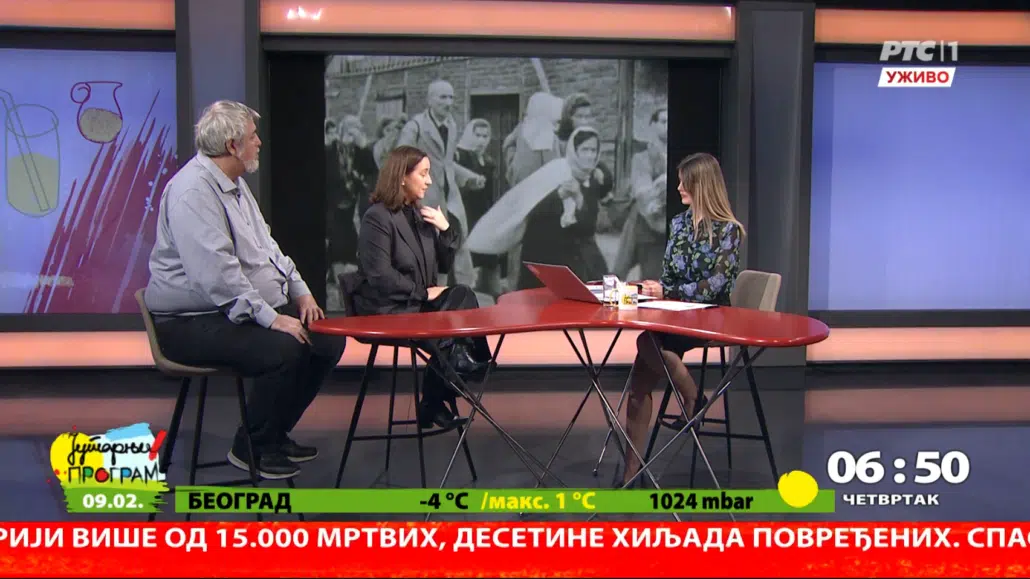
In a guest appearance in the morning program on RTS1, Miško Stanišić stated that although Serbia is a member of the International Holocaust Remembrance Alliance IHRA, it fails to participate more actively in the work of the Alliance, i.e. in defining priorities and creating guidelines, recommendations, and policies of the culture of remembrance, and does not use the opportunity to promote its own perspectives and experiences. He stated that the creators of national policies in Serbia do not sufficiently follow international standards and guidelines when creating national policies on memorialization and education, and pointed out that in this context, the current priority is to put antisemitism in Serbia on the agenda and focus on the problem of contemporary antisemitism.

Petra Marselius, director of the Forum for Living History, said that it is important to nurture the culture of memory, perhaps more important today than ever because we are witnessing the rise of antisemitism and the weakening of democracy. That is why it is especially important to learn about the processes that led to the Holocaust in order not to repeat that terrible history. The International Holocaust Remembrance Alliance IHRA is actively working to create guidelines and recommendations on how to learn and teach about the Holocaust, recommendations are currently being created for teaching about the Roma genocide, and there are recommendations on countering Holocaust distortion, and many others.

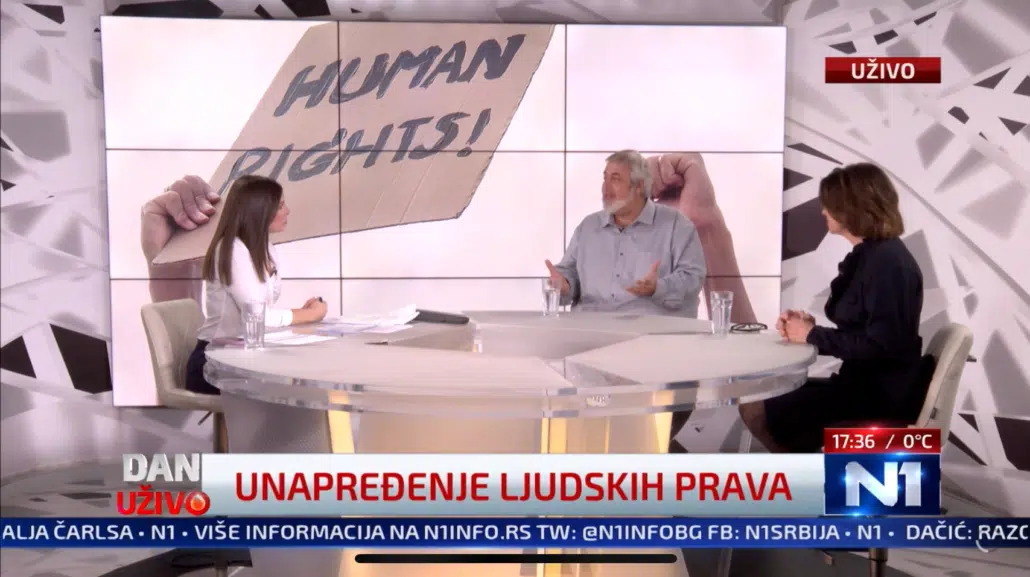
In a guest appearance on N1 television, Dr. Cecilia Rutstorm Ruin pointed out that antisemitism is on the rise, that the distortion of facts about the Holocaust is on the rise, and that we are witnessing the global decline of democracy. As an example, we can take the brutal aggression in which the term “denazification” was misused as a distorted narrative to justify aggression and mass crimes on European soil, and he believes that we must work together to prevent the manipulation of the Holocaust narrative.

TV program
TV program
TV program
TV program
TV program
TV program

News items about the conference