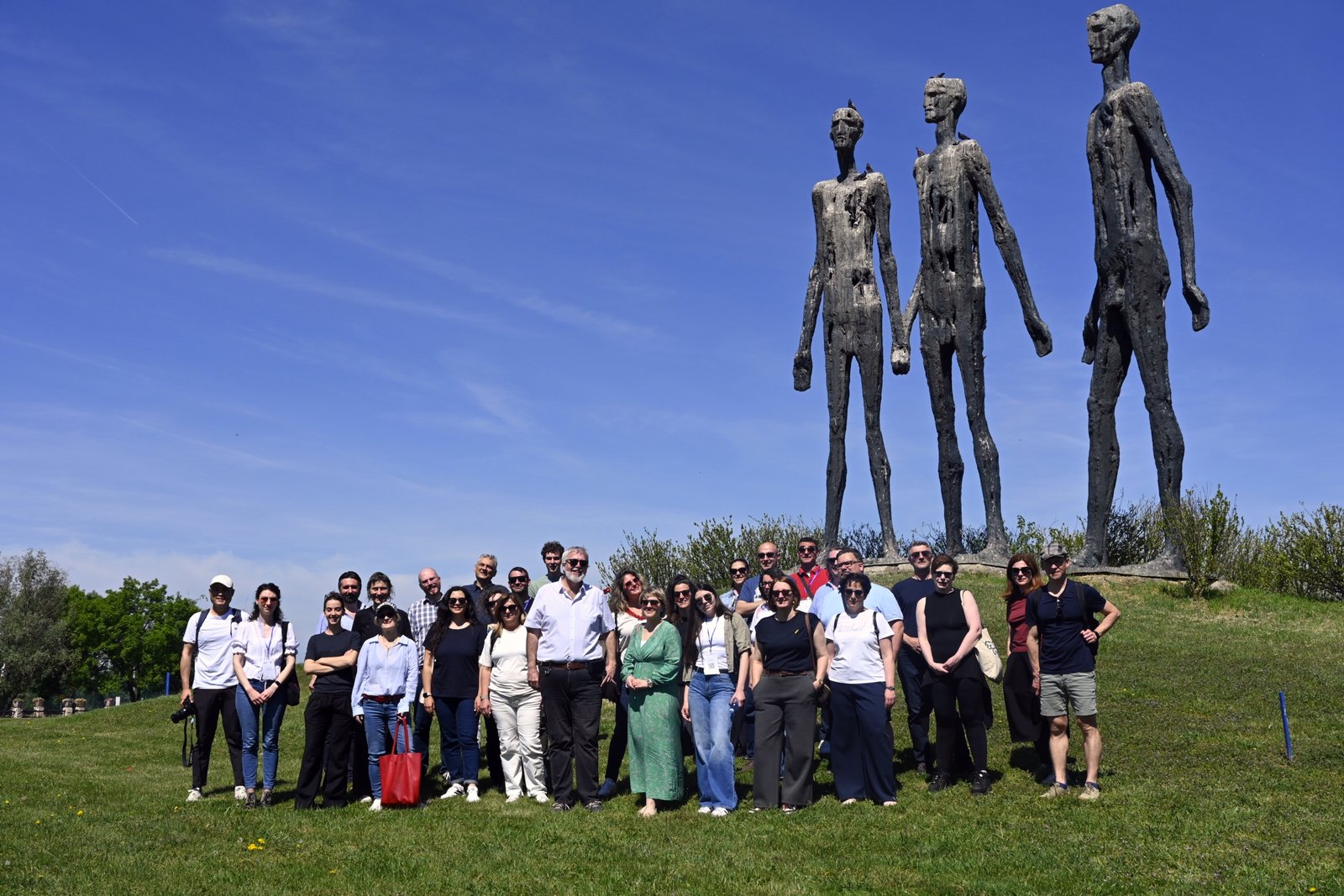
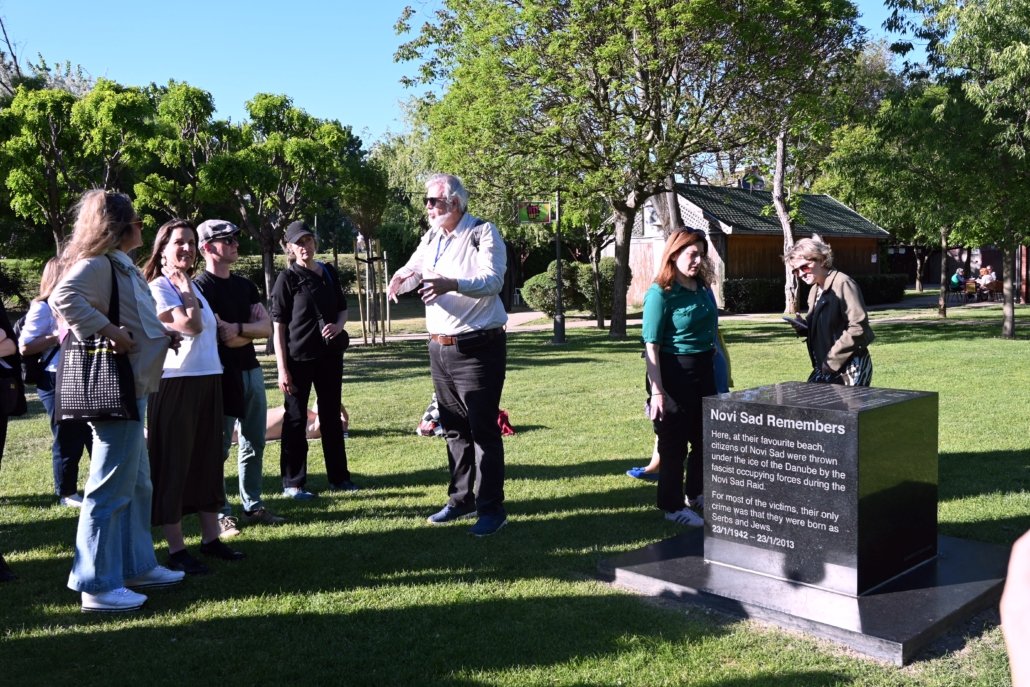
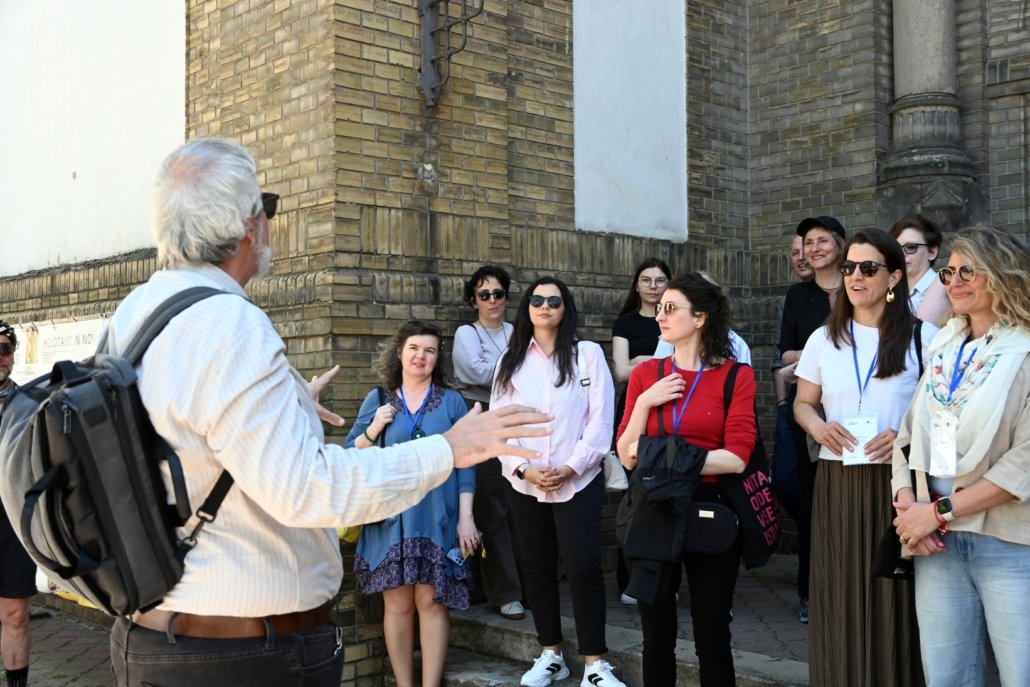
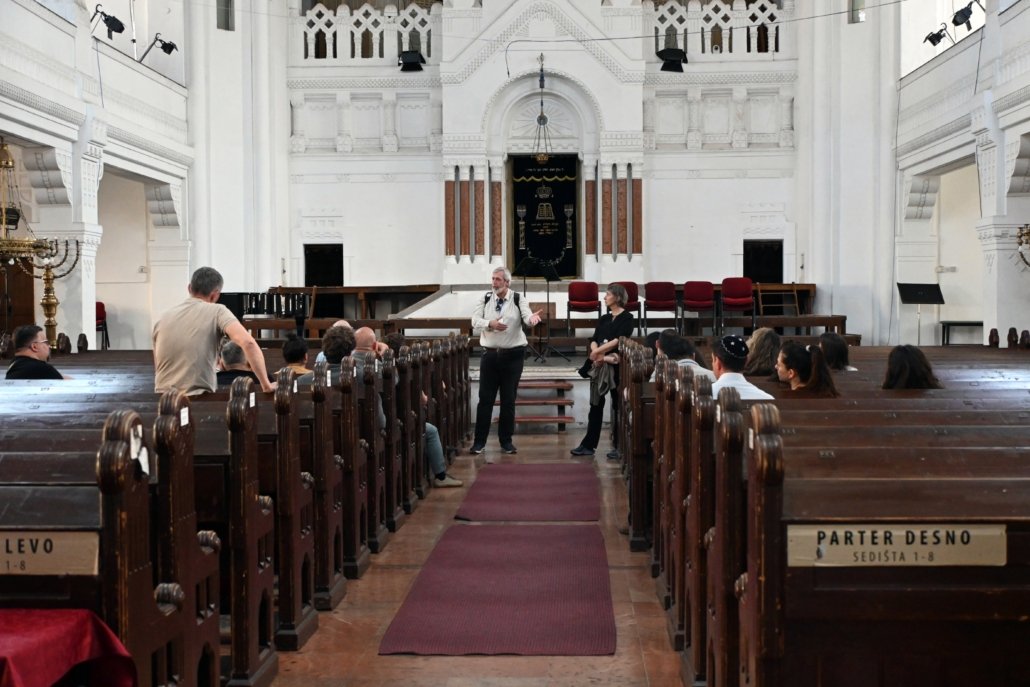
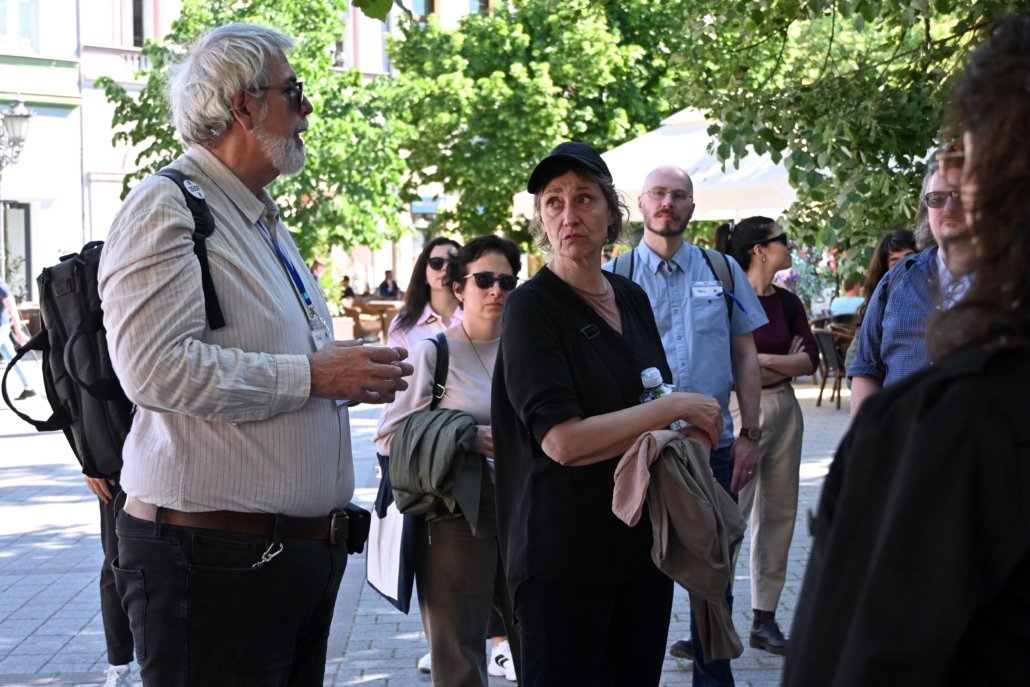
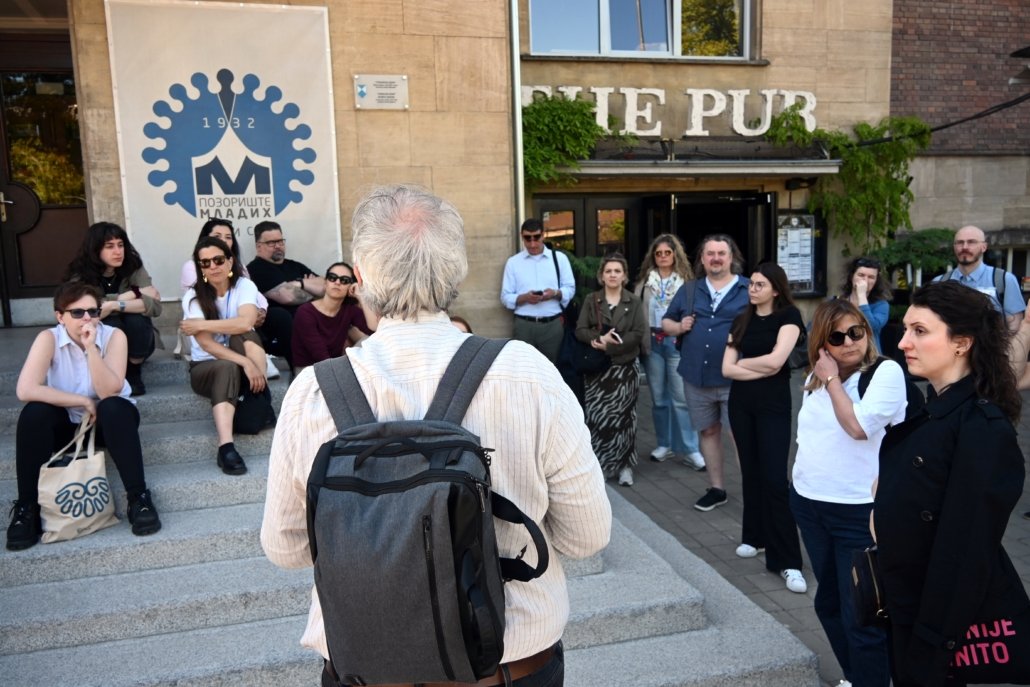
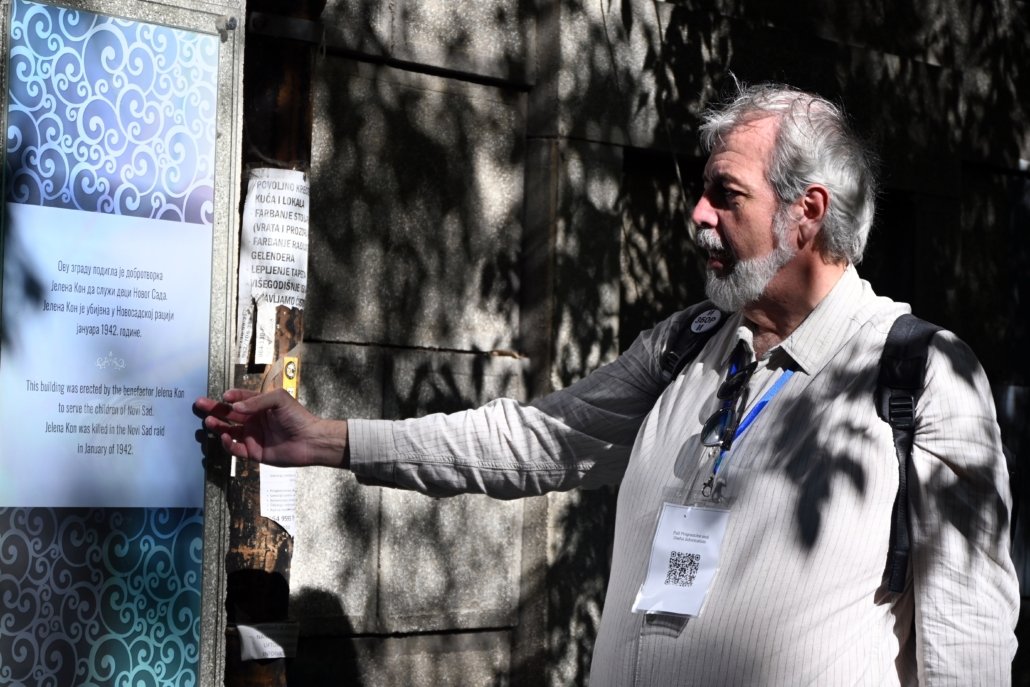
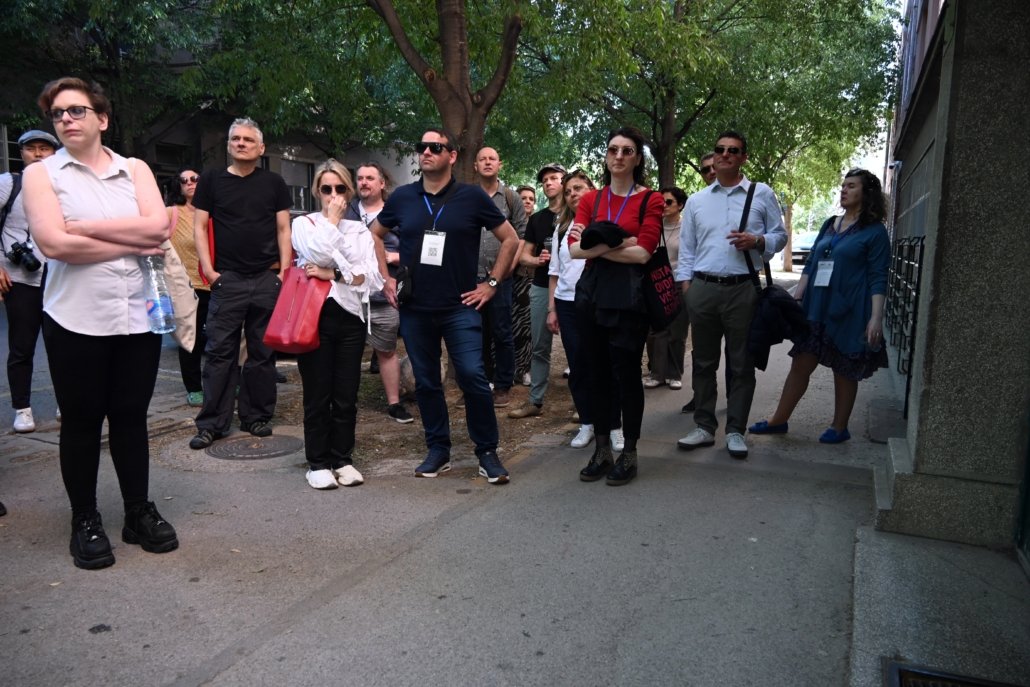
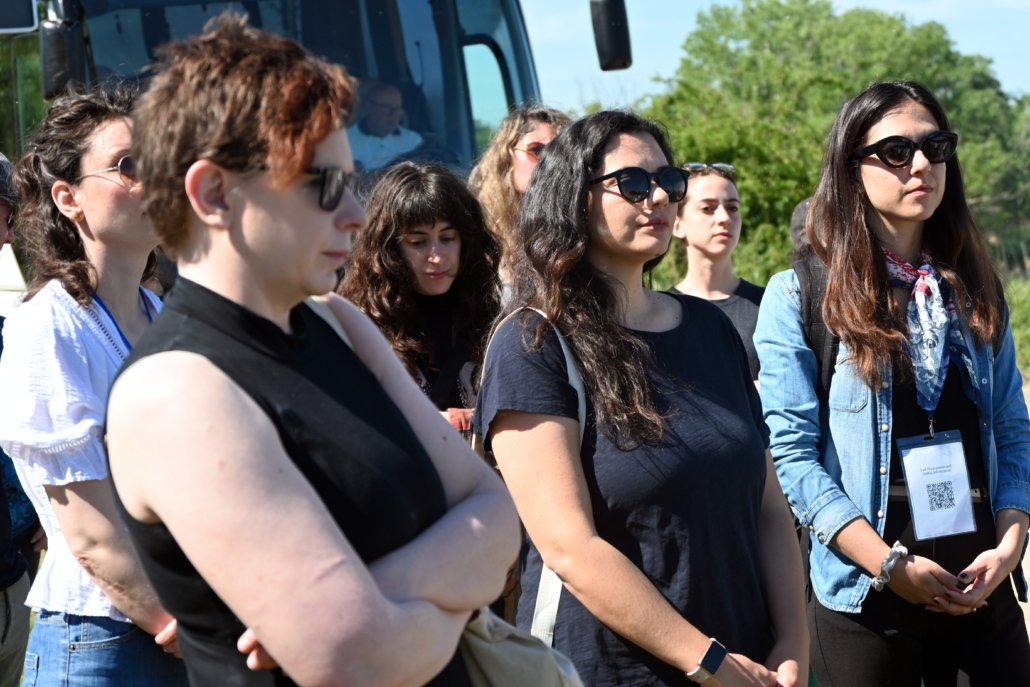
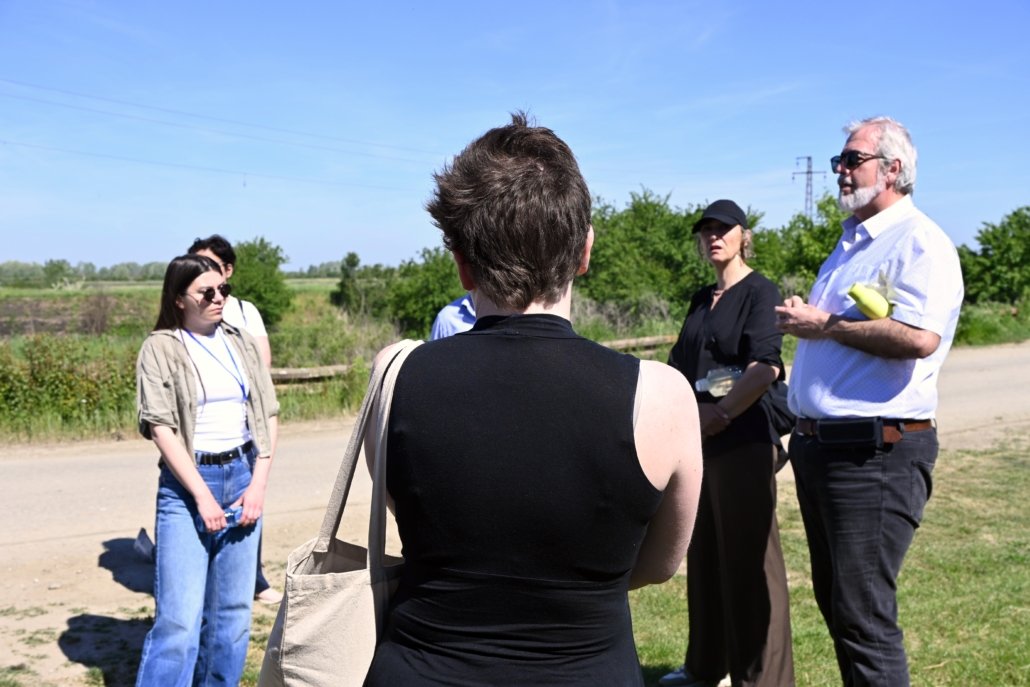
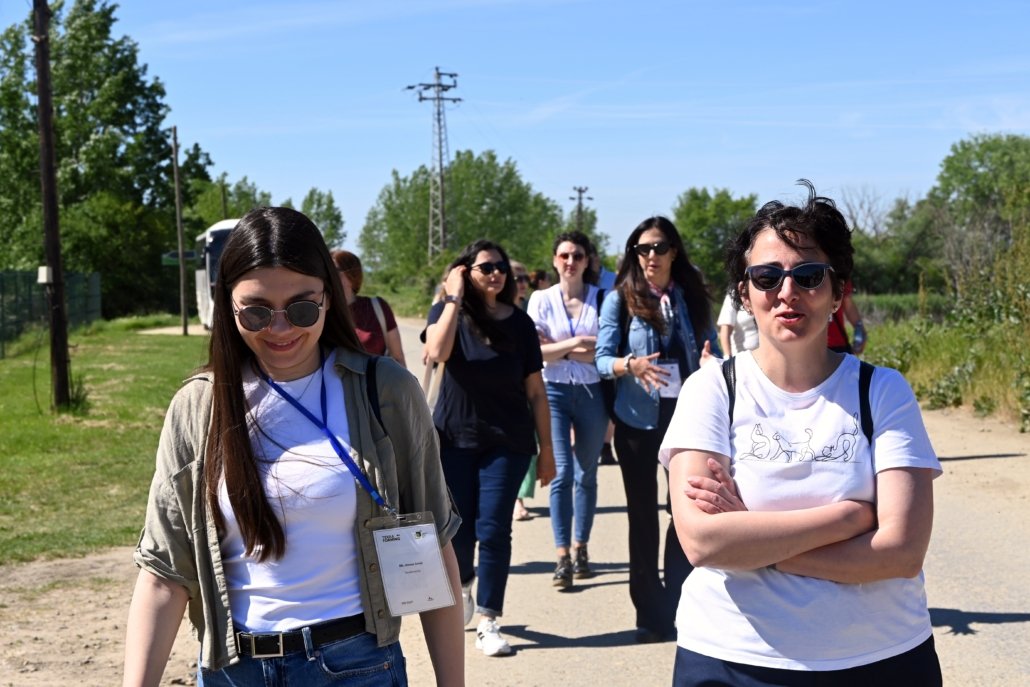
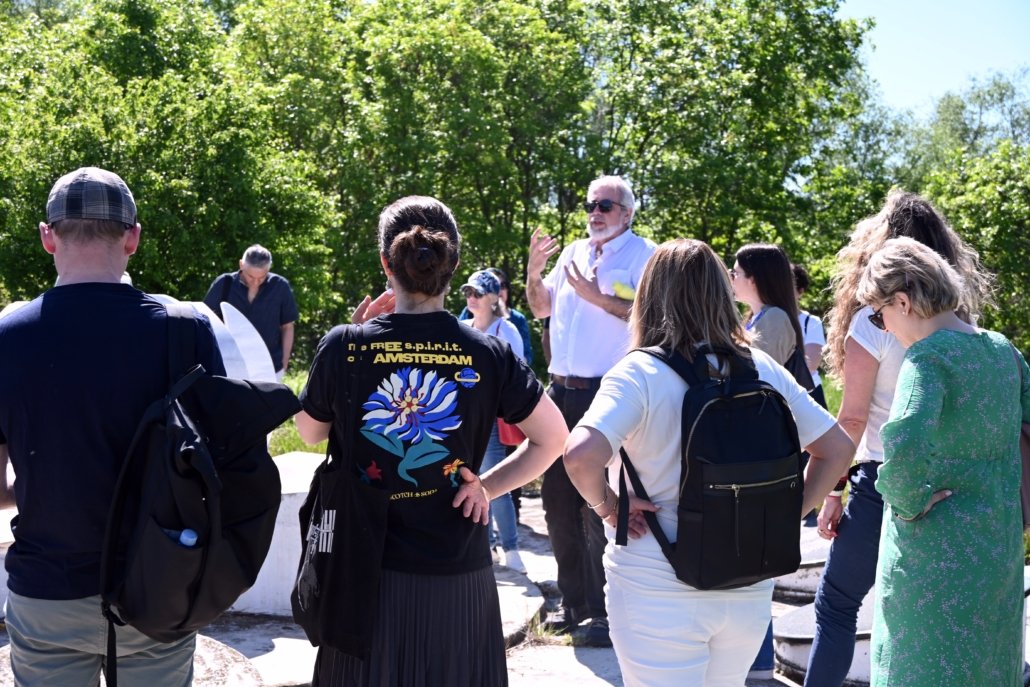
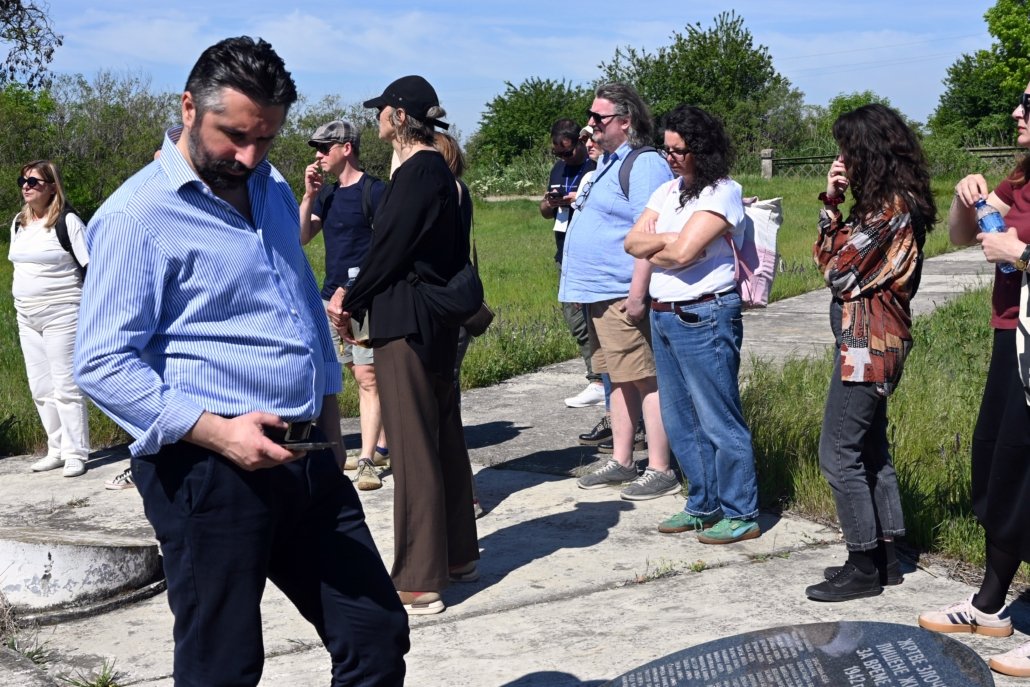
Participants in the program had a unique opportunity to face authentic sites in Novi Sad, South Bačka, and Belgrade where history still “breathes,” where it is slowly fading into oblivion, where it has been hijacked and misused, and where it is preserved with respect and piety toward the victims. Miško Stanišić, Director of Terraforming, led the group through marked and unmarked sites of suffering related to the Novi Sad Raid and the deportation of Bačka Jews, where the participants had the chance to personally form a real picture of contemporary remembrance culture in Serbia.
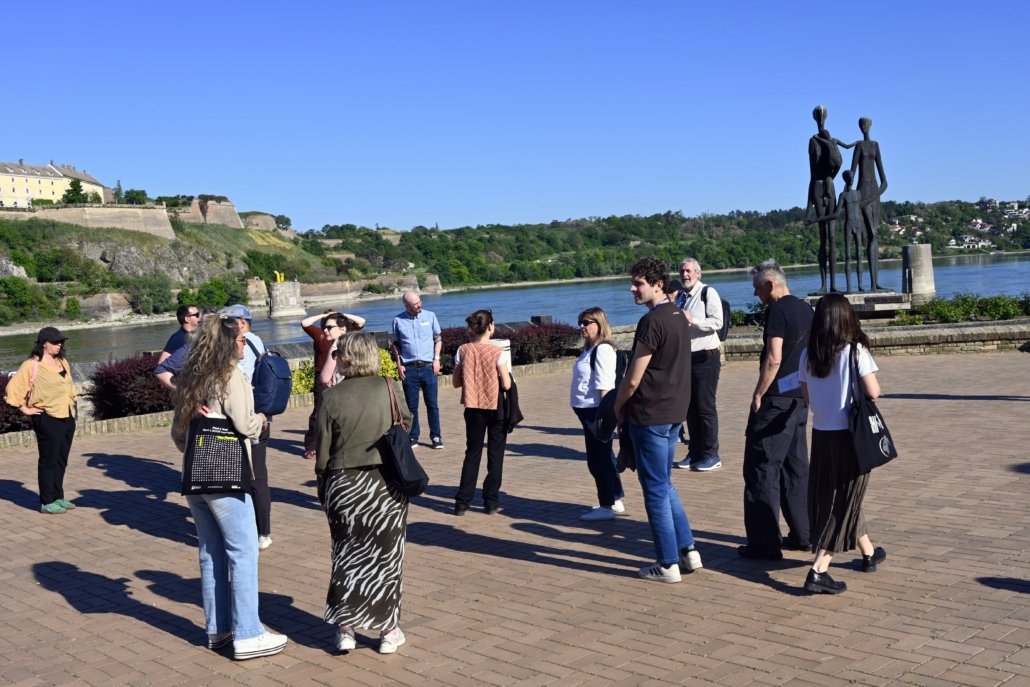
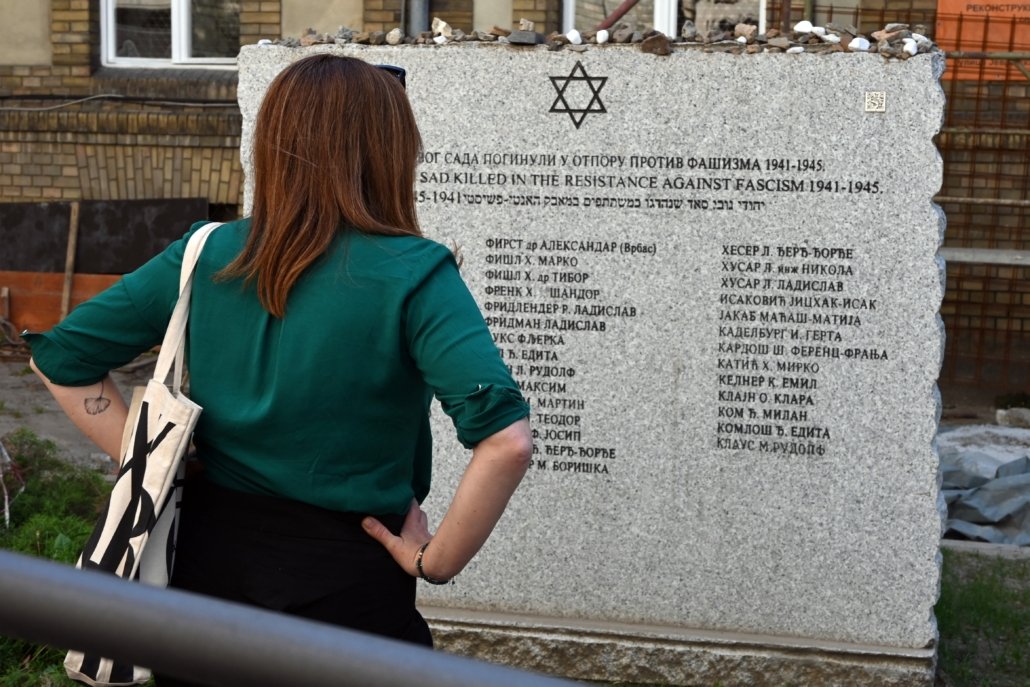
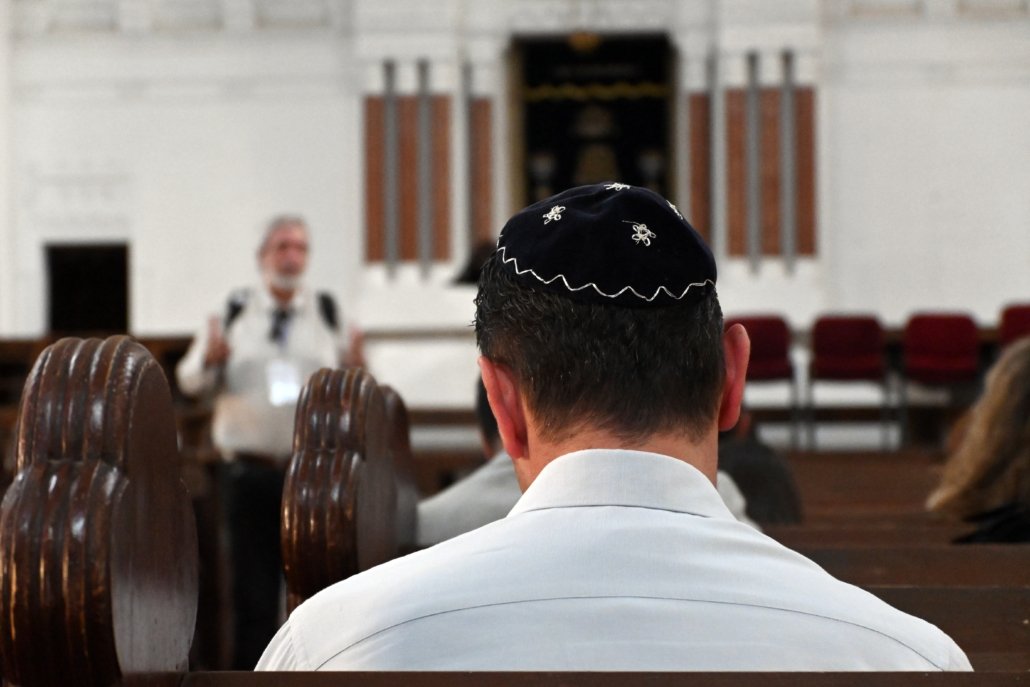
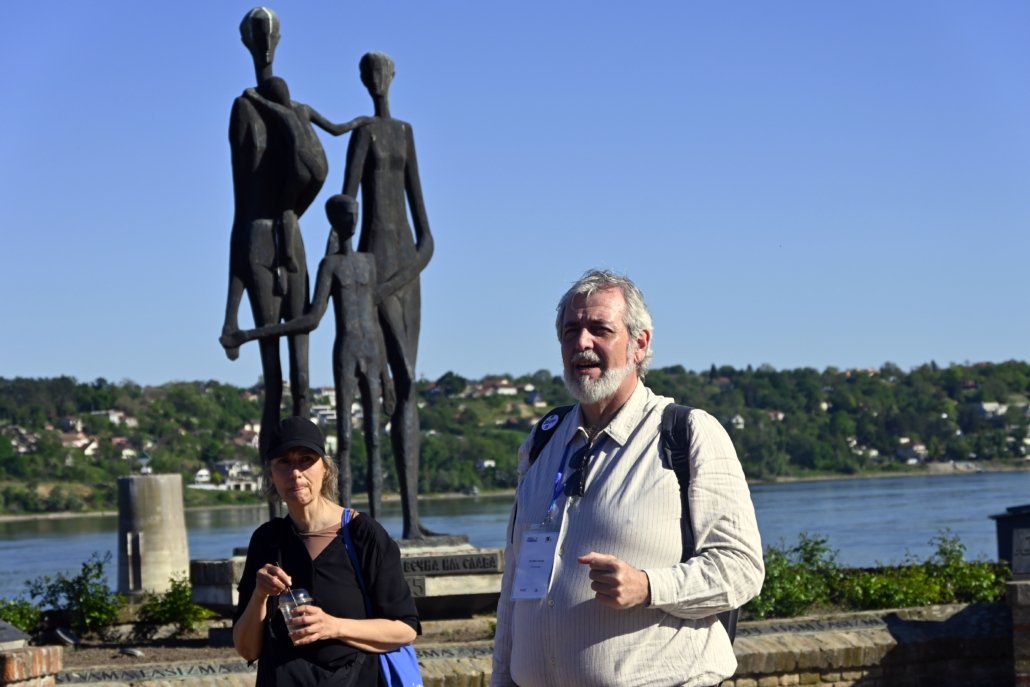
The journey began on the first day with a visit to various locations in Novi Sad, ranging from Terraforming’s panels on deportation in front of the Novi Sad Synagogue to the memorial at the popular “Štrand” beach—surrounded by citizens lying on the grass and sunbathing—to the monument “Family” on the Quay of the Raid Victims, where Terraforming’s exhibition had been attacked and damaged during the “Novi Sad – European Capital of Culture” manifestation.
Killing site and a golf club
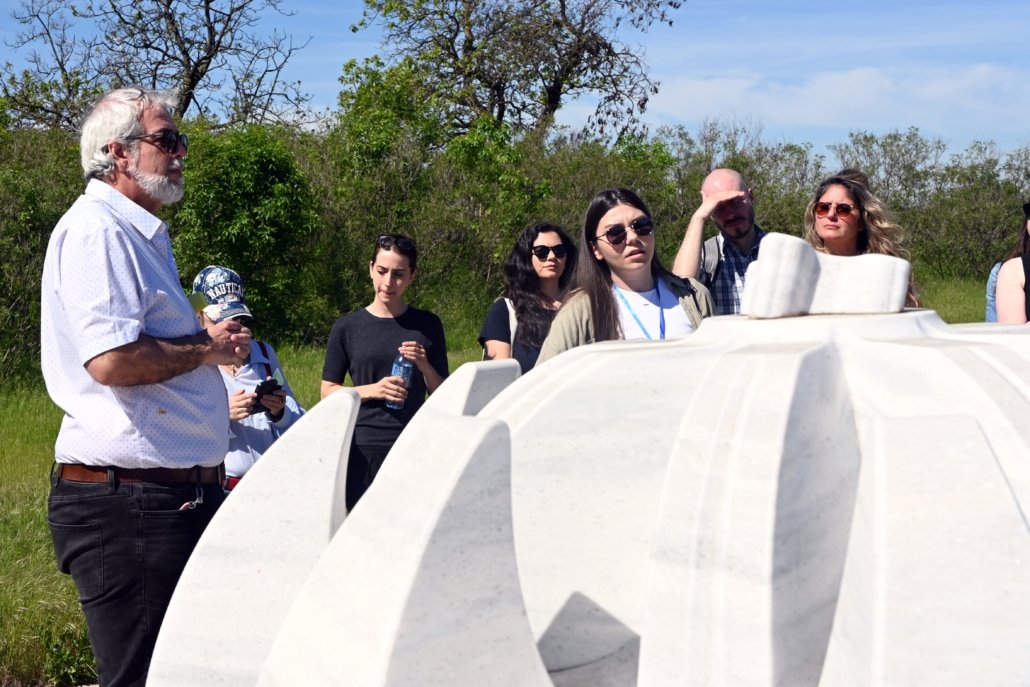
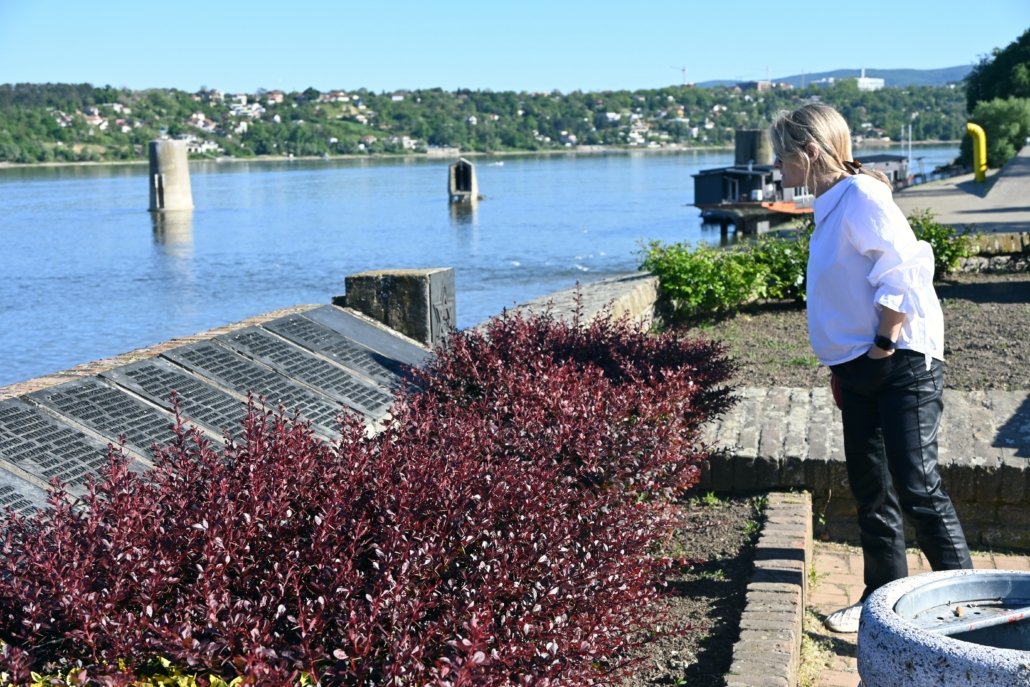
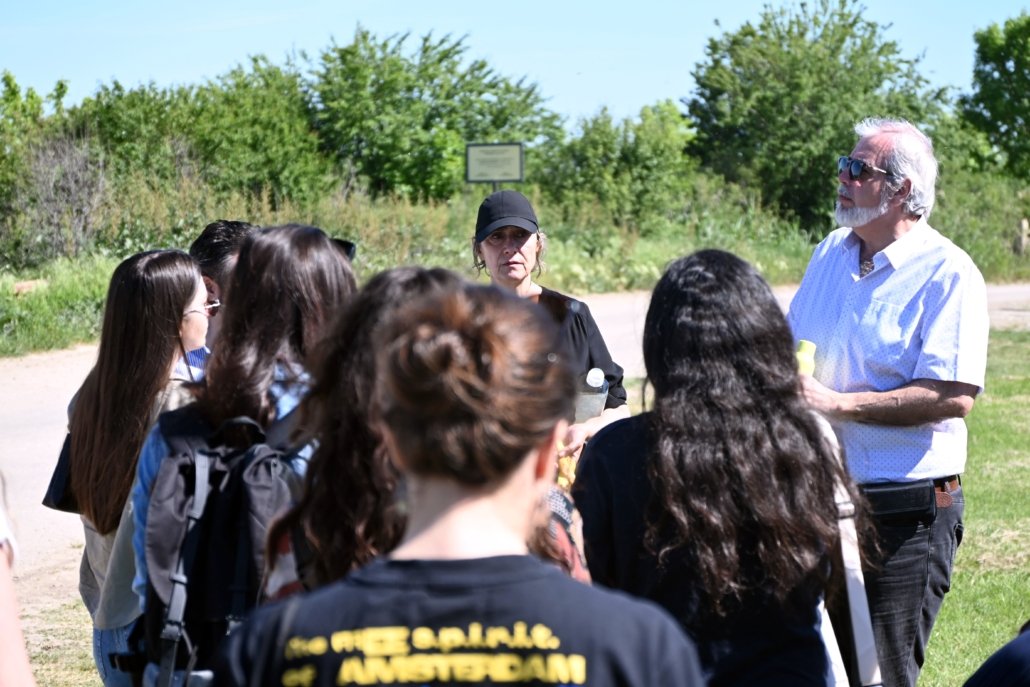
On the second day, the participants were taken by bus to visit sites that seemed truly surreal. From the neglected “Water Lily” monument near Žabalj and the imposing “Black Bridge”—which is now surrounded by a golf club, while the monument itself sits behind trash cans and a restaurant’s brick grill—to the monument on the Tisa at the “third ramp” near Čurug, participants witnessed attempts to keep the victims from being forgotten, alongside incomprehensible neglect and the inadequate use of authentic killing sites. Finding the Museum of the Victims of the Raid in Čurug closed during its official hours of operation, served as a stark reminder of the barriers to contemporary remembrance, ranging from a lack of funding to a total absence of political will. It was precisely these contrasts and contradictions that served as inspiration for discussions and work on new ideas.
From Communist to Nationalist Narratives: A State of Limbo
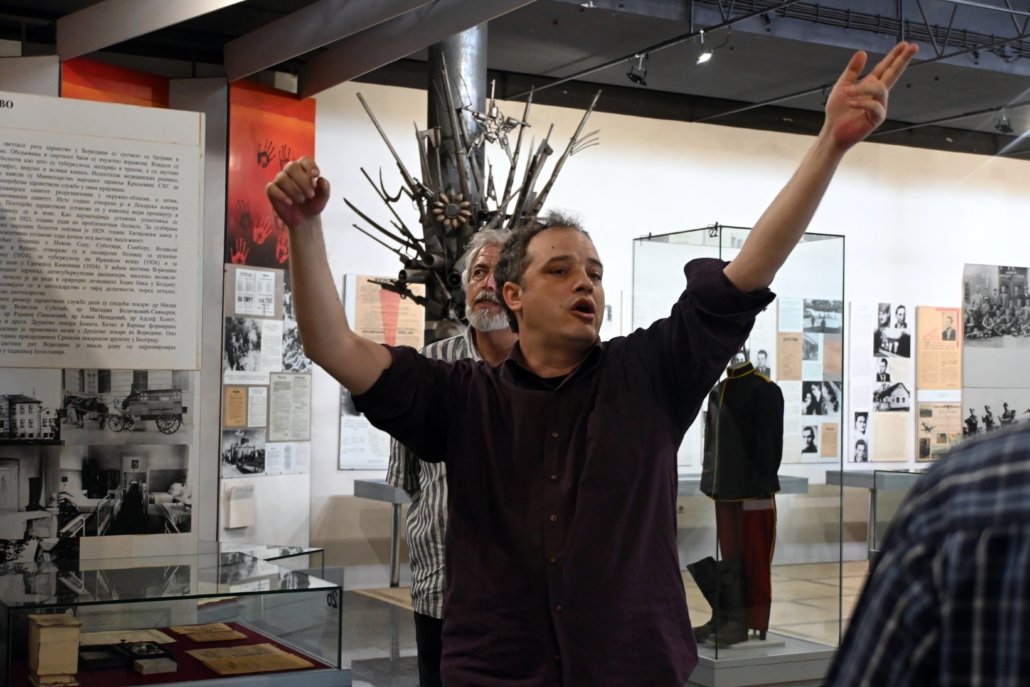
On the third day, the group visited the remnants of an old exhibition about World War II at the Museum of Vojvodina, guided by the excellent Vojislav Martinov. The exhibition was originally created in the 1970s as part of the collection of the Museum of the Socialist Revolution, but was significantly altered in the 1990s as the narrative was adapted to a new, national and nationalist one; following various complications and an unresolved situation regarding the museum space itself, it remained in the 2000s in a sort of liminal space between the old narrative of the anti-fascist past and the unreadiness of policymakers to clearly define a new narrative for this history. We would like to take this opportunity to thank the Museum of Vojvodina for their cooperation and hospitality.
A Culture of Remembrance Under Pressure
These tours left a deep impression on the participants, illustrating a stark divide. They witnessed how nationalism and corruption—the primary drivers of official policy in Serbia—clash fundamentally with modern memorialization standards promoted by the IHRA. Simultaneously, participants saw firsthand the systemic pressures and obstacles faced by the activists and professionals fighting to preserve a culture of remembrance within contemporary Serbian society.







 Terraforming