ELEVATE RELEVANCE:
Ensure Holocaust memory remains relevant and vital for younger generations.


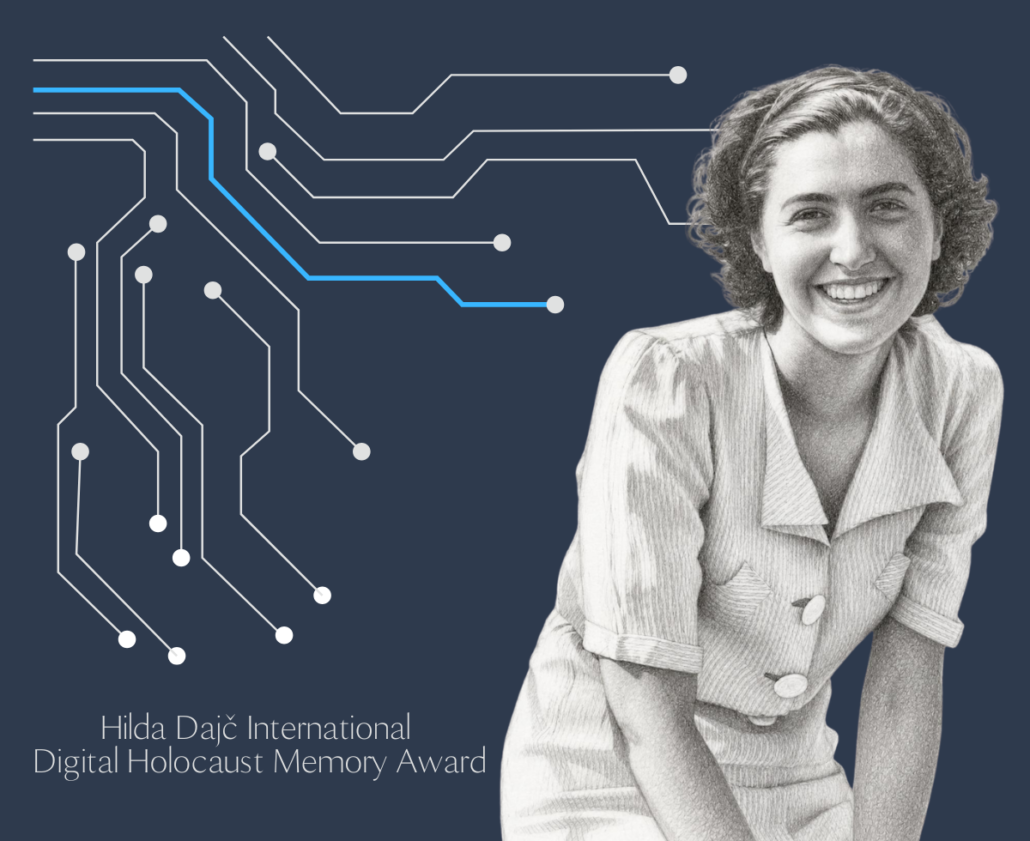
Hilda Dajč International Digital Holocaust Memory Award will serve as an international hub where memory professionals, technology innovators, survivors, their descendants, and young people will propose new benchmarks for excellence in digital Holocaust remembrance.
Its mission is fourfold:
Ensure Holocaust memory remains relevant and vital for younger generations.
Recognize and honor individuals and institutions that use digital tools to create meaningful, critical, and engaging memory projects.
Set ethical, pedagogical, and museological benchmarks for digital Holocaust remembrance.
Build an international network dedicated to identifying and countering Holocaust distortion, denial, and antisemitism in the digital sphere.
The award prioritizes projects that demonstrate the highest quality and a commitment to:

TECHNOLOGICAL SOPHISTICATION & CREATIVITY
Utilize digital tools to rethink traditional memorialization formats. Explore how digital media can evolve the learning experience.

PEDAGOGICAL IMPACT & YOUTH AGENCY
Promote initiatives that foster historical knowledge and empower young people to develop critical thinking skills and defend democratic values.

COLLABORATIVE ECOSYSTEMS & DATA CONNECTIVITY
Recognize projects that enable seamless international exchange of records, practices, and experiences, uniting authentic sites, institutions, collections, and communities through innovative digital technologies. Prioritize efforts that make archival records and knowledge widely accessible and interoperable across borders, fostering a global Holocaust memorialization.

AMPLIFYING MARGINALIZED NARRATIVES
Bring forgotten or overlooked victims, sites, and hidden histories into the global spotlight.
The Hilda Dajč International Digital Holocaust Memory Award honors exceptional initiatives and projects worldwide. Its selection criteria are grounded in rigorous professional standards and best practices, such as those set by the International Holocaust Remembrance Alliance (IHRA).
The award’s global reach is further reflected in its diverse steering board composed of renowned experts and leading institutions, and in its strong international collaborations.

The Hilda Dajč International Digital Holocaust Memory Award was established through a strategic partnership between the initiative’s visionary founder and its primary academic host:
(Novi Sad, Serbia)
Leading Serbian organization dedicated to advancing remembrance culture, pioneering innovative education about the Holocaust and genocide of the Roma, and countering antisemitism, antigypsyism, xenophobia, and historical distortion. Terraforming is based in Novi Sad.

(Brighton, UK)
A premier interdisciplinary hub for worldwide digital initiatives that educate about or commemorate the Holocaust, ensuring a sustainable future for Holocaust memory in the digital age. Landecker Digital Memory Lab is institutionally based at the University of Sussex.
The strategic direction, ethical standards, and selection processes of the award are guided by a Steering Board. Alongside representatives from Terraforming and the Landecker Digital Memory Lab, the Board is comprised of experts from world-renowned institutions in the fields of Holocaust memory, museology, archiving, technology, and education:
The Ghetto Fighters’ House Museum (Beit Lohamei HaGeta’ot) is the world’s first Holocaust museum, founded in 1949 by survivors and resistance fighters to serve as a global center for humanistic education, research, and the preservation of the legacy of Jewish resistance.
Institute of Cultural Studies (IKW) is a research institute committed to cross-disciplinary research on socially relevant issues in the humanities, arts and social sciences, with three research groups engaged in Knowledge Production, Memory Culture, and Antisemitism Studies.
The Fortunoff Video Archive for Holocaust Testimonies is a pioneer in oral history housed at Yale University, dedicated to recording and preserving more than 4,400 witness-centered video testimonies to provide a permanent record of the Holocaust through the voices of survivors, liberators, and witnesses.
European Memory Data Space EMDS is a leading international initiative to create a shared digital infrastructure for Holocaust-related records, technologies and pedagogical methodologies, by connecting archives, institutions, projects, and memory organizations, supporting education, remembrance, and research in the 21st century.
Vancouver Holocaust Education Centre VHEC is a leading teaching museum and resource center in British Columbia dedicated to Holocaust education, remembrance, and the promotion of human rights and social justice. Founded in 1983 by Holocaust survivors, the center houses Western Canada’s largest Holocaust-related archive and library. In the early 1980s, the VHEC was a global pioneer in systematically recording the testimonies of Holocaust survivors on video.
iRights Lab is an independent think tank that develops strategies and practical solutions to shape a democratic digital society, ensuring that technological innovation aligns with human rights and social responsibility.
Memorial Center “Staro Sajmište” is a newly established national institution, founded in 2022, dedicated to preserving the memory of the victims of the Judenlager and Anhaltelager Semlin. Located on the site of the former Belgrade Fairgrounds, where the young volunteer nurse Hilda Dajč was imprisoned and murdered, the center will serve as a vital site of remembrance, research, and education.
The Arolsen Archives is the world’s most comprehensive archive on victims and survivors of Nazi persecution, that share knowledge and promote active remembrance and democracy.

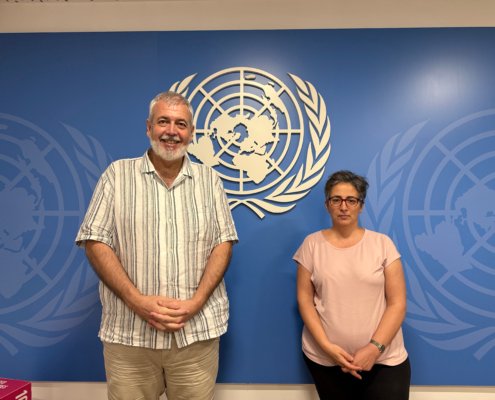 Terraforming
https://terraforming.org/wp-content/uploads/2026/09/IMG_9803-scaled.jpg
1920
2560
Nemanja Stevanović
https://terraforming.org/wp-content/uploads/2016/05/Terraforming-2016-1-enfold.png
Nemanja Stevanović2026-09-08 13:11:512026-09-09 13:24:45Terraforming at CCOA Málaga
Terraforming
https://terraforming.org/wp-content/uploads/2026/09/IMG_9803-scaled.jpg
1920
2560
Nemanja Stevanović
https://terraforming.org/wp-content/uploads/2016/05/Terraforming-2016-1-enfold.png
Nemanja Stevanović2026-09-08 13:11:512026-09-09 13:24:45Terraforming at CCOA Málaga