web analytics

HANNAH

Education about Antisemitism
and the history of Jewish communities

The HANNAH project focuses on the promotion of Jewish history, the enhancement of Shoah remembrance and the fight against Antisemitism in Germany, Greece, Serbia and Poland. through capacity-building training, awareness raising and policymaking contribution.

HANNAH is expected to inform and educate about the long history of the Jewish Communities in Germany, Greece, Serbia and Poland, to reinforce knowledge and remembrance and to increase awareness against Anti-Semitism, through enhancing the capacity of schoolteachers, librarians and archivists, the knowledge of young people and the information of policymakers.

HANNAH is expected to bring about enhanced knowledge, new forms of remembrance and increased awareness as regards Antisemitism, develop innovative tools against it, and contribute to combating it through capacity-building, awareness raising and policymaking, traditions and methods to combat antisemitism, using innovative tools such as the Educational Graphic Novel and Documentary, Oral History Presentations – Installations, and dissemination actions.

Duration: 01. December – 30. November 2022.

Events

Youth Competition Winners

As part of the HANNAH project, we organized an international youth competition in digital storytelling about Jewish history “Digital Storytelling”.

Students from Greece, Germany, Poland, and Serbia applied for the competition and shot short 5-7 minute documentaries about the history of Jews in their city. We received many interesting contributions from different places. All the works were of high quality and creative, and the prizes were won by the following:

First place:

  • Antonia and Kornelia Bryja – “Jewish Cemetery in Kalisz” (Poland)
  • Sylwia Staniewska and Joanna Wiertelak – “Jerzy Dorys – photographer of celebrities” (Poland)
  • Petros Avramidis, Konstantina – Iliana Gritziou, Olimpia Zerva, Panagiotis Zefkidis, Eleftheria Makri, Marilita Makri, Despina Manta Konstantina Paitari, Elissabeth Petropoulou, Marina Taousanidou, Smaragda Tsotra and Martha – Maria Psila – “Grandes Maisons” (Greece)
  • 10th grade religious studies course of Albert-Einstein-Schule Schwalbach/Taunus – “Ich bin zuhause, wenn ich in der Synagoge bin. Vom alten Jüdischen Friedhof in Bad Soden zur Westendsynagoge. Schülerinnen und Schüler auf Spurensuche jüdischen Lebens in ihrer Umgebung” (Germany)

Second place:

  • Kacper Kurczewski – “City of Forgotten Heroes” (Poland)
  • Maciej Kitala – “Lustiger – Będzin”(Poland)
  • Daniele Giuli – “Pain of the past – anxiety for the future” (Greece)
  • Emilija Pešić- “Ruža Lerinc” (Serbia)

Third place:

  • Aneta Święs – “Medallion” (Poland)
  • Jan Hyacent – “Goodbye my diary” (Poland)
  • Papaoulakis Isidoros – “Time has frozen!” (Greece)
  • Iva Rodić – Sećanje na jevrejski Novi Sad (Serbia)

The winners were officially announced and screened during the HANNAH project’s final conference in Athens on 10th and 11th November 2022.

You can view the winning projects on the HANNAH website.

We thank all participants!

Sign up for a free online course

Free online course “Jewish Life and Modern Antisemitism in Germany, Greece, Poland and Serbia” is still available!

Six partners have joined their forces to explore issues relating to Jewish life and modern antisemitism in Europe, including: how did Jewish communities emerge and flourishe in different parts of Europe? What are the different kinds of antisemitism? How did it manifest in different places in Europe? How is antisemitism related to the Holocaust? How is antisemitism expressed today? How could we combat antisemitism?

What topics will you cover?

• Jewish life and history in the heart of Europe (Poland, Germany) but also in the periphery (Serbia and Greece)

• The perception of Jewish identity by reading and listening to oral testimonies of Holocaust survivors and second generation Holocaust survivors

• The numerous kinds of antisemitic narratives

• The variety of manifestations of antisemitism

• Ways to debunk antisemitic myths

• The ways the Holocaust unfolded in its epicenter (Germany and Poland) as well as in its periphery (Greece and Serbia)

• The use of symbolic language to combat antisemitism


Lectures for Serbian teachers

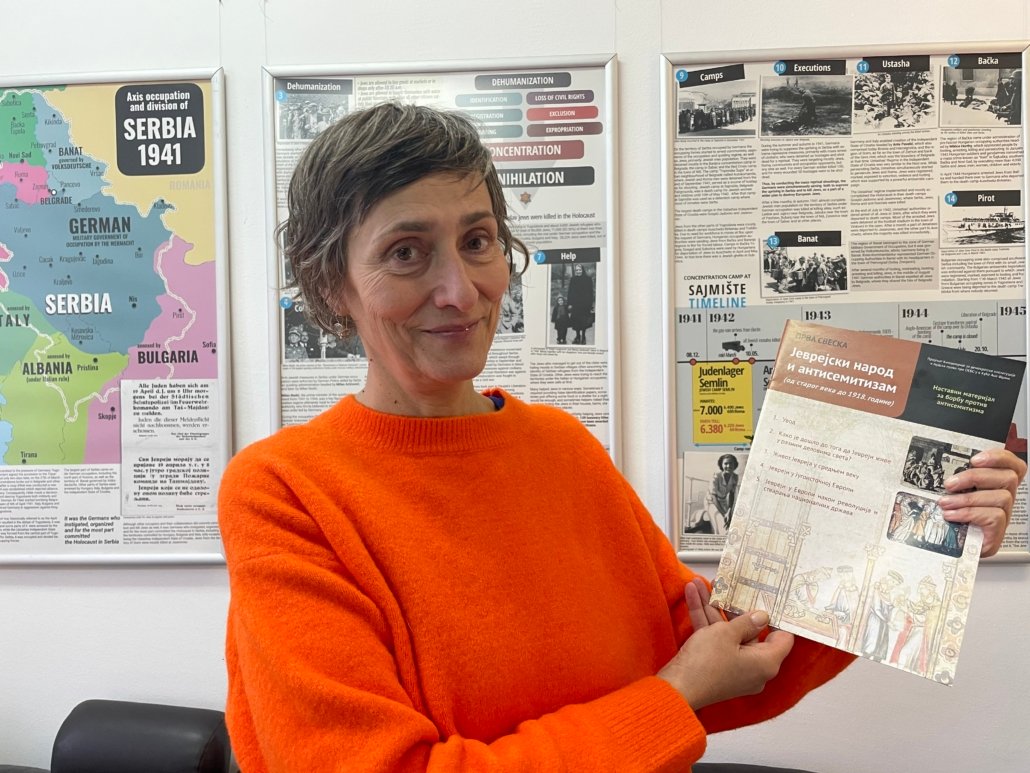
In the Gymnasium “20th October” in Bačka Palanka, held on October 29-30, teachers from the surrounding towns followed the lectures according to the HANNAH seminar plan and had the opportunity to, among other things, learn about the culture and history of the Jewish community in Serbia, as well as in Greece, Poland and Germany. In addition, lecturers Nevena Bajalica and Miško Stanišić spoke to the teachers about history, but also about contemporary antisemitism and presented ways to fight against it.

Premiere screening of the HANNAH documentary about the Jewish history of Novi Sad

The HANNAH project was presented at the public reception at the Archives of Vojvodina in Novi Sad on 21. Aug at 18:00 CET. Among participants, there were over 35 teachers from around Serbia, representatives of the local and national authorities, diplomats, the Jewish community, and others. One of the highlights of the event was a premiere screening of the episode of the HANNAH documentary about the history and culture of the Jewish community of Novi Sad. The audience got an opportunity to learn more about other HANNAH products, such as oral testimonies, the Digital Repository of Antisemitic Narratives, as well as the HANNAH documentary episodes about Athens, Hamburg, Dresden, and Krakow.

About the Project

HANNAH aims are to promote Jewish life and contribute to better understanding of Jewish traditions, the history and contribution of Jewish people in Europe before and after the Shoah, with a focus on local contexts of Dresden, Hamburg, Athens, Thessaloniki, Novi Sad and Krakow, and research, and to foster knowledge and education about the Shoah for schoolteachers, librarians, archivists and young people, and develop new forms of remembrance in the light of dwindling knowledge about the Holocaust.HANNAH will achieve its goals through:

  • mutual learning and exchanges of good practices between partners with an international outreach and complementary approaches in promoting knowledge and remembrance,
  • design, development and delivery of tailored, training addressed to schoolteachers, librarians, and archivists,
  • implementation of innovative tools such as a digital repository of anti-Semitic narratives and educational graphic novels, oral history presentations, documentary filmmaking, competitions for youth projects, and national conferences

The results of the HANNAH projects will also be presented in the official program of Novi Sad European Capital of Culture 2021.

Hannah logo
Seminari
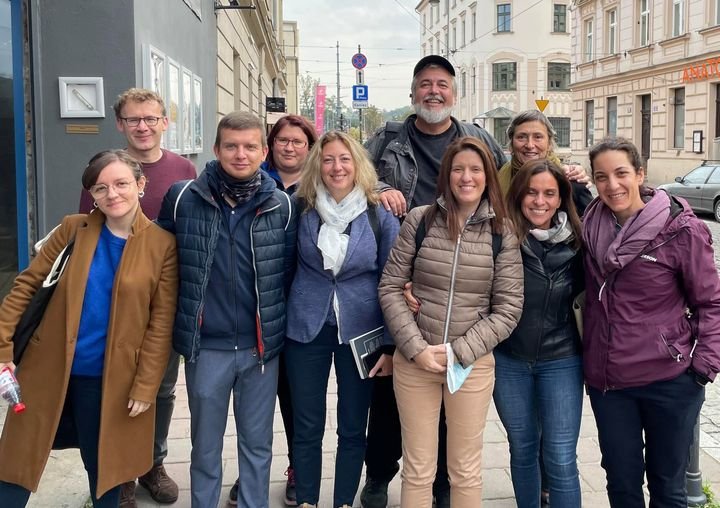
International meeting in Krakow

International meeting in Krakow

HANNAH seminars

Our seminars consist of this program:

  • Session 1 - Jewish identities in Europe

    Module 1

    The Jewish Communities of Europe

    • Part A: Jewish communities in Europe
      Jews in Germany
      Jews in Poland
      Jews in Greece
      Reflection meeting with the audience
    • Part B: History and Traditions of the Jewish Community of Serbia
      Discussion with the audience and assessment

    Module 2

    The Use of Oral Testimony when Teaching about Antisemitism and the Shoah in Europe

    Workshop

  • Session 2 - Understanding Modern European Antisemitism

    Module 3

    • Part A: Modern and Contemporary Antisemitism
    • Part B: Antisemitism in Serbia
      Reflection meeting with the audience and assessment

    Module 4

    Antisemitism: Lessons for Today

    Workshop

  • Session 3 - Approaching the Shoah

    Module 5

    Jews in Hitler’s Empire

    • Part A: European Cities in the Midst of the Shoah
    • Part B: Jews in Serbia during the Holocaust?
      Discussion with the audience

    Module 6

    Teaching about Antisemitism through the Arts 

    Workshop

    Evaluation

    Concluding remarks

Activities

Monthly meetings

Transnational meeting

  • Krakow – september 2021.
  • Hamburg – mart 2022.
  • Novi Sad – june 2022.

Collection of oral testimonies

Creating teaching materials for:

  • Online course
  • Seminars for teachers

Creating manuals for using educational graphic novels

Creating a repository of antisemitic narratives

Seminars for teachers, archivists, museum workers and librarians

NEWSLETTERS

Jugend- & Kulturprojekt e.V. (JKPeV) is the principal partner in the project

Jugend- & Kulturprojekt e.V. (JKPeV) was founded in 2004 in Dresden and is dedicated to Education, Culture and Art. We are a team of project managers, event managers, political scientists, sociologists, historians, youth workers, artists, designers and filmmakers who wish to make Dresden and other cities in Europe better places to live, grow, create and peacefully co-exist.

Main goal of the project is to promote diversity, equality and inclusion, foster active participation, civic engagement and social innovation To achieve our goal, we design and carry out educational, creative and cultural activities on-site and abroad which encourage cross-sectoral and interdisciplinary cooperation.

The project is realized with the support of

Rights, Equality and Citizenship Programme

The European Union Program “Rights, Equality and Citizenship” is an instrument of the European Union aimed at promoting, protecting and enforcing the rights that ensure equality of citizens guaranteed by the Treaty on the Functioning of the European Union (TFEU), the Treaty on European Union (TEU), the EU Charter on fundamental rights (the “Charter”), as well as international human rights conventions.

Ministry of Culture and Information

The Ministry of Culture and Information of the Republic of Serbia has been established as a state administration body and its scope is determined by Article 15 of the Law on Ministries.

The Ministry, among other things, performs state administration tasks related to: development and improvement of culture and artistic creation; monitoring and research in the field of culture; providing the material basis for cultural activities; protection of immovable, movable and intangible cultural heritage; library, publishing, cinematographic and music and stage activities.

Autonomous Province of Vojvodina – Provincial Secretariat for Finance

The Provincial Secretariat for Finance, in accordance with the law and the Statute, performs the tasks of the provincial administration in the field of finance and economy, as well as the tasks of the provincial budget and treasury in accordance with the law.

The Provincial Secretariat for Finance, among other things, prepares, monitors the implementation and reports on the implementation of capital projects in accordance with the acts governing this area and coordinates activities aimed at successful use of EU pre-accession, structural and cohesion funds in the Autonomous Province of Vojvodina.

Seminar: Savremeni antisemitizam i edukacija o Holokaustu

13. jun 2022.

11:00 – 13:00 časova

Arhiv Vojvodine

Seminar će se održati uživo u Arhivu Vojvodine sa onlajn uključenjima partnera iz Grčke, Nemačke i Poljske. 

Hannah logo

Projekat je podržan kroz program Evropske unije „Prava, jednakost i državljanstvo“.